Education MEC Lebogang Maile on Monday held a briefing to outline the outcomes of community engagements over school safety.
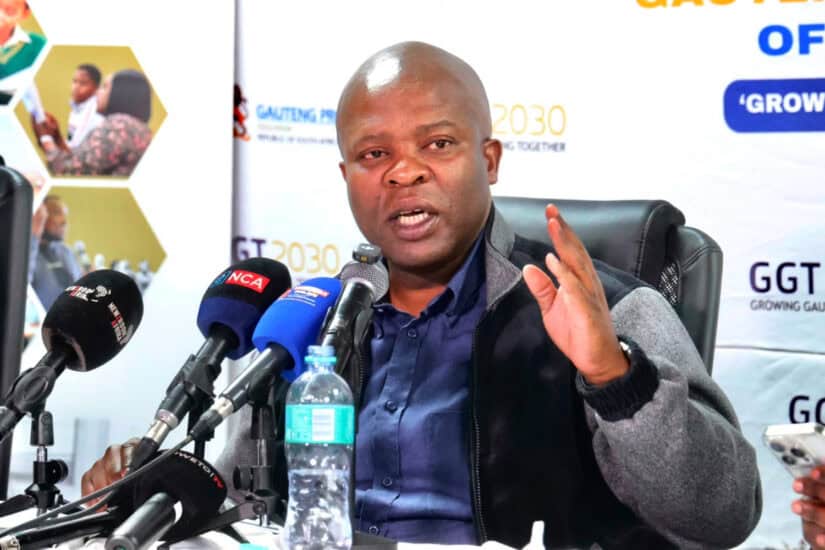
Gauteng MEC for Education, Sport, Arts, Culture and Recreation Lebogang Maile. Picture: Supplied / Gauteng Department of Education


Societal issues are impacting the classroom as thousands of incidents of abuse and neglect are being dealt with by Gauteng schools annually.
A report compiled by the provincial department of education recently revealed that just over 22 000 reports of emotional, physical, sexual and financial abuse were recorded between 2023 and 2026.
While a small fraction of the reports were the result of incidents occurring at schools, the vast majority were detected by staff trained under the department’s learner psychosocial support directorate (LPSD).
“Reported incidents reflect a broad spectrum of learner safety, protection, and wellbeing concerns within and beyond the school environment.
“All schools have established school-based support teams which serve as the first point of receipt and management of reported cases.
“Cases received by school-based support teams are referred, where appropriate, to social workers and district-based support teams for further intervention and support,” the department’s July report stated.
As well as to the almost 120 social workers available to the department, abuse reports were also made telephonically to partner organisations under the department of social development.
Over 22 000 reported cases of abuse
The details on the extent of the abuse facing children stemmed from a question posed in the provincial legislature by the DA’s shadow MEC for education Sergio Isa Dos Santos.
Of the 22 020 abuse reports, 155 were documented to have occurred at schools.
This included 15 corporal punishment incidents, 34 cases of pupil-on-pupil bullying, 10 fights between pupils, eight pupil stabbings and one school shooting.
The LPSD identified 3 022 cases that required clinical counselling, including 1 118 pupils affected by rape or sexual assault, 435 by physical and emotional abuse and 369 suffering from neglect.
LPSD social workers also dealt with 276 suicide-related incidents, 398 cases related to domestic violence and three children used in the creation of pornography.
The telephonic helpline was the most frequented reporting mechanism, with 18 843 cases across 43 separate forms of abuse reported since 2023.
These ranged from child begging and child prostitution, to complaints of starving children, inadequately clothed children, and substance abuse by children and parents.
Most common cases were 3 960 telephonic reports of emotional abuse, 2 006 reports of physical abuse, and 2 005 poverty-related calls.
“[We must] urgently implement a centralised case-tracking system with legally enforceable investigation deadlines to ensure that every report of child abuse is investigated, victims receive support, and perpetrators are held accountable,” stated Dos Santos.
Shared societal responsibility
Gauteng MEC for Education, Sport, Arts, Culture and Recreation on Monday gave a briefing on how his department has been addressing the issues.
Since May, the department has held at least 90 engagements with community leaders and sports hubs to drive the message of societal improvement.
In the department’s engagement sessions, Maile noted the persistent concerns of communities were crime, violence, bullying, gangsterism, substance abuse and vandalism.
The MEC stated that “learning cannot flourish where fear dominates”, but stressed it was a joint responsibility shared with the greater community.
“The future of the African child cannot be secured by government alone.
“It demands a united society in which parents, families, educators, school governing bodies, traditional leaders, religious institutions, municipalities, law enforcement agencies, civil society, business, artists, athletes, libraries, community organisations, and every resident, accept responsibility for nurturing, protecting and empowering our children,” stated Maile.
He noted that classrooms could not be separated from broader social environments, and reminded parents to be the most positive force in the lives of their children.
“Children spend only part of their day within educational institutions. The values that shape discipline, respect, compassion, patriotism, responsibility and accountability are first cultivated within families and communities.
“Every parent must therefore become an active participant in the educational journey of their child.
“Attending school meetings, monitoring learner attendance, supervising homework, protecting schools from vandalism and promoting positive behaviour are not optional responsibilities; they are fundamental obligations arising from our collective duty to protect future generations,” Maile said.