


The results of last Wednesday’s local government elections, as declared by the Electoral Commission of South Africa, have left the...
 Elections 2026
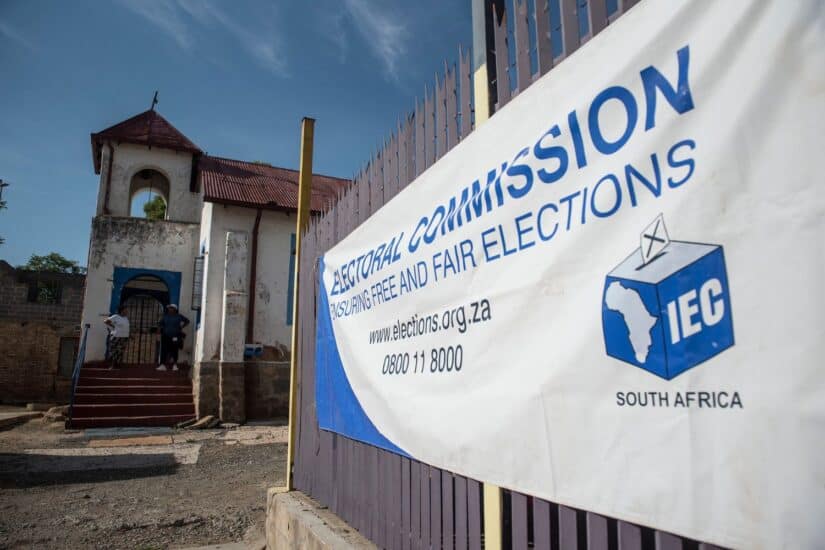
Voters at a church serving as a polling station in Alexandra, Johannesburg on 4 November 2026. Picture: Michel Bega / The Citizen


The results of last Wednesday’s local government elections, as declared by the Electoral Commission of South Africa, have left the ANC as the largest party in many municipalities, but without sufficient support to govern alone in a number of councils.
The outcome has opened the door to coalition negotiations, with parties expected to engage in intense bargaining to establish governments of local unity.
Voters have effectively compelled political rivals to negotiate multiparty administrations across several municipalities.

Get your results on
our Election Hub
Live results
Unlike the 2024 government of national unity (GNU), which brought together 10 parties, local coalitions are far less predictable.
Hung municipalities to lead to coalition governments
In municipal politics, larger parties have often preferred to partner with smaller organisations, rather than work with their strongest rivals, enabling them to retain greater influence within coalition administrations.
Political commentator and research fellow at the Institute of Pan-African Thought and Conversation Rebone Tau said widespread dissatisfaction with service delivery contributed to the emergence of hung municipalities.
“Service delivery has not improved and that is one of the reasons we are seeing so many hung municipalities across the country,” Tau said.
The results also reflect a maturing democracy in which voters feel free to make independent political choices.
This dynamic has long been evident in Johannesburg and Tshwane, where the ANC and the DA have remained on opposite sides of the political divide, each seeking support from smaller parties, rather than cooperating with its principal rival.
While the two parties work together at national level through the GNU, relations have remained considerably more strained in provincial and local government.
In Gauteng, premier Panyaza Lesufi excluded the DA from the provincial executive, while in the Western Cape and the City of Cape Town, the DA has kept the ANC in opposition.
A similar pattern is likely to emerge as parties begin negotiations to form new local coalitions.
Other metros
For the first time, the ANC’s long-standing dominance in Buffalo City has been broken, with Bantu Holomisa’s United Democratic Movement (UDM) emerging as the official opposition in the newly constituted council.
Comparable shifts have occurred in Mangaung and Nelson Mandela Bay, where the DA has overtaken the ANC in municipalities facing significant financial and governance challenges.
In these councils, the major parties are expected to recruit smaller organisations to build governing majorities and prevent their rivals from taking control.
In Buffalo City, the ANC and UDM may seek common ground, potentially alongside the EFF.
EFF leader Julius Malema has warned that his party would withhold support from any party that approaches coalition negotiations with arrogance, choosing instead to back partners willing to engage constructively.
Although the ANC and DA frequently clash in municipalities, they have often found common cause in opposing the left-wing alliance represented by the EFF and the uMkhonto weSizwe (MK) party.
This tendency has become increasingly evident during the GNU era.
KZN coalition
KwaZulu-Natal (KZN) presents a notable exception.
There, the provincial government comprises the Inkatha Freedom Party, ANC, DA and National Freedom Party in an arrangement designed to keep Jacob Zuma’s MK party out of power.
A similar alignment could emerge in eThekwini, where MK secured the largest share of the vote.
Zuma has indicated a willingness to work with other black-led parties, suggesting the DA could be excluded from any MK-led coalition.
However, strained relations between MK and the ANC may complicate such a scenario.
The final proportional representation allocations could still influence coalition arithmetic, particularly in municipalities where ward and PR voting patterns differ significantly.
Municipal Coalition Bill stalls
A long-delayed Coalition Bill, intended to regulate coalition governments, remains stalled in parliament and will not apply to the current negotiations.
The proposed legislation would require written coalition agreements and seek to curb the frequent motions of no confidence that have undermined stability in municipal administrations.
Under the current legal framework, coalition talks and the establishment of new administrations must be concluded within 14 days.
The proposed legislation would extend that period to 30 days before the first council meeting, allowing parties more time to negotiate durable agreements.
Tau said it was unfortunate that the legislation had not yet been passed.
“There is no political party that I can confidently say guarantees stability in a coalition. Much depends on how individual politicians relate to one another and their ability to work together,” he said.
National party leaders should provide guidance without dictating outcomes.
“Local politicians should be allowed to engage one another, as they understand the local political dynamics and have personal relationships that can help make coalitions work,” Tau said.