


... and where the details are thin.
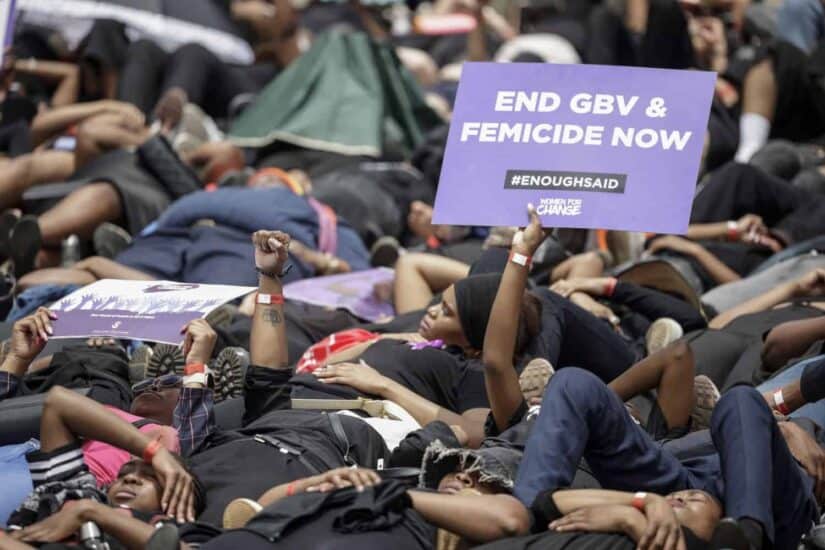


With local elections around the corner, gender-based violence (GBV) is on the ballot – especially in South Africa’s current violent climate.
Elections manifestos
| Party | Manifesto approach | Main GBV commitments |
|---|---|---|
| ANC | Dedicated local-government commitment within a broader safety plan. | Referral pathways, safer schools and transport, liquor by-law enforcement, prevention programmes and gender-responsive budgeting. |
| DA | No dedicated GBV section; GBV-related measures appear in its general safety plan. | Lighting, safe routes to school, safer public-space design, liquor enforcement and rehabilitation programmes. |
| EFF | Most detailed and explicit local GBV package. | Ward-based victim support, safe reporting channels, shelters, counselling, procurement bans and gender-responsive budgeting. |
| MK party | National manifesto, not a municipal GBV plan. | Specialised GBV investigation units at every police station and a compulsory school subject on values, ethics and gender relations. |
ANC: local links to national system
The ANC frames GBV as part of a wider municipal safety responsibility. It commits municipalities to support the national strategic plan on gender-based violence and femicide by strengthening referral pathways to Thuthuzela Care Centres, shelters and victim-support services.
Its promises focus on the environments where violence and harassment often occur: safer schools, taxi ranks and transport facilities; better street lighting and pedestrian routes; and enforcement against unlawful liquor outlets.

LIVE interactive map, latest news, multimedia and more!
View MapThe party also commits to prevention and youth programmes, protection for LGBTQI+ residents and other vulnerable groups, and gender-responsive municipal budgeting. It cites as its record the passage of three GBV laws, the establishment of the GBVF national council and the expansion of Thuthuzela Care Centres.
What is clear: The ANC links municipal services to the national survivor-support system.
What is less clear: The manifesto does not specify how many new shelters, referral workers or municipal safety posts it would fund, or how municipalities would be held accountable for implementation.
DA: safety by design
The DA does not present a stand-alone GBV section in its manifesto.
Its commitments instead sit within a broader plan to make communities safer through better lighting, urban design, local policing and crime prevention.
Its most relevant promises include improved lighting in high-risk areas and transport routes, safer spatial design to remove secluded walkways, cutting long grass for clear sightlines, and a “safe routes to school” initiative involving paving, lighting and pupil transport.
The DA also commits to strict enforcement of traffic and liquor-related laws, support for neighbourhood watches and community patrols, and rehabilitation, education and employment programmes to reduce reoffending and steer young people away from crime.
What is clear: The DA emphasises prevention through safer physical environments and visible local enforcement.
What is less clear: Because it has no dedicated GBV section, the manifesto does not spell out survivor services such as shelters, counselling, referral pathways or specialised support for victims of sexual violence.
EFF: the most detailed offer
The EFF sets out the most explicit municipal GBV programme of the four parties. It promises safe and accessible reporting mechanisms for GBV, sexual harassment, exploitation and abuse, supported by trained municipal law enforcement and community safety structures.
It proposes ward-based victim-support units and centres offering medical, legal, forensic, psychological and social support, alongside shelters, places of safety and counselling services. It also commits to school and community campaigns on rape prevention, GBV and how survivors can report abuse.
The EFF goes further than the other parties on accountability and procurement. It says individuals and businesses linked to GBV, rape, child abuse, exploitation or organised crime should be barred from municipal contracts, and that every EFF councillor would sign a pledge not to commit GBV.
It also promises gender equality units, gender-responsive budgeting, a 50% women-representation rule in municipal leadership and employment, and safer design of water, sanitation, roads, lighting and public spaces for women.
What is clear: The EFF treats GBV as a distinct municipal service area, with named structures and survivor-support commitments.
What is less clear: The manifesto does not detail the cost, staffing model or rollout timetable for ward-based victim-support units and centres, which would be central to delivering the promise.
MK party: a national policing answer
The MK party’s manifesto is a national policy document rather than a local-government manifesto, so its GBV commitments are framed around policing and education rather than municipal services.
MK party cancelled its planned Siyathatha rally, scheduled for 18 October, and said its 2026 local government election manifesto would instead be distributed electronically to structures and members.
The party said the change would allow it to focus resources on ward-level campaigning, although the cancellation followed reporting on financial difficulties, including concerns about unpaid service providers and the party’s ability to stage a large launch.
It commits to ensuring that every police station has a well-resourced specialised unit to investigate gender-based crimes. It also proposes a compulsory school subject covering African history, values, ethics and morals, with particular attention to gender relations.
The party describes crimes against women, children and the elderly as symptoms of moral decay, placing its response in a broader moral and social-renewal framework.
What is clear: MK party prioritises specialised police capacity and values-based education.
What is less clear: Because the document is national rather than municipal, it does not set out what a local council would do to support survivors, improve safety in public spaces or coordinate with shelters and care services.
The bottom line for voters
- ANC offers the clearest connection between municipalities and the existing national GBVF response system, including Thuthuzela centres and shelters.
- DA focuses on preventing violence through safer streets, lighting, school routes and local enforcement, but does not present a dedicated survivor-support plan.
- EFF offers the broadest and most specific local GBV package, from reporting channels to shelters and procurement bans, though implementation details are limited.
- MK party focuses on specialised police units and education, but its manifesto does not translate this into municipal-level GBV commitments.