The latest dispute centres on the state's decision to provide the case docket electronically.
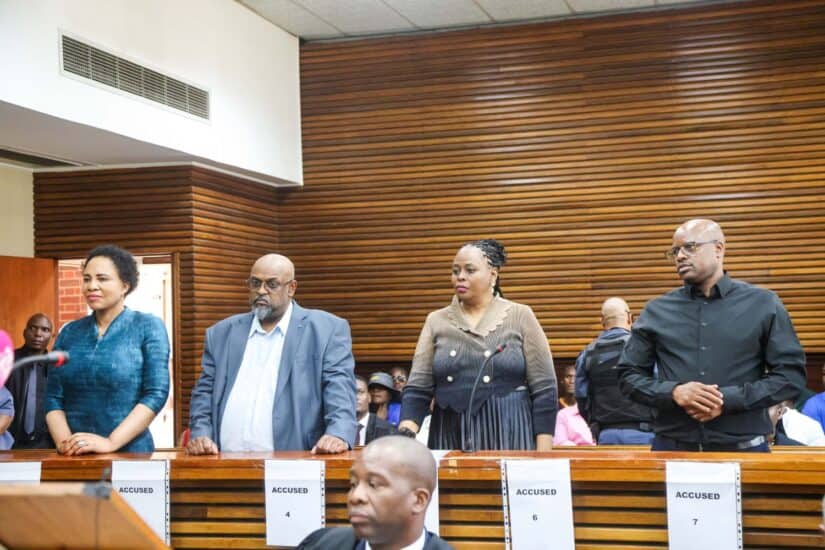
(From left to right) Imogen Mashazi, Khemraj “Kemi” Behari, Linda Gxasheka and Julius Mkhwanazi appear at the Germiston Magistrate’s Court on 6 November 2026. Picture: Gallo Images/OJ Koloti


The prosecution’s handling of the Ekurhuleni blue lights corruption case has come under renewed scrutiny, with defence lawyers this time accusing the prosecution of failing to properly disclose the docket.
The latest dispute centres on the state’s decision to provide the case docket electronically rather than in hard-copy format, a move that the defence says has left them unable to properly prepare their cases.
Ex-Ekurhuleni city manager Imogen Mashazi and fired Ekurhuleni Metro Police Department (EMPD) deputy chief Julius Mkhwanazi, former head of human resources Linda Gxasheka and suspended head of legal and risk services Khemraj “Kemi” Behari appeared before the Germiston Magistrate’s Court on Friday, 6 November 2026.
The four are facing corruption charges arising from allegations of abuse of public office, unlawful salary adjustments and interference with internal disciplinary proceedings.
Each accused is currently out on R50 000 bail.
The charges relate to an alleged attempt to cover up disciplinary proceedings against Mkhwanazi following the unlawful installation of blue lights on vehicles belonging to tenderpreneur Vusimuzi “Cat” Matlala.
Julius Mkhwanazi blue lights case resumes
The issue came to the fore on Friday after state prosecutor Zwelethu Mata informed the court that the docket had already been disclosed to the defence.
However, Mashazi’s legal representative, Bongani Khoza, challenged this assertion, saying the defence had not received the documents.
Khoza explained that the prosecution had made the docket available only in electronic format, despite an earlier court directive, according to him, requiring disclosure a week before the latest appearance.
“That did not happen, Your Worship,” the lawyer remarked.
He told the court that the arrangement had placed the defence “in jeopardy”, particularly because some legal representatives did not have the necessary USB devices to access the documents.
“We tried to purchase a memory stick at a nearby shop [but] it is not working,” Khoza added.
The lawyer argued that the defence needed sufficient time to access and examine the docket before the case could proceed because one “can’t just take it at face value”.
He, therefore, asked the court to postpone the matter to Wednesday, 11 November, allowing the prosecution to make the disclosure properly and the defence to scrutinise the electronic documents.
Potential trial complications
Advocate Tyron Pather, who represents Behari, also questioned the decision to provide the docket electronically without first securing the defence’s agreement.
“I wish to record our unhappiness as to the way the discovery has been made,” Pather argued.
He maintained that the customary procedure was for the prosecution to provide hard copies of the case documents.
“My concern is that, should the trial proceed and there seems to be a discrepancy as to what is received electronically and what we wish to present to a state witness, I foresee problems in the way this trial will be conducted,” the lawyer told the court.
“The state is bound by the rules to make a disclosure and to do so in the ordinary course as we are accustomed to.”
Gxasheka’s legal representative also supported the concerns raised by their colleagues and suggested that representations could be launched by his client.
Such representations are formal submissions to the National Prosecuting Authority (NPA), through which an accused person requests the prosecution to reconsider their decision to proceed with criminal charges.
Depending on the outcome, the process can result in charges being withdrawn.
Prosecution insists electronic copies are sufficient
Mkhwanazi‘s attorney, Shafique Sarlie, took a different position from the other defence lawyers, indicating that he was satisfied with the electronic disclosure.
He proposed that the matter be heard again on 13 November.
The prosecutor rejected the suggestion that the state had disregarded the court’s directive, while apologising for not providing the defence with hard copies of the docket.
He explained that electronic disclosure was the method he had traditionally used when dealing with such cases.
“It is not out of disrespect,” Mata said.
The state advocate further argued that providing the documents electronically was a more practical approach, particularly given the substantial volume of material contained in the docket.
“I don’t see a problem with the softy copies. They work well,” he said.
Mata added that the prosecution would engage with the defence to establish whether all the documents had been received and whether the disclosure was complete.
The court subsequently postponed the case to next Friday.
Separate blue lights matter
A related but separate criminal case involving Mkhwanazi, Matlala and EMPD fleet manager Chris Steyn was also before the court.
Proceedings in that matter were postponed to 29 January 2027 after the state disclosed the case docket.
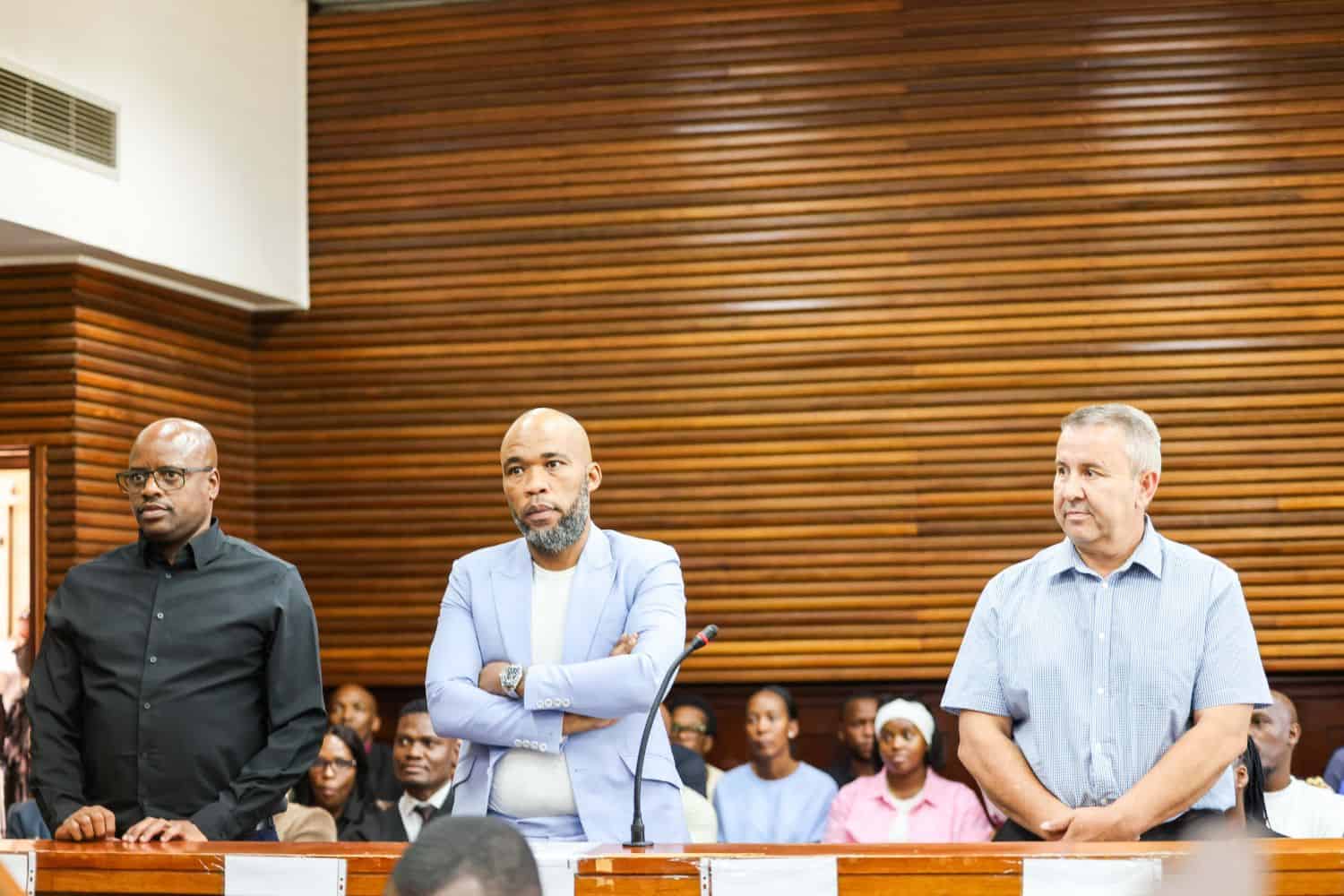
The case also stems from allegations surrounding the installation of blue lights on vehicles belonging to Matlala.
According to the charge sheet, three of Matlala’s companies paid R70 000 into Mkhwanazi’s personal bank account, while Steyn stands accused of facilitating the installation of blue lights.
Matlala remains in custody, while Mkhwanazi and Steyn are out on R10 000 bail each.
Mkhwanazi is, however, being held in connection with the murder case involving the death of Emmanuel Mbense, after his application to be released was rejected by the Brakpan Magistrate’s Court.
He was fired from the EMPD in September.