South Africa's water crisis is escalating into a severe infrastructural and socio-economic threat.
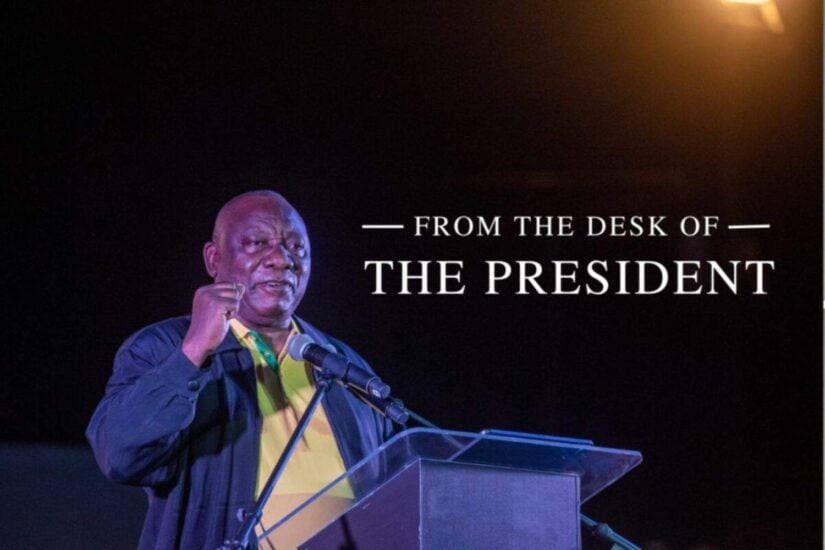
President Cyril Ramaphosa. Picture: The Presidency.


President Cyril Ramaphosa has admitted that collapsing infrastructure and poor municipal management have worsened South Africa’s water crisis, warning that urgent reform is needed to avert a nationwide threat to supply and quality.
South Africa’s water crisis is escalating into a severe infrastructural and socio-economic threat, with an estimated R400 billion to R900 billion required to fix failing municipal water systems, upgrade infrastructure, and prevent systemic water losses.
Water crisis
The crisis is characterised by chronic supply disruptions, ageing infrastructure, and collapsing water quality, leaving many municipalities-particularly in the Gauteng province-experiencing intermittent cuts, low pressure, and sometimes weeks-long outages.
Last week, WaterCAN warned that South Africa’s worsening water crisis has highlighted the urgent need for citizens to play a greater role in monitoring water quality and holding authorities accountable, arguing that safe drinking water cannot depend on government action alone.
Government
As the country battles an escalating water crisis, Ramaphosa, in his weekly newsletter on Monday, admitted that the government has not succeeded in maintaining infrastructure, properly managing water services, or responding with sufficient urgency.
“Parts of our country are experiencing worsening water shortages and deteriorating water quality. In some places, ageing water infrastructure has collapsed.
“Earlier this year, we established the National Water Crisis Committee to coordinate interventions across government. The committee is focused on strengthening municipal water and sanitation services, increasing water infrastructure investment, reforming water sector institutions, improving the legal and regulatory framework, and addressing corruption and criminality in the sector,” Ramaphosa said.
Sustainable solutions
Ramaphosa added that, like the energy crisis, sustainable solutions require putting the necessary building blocks in place rather than relying on quick fixes.
“Our response to the water crisis focuses on sustainable, long-term reform.”
He said the National Water Action Plan brings together national, provincial and local government, water boards, regulators and water service authorities around a single programme of action, with clear responsibilities and timelines.
“A number of immediate interventions are already being implemented, including rolling out emergency infrastructure projects such as the boreholes in Hammanskraal. These will continue to be expanded to reach more communities.”
Legislative and regulatory reform
The president said legislative and regulatory reform is also continuing, adding that a National Water Resources Infrastructure Agency has been established to coordinate investment in bulk water infrastructure.
“Public hearings will soon begin on the Water Services Amendment Bill, which will strengthen enforcement and enable municipal managers who fail to manage water infrastructure to be held personally liable.
“Over the next three years, government has allocated R156 billion to water and sanitation infrastructure as part of its broader public infrastructure investment programme,” Ramaphosa said.
Criminal proceedings
Ramaphosa added that municipalities are on the frontline of service delivery and must be supported to fulfil this critical mandate.
“The National Treasury is supporting municipalities towards financial sustainability, including ensuring that revenue from water goes to the water entities so that it can be reinvested in infrastructure.
“Where municipalities or officials fail to comply with environmental and water-services legislation, government will use the enforcement mechanisms available to it, including directives, criminal proceedings and, where the law permits, personal liability,” Ramaphosa said.
Ramaphosa said expanding water access has been one of the “most important achievements of our democracy.”