The project needs more than R109 million more to be complete. Should we have given money to the project?
A luxury hotel for African parliamentarians? Picture: Instagram/ cpaafrica


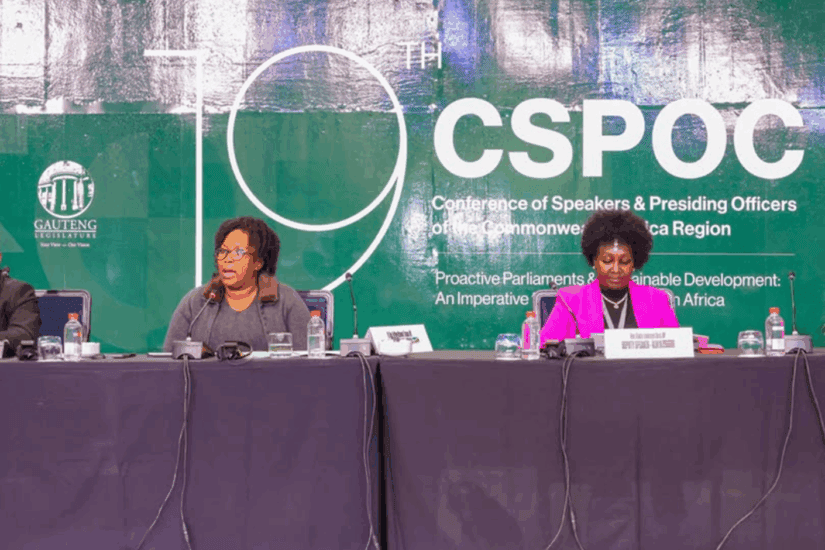
Delegates attending the 19th Conference of Speakers and Presiding Officers of the Commonwealth (CSPOC) Africa Region on Thursday debated whether to fund a hotel project that could become a cash cow and base for the continent’s parliamentarians.
The conference emphasises the role of Parliamentarians in enhancing public trust in governance under the theme “Proactive Parliamentary and Sustainable Development: An Imperative for Political Stability in Africa”.
A key item on the agenda was a proposal from the Treasurer of the Commonwealth Parliamentary Association (CPA) Africa Region, Enos Asiiwe of Uganda, to secure funding to complete a hotel development project in Dodoma, Tanzania.
The project promises to generate sustainable revenue for the association, support parliamentary programmes, and provide accommodation for parliamentary officials during official visits.
We need your money
Describing the initiative as “an investment in the future of the region,” Asiiwe informed delegates that while the title deeds for the land donated by the Tanzanian government are already in the CPA’s possession, the project currently faces a funding shortfall of approximately US$ 6.65 million (R109 million).
To address the deficit, the CPA proposed that the 19 parliamentary branches represented at CSPOC contribute towards the completion of the project.
Delegates heard that the development could provide a long-term source of income for the organisation and reduce reliance on external funding for future parliamentary activities.
The proposal received support from Botswana, Cameroon, Eswatini, Lesotho and Tanzania, with representatives highlighting the potential benefits of a self-sustaining financial model for the region.
However, discussions also raised concerns regarding the affordability of the proposed contributions, particularly for smaller parliamentary branches facing budgetary constraints.
Delegates debated how the funding model could be structured in a manner that accommodates varying financial capacities while ensuring the successful completion of the project.
Why SA said no
The South African delegate for the National Council of Provinces, Bhekizizwe Radebe, said that, due to local laws and policies, it would not be possible for South Africa to contribute unless funds are raised through other initiatives.
Gauteng
On day one of the conference, acting Gauteng Premier Faith Mazibuko highlighted the province’s role as an economic powerhouse, while emphasising the need to unlock intra-African trade and advance industrial development across the continent.
“Gauteng is deliberately positioning itself as a global city region. It is envisioned as a province that is globally connected, economically competitive, technologically advanced and environmentally sustainable,” Mazibuko said.
She noted that to bring this vision to life, Gauteng aims to be a destination of choice for investors while focusing on growing the economy, creating jobs, and enhancing community safety in both the province and the country.
While Gauteng remains the smallest province in the geographical perimeters of Southern Africa, Mazibuko said it is still the economic heart of South Africa, contributing more than a third of the country’s GDP.
She described the province as a culturally diverse region and added that Gauteng’s success “cannot be separated from the whole of Africa” as the province is in many ways a bridge between South Africa and the rest of the continent.