
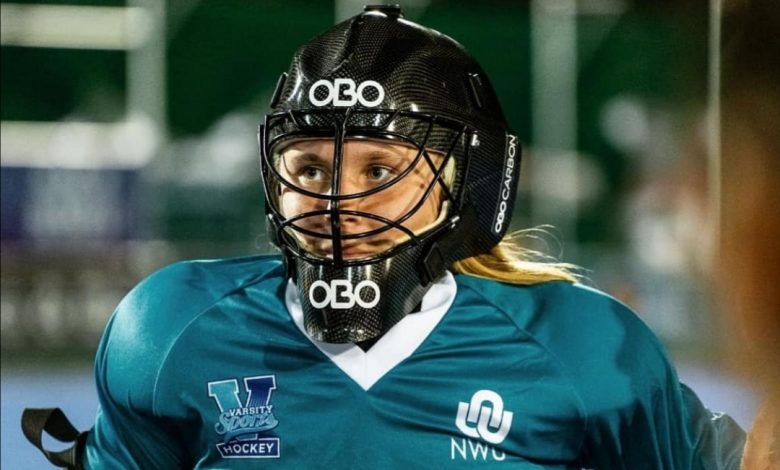
The feeling of making a vital save to deny the opposition a goal is what motivates and excites the NWU women’s hockey goalkeepers, Mishka Ellis and Caitlin Grant.
Being a hockey goalkeeper is not everybody’s first choice, but if you choose that position, then you own your goal and make sure you are a rock-solid last line of defence. It’s not glamorous, but such a necessary cog in a championship-winning team. Just ask Ellis and Grant, who were part of the 2019 Varsity Cup women’s hockey team that won gold after beating Maties in a shootout.
Ellis was the hero in Stellenbosch on that night when she denied Maties victory with brilliant saves, sending the NWU to their first Varsity Hockey title.
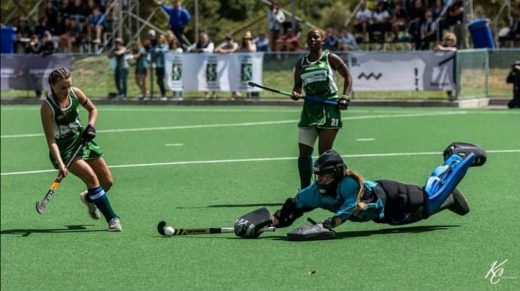
Ellis grew up in the Strand in the Western Cape and attended HMS Bloemhof. She is currently a second-year B.ed. Intermediate-phase student. Besides, the former Bloemhof alumni is also an SA u.21 goalkeeper and has all the necessary credentials to stake a claim that this position is one of the most important on the field.
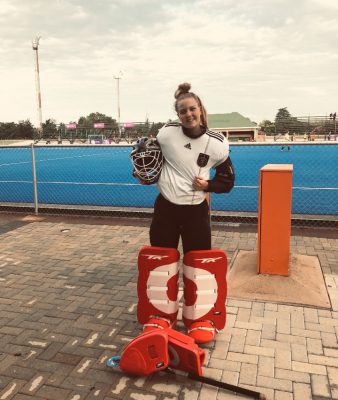
Grant is an East Coast girl from Pietermaritzburg Girls’ High School and is currently a third-year student studying a bachelor of health sciences with sports coaching and human movement sciences. She started hockey, mainly because of her energy levels as a kid.
“A goalkeeper should be flexible and have good reactions, but, most importantly, you have to be agile. Your mindset also makes a big difference. Goalkeepers need to stay composed at all times and your communication must be very effective and efficient. The negatives of goalkeeping would be that if you make a mistake, unlike the other players, it usually ends up on the scoreboard. There are certainly moments where there is no room for error. Some would describe it as a very emotional position because of the responsibility and purpose of the position. Not everyone is cut out for it. It takes an exceptional human to be a goalkeeper,” states Ellis.
“On the positive side, the position allows you to really make a differ-ence and you’ll know very well if you’ve made a difference or not. The best part of goalkeeping is bringing a sense of trust, confidence, safety and structure into a team. If a team trusts the goalkeeper, they are more confident in attack,” she adds.
“When I tried goalkeeping out for a match in Grade 4, I immediately took an interest in the goalkeeping pads because I felt like a transformer. I enjoy the challenge of being able to push my body to its full extent, having extra space in my goalkeeping kit to pack when going on tours and having the ability to make insane saves.
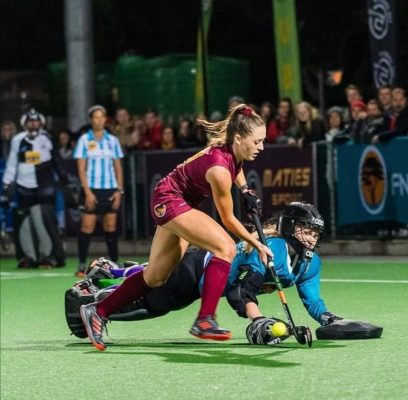
Grant also delves into the not-so-glamorous and spectacular elements of the position in her unique way.
“The negatives are bruises, looking like the Oros man and dealing with the smelly kit,” she exclaims.
“You need to possess flexibility, mobility, mental strength, agility and fearlessness to be a good hockey goalkeeper.
I love making game-changing saves,” mentions Grant.
Ellis has the same mentality when it comes to being a goalkeeper, with saves being as priceless as gold.
“The most satisfying part of goalkeeping is saving a goal that the opposition thought would certainly go in. It is so entertaining to see the ‘access-denied look’ on their face. It changes the whole dynamic of the game.”
Playing for the NWU has given Grant and Ellis massive opportunities to improve their game and feel part of the hockey family. They both agree that the best moment in an NWU hockey shirt was to win that 2019 Varsity Hockey medal.
“What makes NWU special to me is that it is a family, from team-mates to coaches, to staff. Having their support on and off the field and when it comes to studies, the NWU hockey has always been there for me,” says Grant.
“NWU hockey is like a big family. I think what separates it from other hockey clubs is that the staff goes out of their way to give you the best opportunity to compete,” adds Ellis.
Naturally, the hockey goalkeeper has been given some stick because of the misconception that it is “boring”.
According to Ellis and Grant, this couldn’t be further from the truth; making one or two saves can determine the outcome of the match. It is that “ready for anything” mentality and the ability to switch on in an instant that make this position so unique.
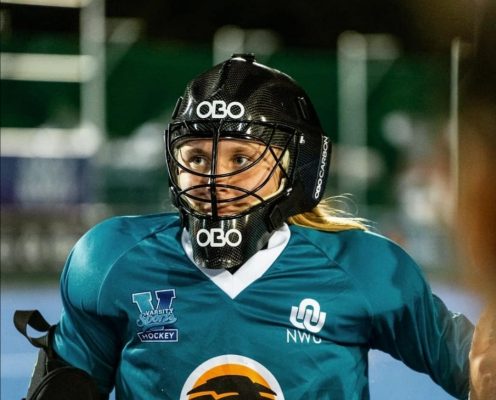
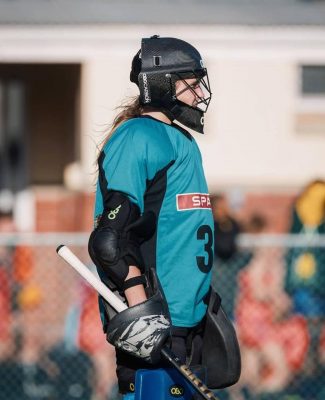
“The importance of a goalkeeper’s role in a team and the difference they make are undeniable. If a team has a good goalkeeper, the match instantly becomes tougher for the other team. I’ve experienced countless scenarios where a big part of a team’s game plan revolves around the goalkeeper’s ability. Many coaches analyse the opposition keepers’ weaknesses and strengths. I can say from first-hand knowledge that this can be the difference between a win or loss,” states Ellis.
Grant’s hockey role model is Ireland’s national men’s goal- keeper, David Harte. Ellis does not have a traditional role model and states that she looks up to various individuals while learning from the behaviour and habits of others.
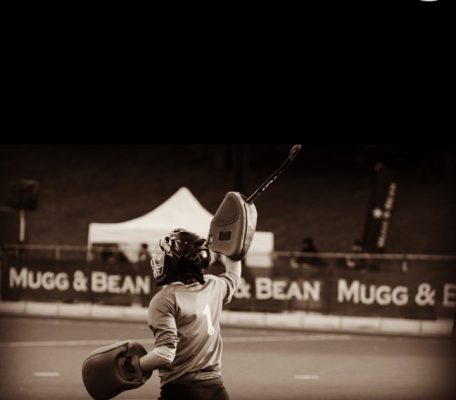
“My main focus at the moment is making the SA u.21 team for the Junior World Cup. Then my focus would be on making the SA women’s side and starting the matches in goal,” emphasises Ellis.
Grant would like nothing more than sporting another gold medal for the NWU and repeat the heroics of 2019.
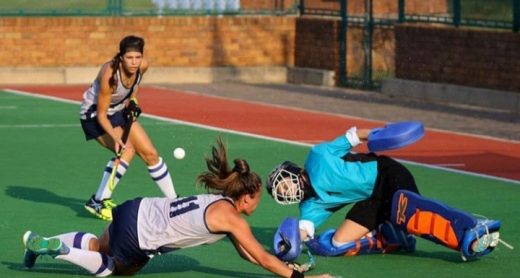
If she continues on this road, then she and her NWU teammate in goal will leave the opposition scratching their heads with a “how did that not go in?” look on their faces.
At the same time, behind the mask, is a Cheshire cat-like smile on these NWU goalkeepers’ faces after shutting the door to goal once again.