South Africa has lifted the AFCON trophy before. The benchmark remains the class of 1996.
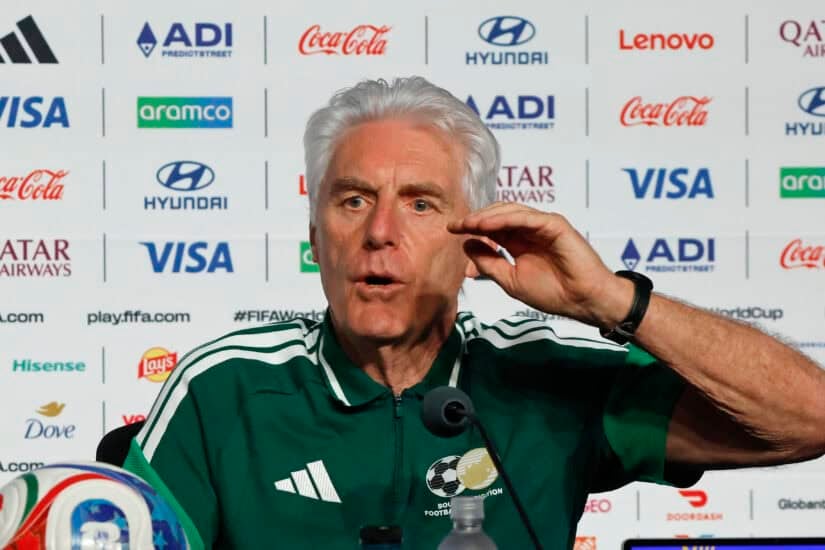
Hugo Broos during the FIFA World Cup 2026, South Africa Press Conference at the Atlanta Stadium, Atlanta, America on 17 June 2026 ©Gavin Barker/BackpagePix


Whether Hugo Broos leaves Bafana Bafana coach when his contract expires at the end of this month or is handed a short-term extension until next year’s Africa Cup of Nations (AFCON), one thing is beyond dispute – the South African Football Association (SAFA) has failed to provide decisive leadership.
Broos in limbo
The uncertainty surrounding Broos’ future has dragged on for far too long. The Belgian made it clear before the 2026 FIFA World Cup that he was stepping down, yet SAFA still appears to have no definitive plan. Instead, the football public has been treated to a series of denials over who will lead the national team into the next cycle.
That uncertainty has been fuelled by SAFA’s reluctance to make a clear announcement. When an association hesitates, information inevitably leaks, speculation gathers momentum and confidence in its leadership begins to erode. A straightforward decision on whether Broos is staying or leaving would have spared South African football weeks of unnecessary debate.
Broos himself has done little to calm the situation. His comments from Belgium suggesting that he is finished with Bafana have only added to the confusion. Such mixed messaging benefits neither the coach nor the association.
Should SAFA decide to retain the 74-year-old, it cannot simply be to reward him for his past achievements. The objective must be crystal clear, qualify for the 2027 AFCON and win the tournament.
Broos guided South Africa to a bronze medal at the 2023 AFCON in Côte d’Ivoire and then led the team to a historic place in the knockout rounds of the 2026 FIFA World Cup. Those accomplishments restored belief in the national team and deserve immense credit.
Mandates must be set
However, football is ultimately judged by what comes next, not what has already been achieved. South Africa has lifted the AFCON trophy before. The benchmark remains the class of 1996, and the logical progression for this current generation is to compete for the title once again.
Merely participating or reaching the latter stages should no longer satisfy a team that has shown it can compete against stronger opposition. Equally concerning is SAFA’s apparent lack of succession planning. A coach who had openly hinted at leaving should already have had a successor identified or, at the very least, a clear transition strategy in place.
There is also a sense that Broos may feel his legacy is already secure. He has rebuilt a struggling national team, restored its credibility and taken Bafana back onto the global stage.
Winning the AFCON might not even be a priority for him. Anything less than lifting the trophy at the next AFCON, which will be co-hosted by Kenya, Uganda and Tanzania, should be viewed as a failure if Broos is handed an extension.
If Broos remains in charge, it must be because SAFA genuinely believes he can deliver the AFCON trophy. If there is any doubt about that, then the association should begin a new chapter immediately by appointing a successor capable of building towards the 2030 FIFA World Cup.