
Hotel comes out of the Wilderness

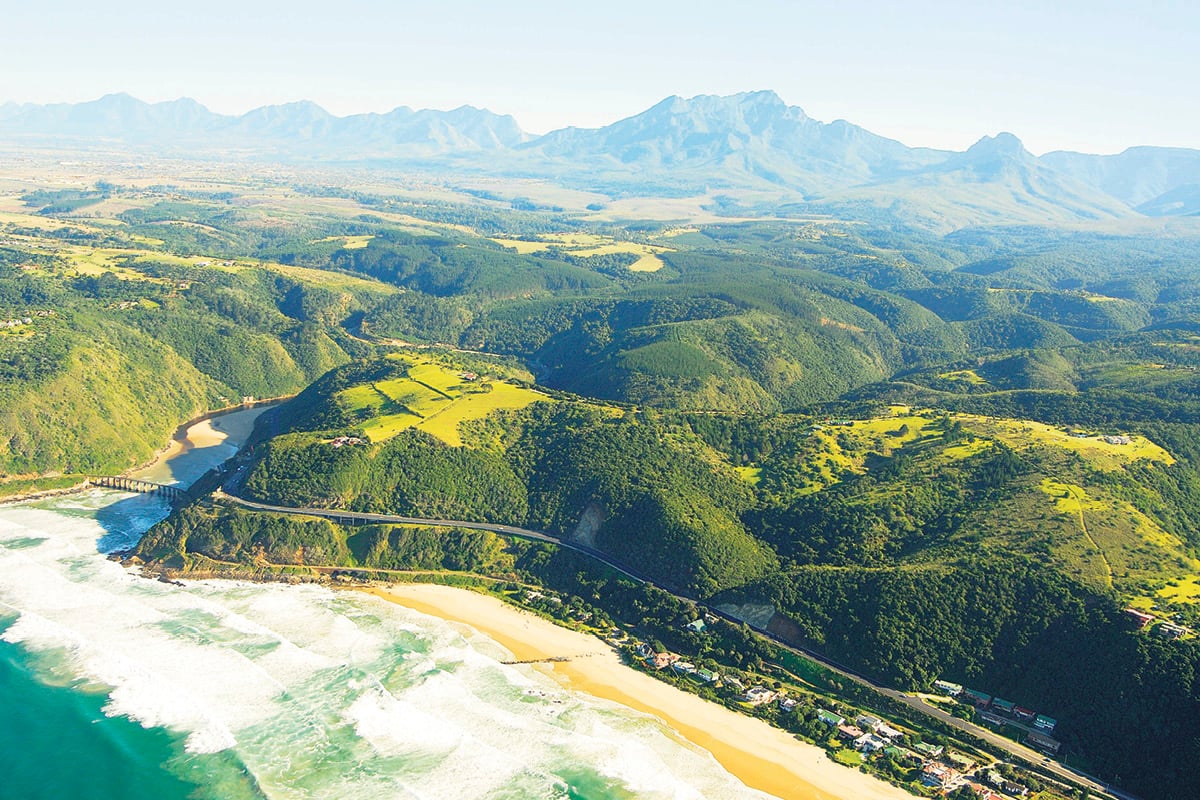
SILVER LINING. Winter clouds gather above the Touw River lagoon, where changing weather adds drama to an already spectacular landscape. Pictures: Supplied/iStock


Few hotels on the Garden Route occupy as important a place in South African tourism history as the former Wilderness Hotel.
For generations it has welcomed holidaymakers drawn to the meeting point of the Touw River and the Indian Ocean.
Now, under the stewardship of ANEW Hotels & Resorts, the landmark property has undergone its most significant transformation in years, emerging as ANEW Resort Wilderness Garden Route without losing the character that made it an institution.
Having visited the property regularly over many years, albeit never as an overnight guest, I was curious to see whether the refurbishment would honour its heritage or simply modernise it.
The answer became apparent within minutes of arrival.
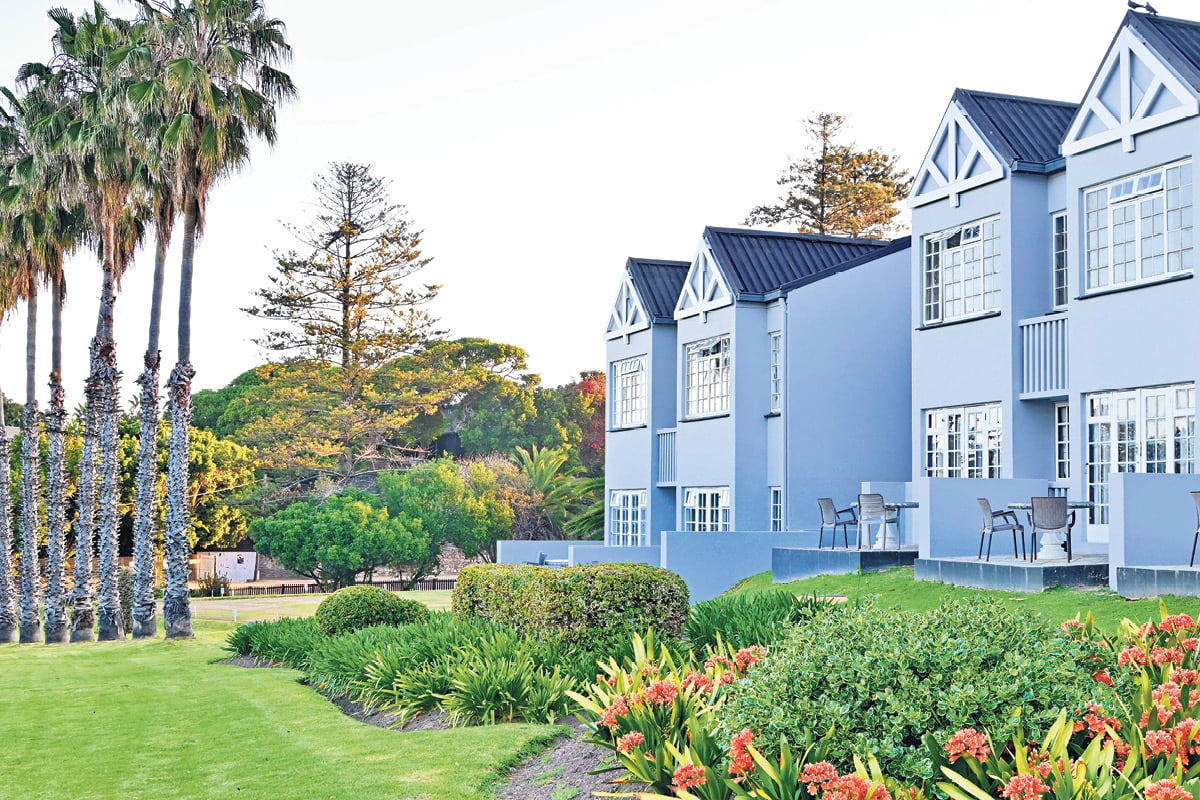
The exterior has been freshly painted, but the more meaningful changes begin inside.
The once-dark and rather dated reception foyer has been transformed with lighter finishes, cleaner lines and a far more contemporary feel.
Recently graded as a four-star property, the welcome nevertheless feels notably more generous, with chilled towels, sparkling wine and attentive staff setting an immediate tone of relaxed hospitality.
The most impressive changes are found on the first floor, where the hotel’s principal public spaces were thoughtfully reimagined.
A striking contemporary light installation now draws the eye above the staircase, while the spacious lounge successfully balances old and new.
Deep leather sofas and high-backed armchairs from the previous incarnation have wisely been retained, preserving the warmth and familiarity long associated with the property.
The décor also acknowledges the building’s history.
Vintage Visit Wilderness tourism posters remain, now complemented by carefully chosen prints celebrating destinations around the Mediterranean and southern Europe.
The comparison is understandable, although Wilderness arguably possesses an authenticity and natural beauty many celebrated international destinations have long surrendered to overtourism.
Winter, in particular, reveals another side of the destination.
Crisp mornings give way to clear, still afternoons, and even after passing showers the sun frequently returns.
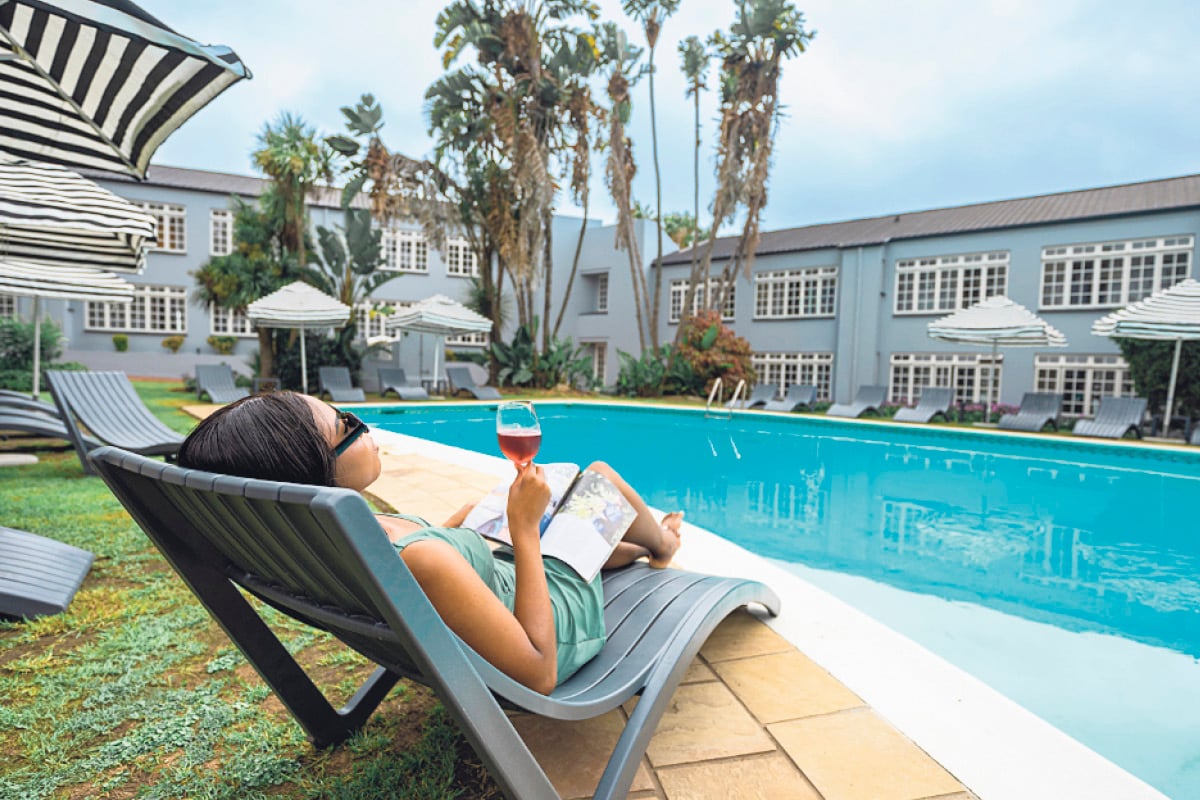
Sitting beside the pool wrapped in winter sunshine proved every bit as enjoyable as a midsummer afternoon.
Perhaps the most successful addition is the new horseshoe-shaped bar, which has transformed what was once an underused space into the social heart of the hotel.
The aroma of freshly brewed coffee, sound of cocktails being prepared and the gentle rhythm of guests gathering throughout the day have given the lounge an energy it previously lacked.
The expansive grounds accommodate tennis, padel, squash, bowls and mini-golf, while extensive lawns provide ample room simply to unwind.
Beyond lies protected public open space where the property’s original vegetable gardens once supplied the hotel kitchens.
The property traces its origins to 1877, when English settler George Bennett established accommodation near the mouth of the Touw River.
In 1928, it became known as The Wilderness Hostel, coinciding with the opening of the George-Knysna railway, which significantly improved access to what was then a remote stretch of coastline.
Those improved transport links played an important role in establishing Wilderness as one of South Africa’s earliest seaside holiday destinations.
During the British Royal Family’s 1947 tour of South Africa, Princess Elizabeth, the future Queen Elizabeth II, and members of the royal party spent time in the Wilderness area, further cementing the region’s growing reputation as a holiday destination.
General manager Brandon Schafli believes Wilderness continues to occupy a unique position on the Garden Route, despite the area’s steady growth.
“The natural beauty is what anchors everything. Wilderness has grown substantially over the years, yet it has somehow retained a magical character few destinations manage to preserve,” says Schafli.
“Today’s visitors arrive for the scenery, but increasingly stay for the breadth of experiences.”
That sense of continuity is evident.
While contemporary finishes have refreshed the interiors, the property’s history has not been erased.
Historic photos lining the corridors quietly document successive chapters in the hotel’s evolution, creating what feels less like a themed display than a living archive.
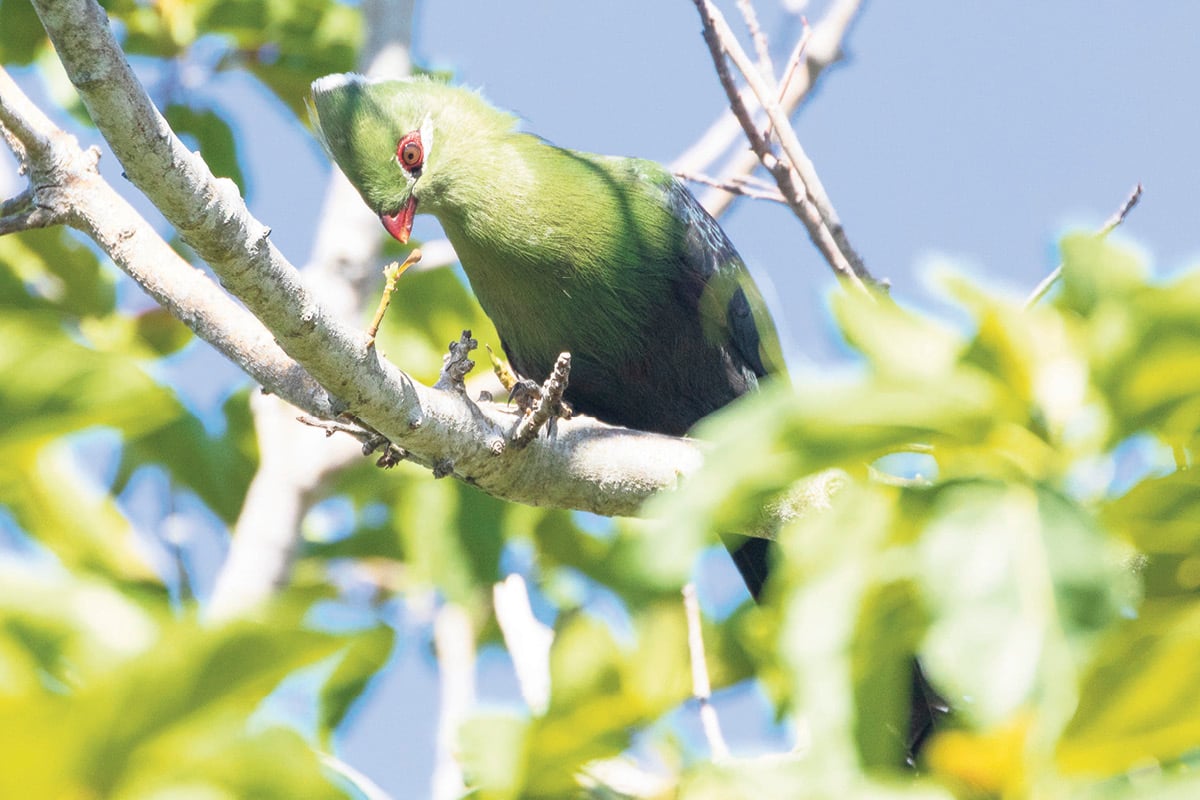
The Loerie Restaurant, named after one of the Garden Route’s most recognisable birds, has benefited from the same thoughtful redesign.
Brighter interiors have modernised the dining room without sacrificing its relaxed atmosphere.
Under the direction of Wesley Puxley and Hendrik Jansen, the kitchen produces a menu broad enough to satisfy families, leisure travellers and conference guests.
It is at breakfast, however, that the restaurant makes its strongest impression.
The buffet is one of the better hotel breakfasts on the Garden Route.
Alongside excellent fresh fruit, quality cold meats and house-made muesli are thoughtfully South African touches, including amagwinya, the pillowy-fried bread more widely known as vetkoek in Afrikaans, served with a range of accompaniments.
House-pickled carrots and onions add welcome acidity, while marinated olives with a gentle chilli warmth demonstrate unusual attention to detail.
One evening we were served a private three-course meal beside the lounge fireplace by the gracious Wilmarie Bruiners, whose warm, unobtrusive service exemplified the hotel’s hospitality.
The highlight was a recently introduced 400g bone-in beef fillet, finished with a rich blue cheese sauce.
Perfectly cooked and deeply flavourful, it demonstrated a kitchen increasingly confident in producing dishes that go well beyond dependable hotel fare.
The refurbishment extends beyond bricks and mortar.
One of ANEW’s more astute decisions has been to strengthen partnerships with local operators, recognising today’s travellers increasingly judge a destination by the experiences available beyond the hotel itself.
Among these is Sedgefield-based Dawn to Dusk Adventures, whose activities desk sits adjacent to reception.
Guests can choose from whale watching, kayaking, hiking, paragliding and numerous other outdoor pursuits, but we opted to explore Wilderness by electric mountain bike.
Our guide, Mxoli Stix, immediately inspired confidence.
Before venturing onto the roads, he patiently introduced us to the bikes on the open field opposite the hotels.
His relaxed manner, combined with an obvious affection for the area, transformed what could have been an intimidating outing into one of our highlights.
The route follows quiet roads climbing steadily above Wilderness towards one of the Garden Route’s best-known viewpoints, the Map of Africa.
Named for the remarkable shape formed by the winding Kaaimans River valley, the viewpoint offers a perspective that has become one of the region’s defining photographs.
I had approached the excursion with apprehension, imagining a demanding climb.
The electric assistance, however, removes much of the physical effort, while preserving the pleasure of cycling.
Long before ANEW acquired the landmark, The Wilderness Spa had earned a loyal following in the Garden Route.
It remains one of the hotel’s greatest assets.
Many of my previous visits to the property were specifically to experience the spa, whose facilities have long ranked among the region’s finest.
Happily, that reputation remains intact.
Equally reassuring is the continued presence of Jacques Lodewyk, whose massage treatments have developed something of a following over many years.
One of the challenges facing historic hotels is remaining relevant without sacrificing their identity.
Too often, refurbishment becomes reinvention.
ANEW has largely avoided that trap.
The contemporary interiors sit comfortably alongside more than a century of history.
Original architectural character has been respected, heritage photographs remain proudly displayed and long-serving staff continue to provide continuity that returning guests value.
The most successful restorations are rarely those that erase the past.
They are the ones that understand it, respect it and quietly allow it to evolve.
ANEW Resort Wilderness Garden Route succeeds precisely because it does all three.