
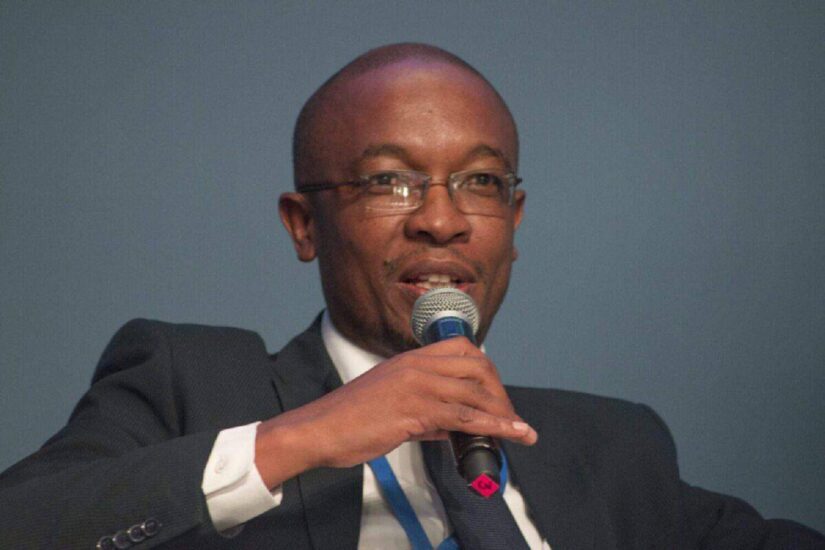
Deputy Minister Zuko Godlimpi said the department's primary task is to convert improving economic conditions
Trade, Industry and Competition Minister Parks Tau. Picture: Getty Images


The Department of Trade, Industry and Competition (DTIC) has set its sights on creating more than 100 000 employment opportunities in the upcoming financial year. It will do this as it rolls out a range of industrial and investment-focused programmes.
The ambitious target forms part of the department’s Annual Performance Plan (APP). This plan was presented to Parliament’s portfolio committee on Tuesday.
Focus on industrialisation and growth
Minister of Trade, Industry and Competition Parks Tau said the APP focuses on inclusive growth, job creation and poverty reduction.
“This APP will outline our priorities for the coming financial year, including placing emphasis on our new industrial policy, our investment targets and our trade relations, emphasising implementation and moving from the foundation we built in the previous financial year,” Tau said.
He added that the department aims to translate policy into tangible economic outcomes. It will do this by driving industrial expansion and improving trade performance.
SEZs and industrial parks key to job creation
Director-General Simphiwe Hamilton highlighted the role of special economic zones (SEZs) and industrial parks in boosting employment.
“Within this programme, our target this financial year is to ensure 15 industrial parks are revitalised into competitive infrastructure platforms to support sector diversification in marginalised areas. We are also gearing to operationalise 10 of 12 special economic zones,” Hamilton said.
These initiatives form part of broader “catalytic instruments” that include incentives, export promotion and global business services.
Hamilton also revealed that up to R4 billion will be disbursed through incentive schemes. These incentives will go to businesses that comply with the Broad-Based Black Economic Empowerment Act.
Turning stability into jobs
Deputy Minister Zuko Godlimpi said the department’s primary task is to convert improving economic conditions into real job opportunities.
“South Africa is entering a period where the foundations for growth are being rebuilt through greater stability in energy, logistics and fiscal conditions, and the responsibility of the DTIC is to ensure that this momentum translates into productive sectors of the economy,” Godlimpi said.
“Our focus in the year ahead is to deepen re-industrialisation, expand exports, strengthen investment mobilisation and advance transformation through practical instruments that widen participation for black-owned enterprises, SMMEs, women and young people.”
Enabling business growth
Deputy Minister Alexandra Abrahams said the APP prioritises creating an environment where businesses can expand and hire at scale.
“The DTIC’s approach this year is therefore grounded in creating the conditions for businesses to grow, compete and employ more South Africans at scale,” Abrahams said.
“Sustained job creation will come from a stronger, more competitive economy, supported by practical policy interventions to advance the economy, improved coordination across government, and consistent implementation that translates commitments into measurable outcomes.”
Investment bill to cut red tape
A key pillar of the plan is the proposed Omnibus Industrial Development and Investment Acceleration Bill. This bill is aimed at boosting investment and easing regulatory hurdles.
The bill seeks to accelerate industrial development, improve the ease of doing business and reduce red tape. All these steps are seen as critical to unlocking job creation and economic growth.