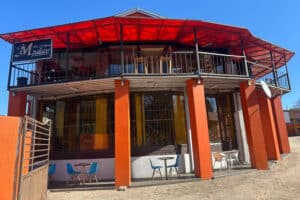
Verification processes revealed some spaza shops did not exist.
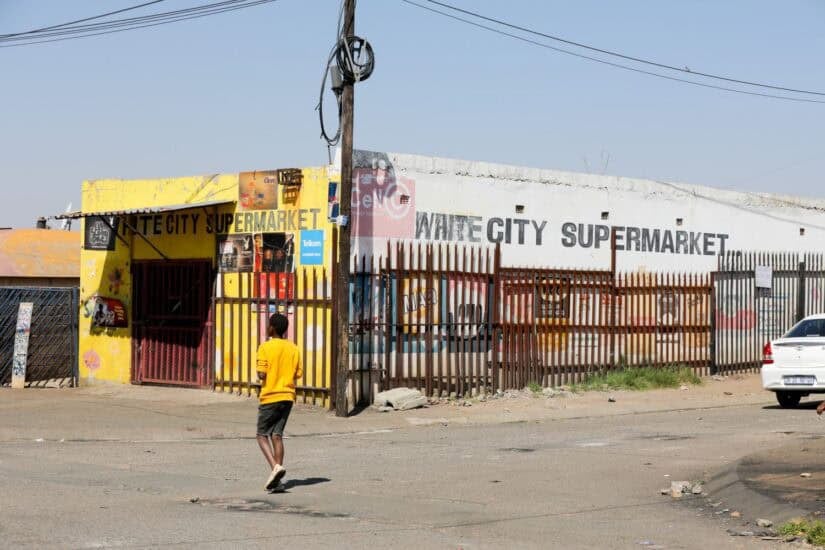
For illustrative purposes. Picture: Gallo Images/Fani Mahuntsi


The Department of Small Business Development says R179.5 million from the Spaza Shop support fund has been spent on qualifying businesses around South Africa.
The R500 million Spaza Shop Support Fund is a joint initiative between the Department of Small Business Development (DSBD) and the Department of Trade, Industry and Competition (DTIC). The Small Enterprise Development and Finance Agency (Sedfa) and the National Empowerment Fund (NEF) have been appointed as implementing agencies to ensure the funds reach qualifying businesses.
DSBD Director-General Thulisile Manzini led a media briefing in Pretoria on Friday to provide an update on the fund. She expressed concern that some of the businesses which have applied for the fund were rejected because they did not meet the criteria, which is why only a proportion of the money has been spent since the fund was established in April 2025.
Spaza shop licence key to receiving funds
Manzini highlighted that one of the key criteria is that business owners must have a valid spaza shop licence or trading permit from their respective municipalities, which some still do not have.
To date, the fund has received 4 522 complete applications nationally, of which 4 240 have been assessed, but only a few were granted support.
“The assessment process continues to highlight a key structural constraint within the sector, with only 58% of applicants linked to valid business licensing or temporary permits issued by municipalities,” she said.
“As a result, a significant number of applications remain unable to progress until licensing and compliance requirements have been addressed.”
Registration does not guarantee spaza shop licence
According to the director-general, municipalities have reported approximately 82 000 spaza shops registered nationally. Subsequent verification confirmed 44 696 registered businesses, of which approximately 15 000 were able to obtain approved trading permits or licences.
“It is important to distinguish that registration does not equate to licensing,” said Manzini. “Spaza shop owners are therefore required to secure trading permits or licences through their respective municipalities to achieve full compliance and access funding opportunities.”
She acknowledged that the aforementioned gap continues to highlight systemic challenges within the licensing environment, including municipal backlogs driven by manual processes, shortages of environmental health practitioners required for inspections and certificates of acceptability, and complex zoning requirements.
“To address these constraints, we are working closely with municipalities to promote conditional licensing, expand the use of digital and electronic licensing systems and strengthen intergovernmental coordination,” Manzini added.
Some businesses do not exist
She said verification processes had revealed that some of the people who have applied for the support fund do not operate a spaza shop.
“And as part of ensuring the integrity of the programme, site visits and verification processes have identified the 354 applications that could not be processed due to non-compliance, including non-existent businesses, ownership discrepancies, and inconsistencies between the applicants and the operators.”
Only 2 369 businesses were collectively approved by Sedfa and the NEF for support through the fund. These are the businesses that met all the programme requirements, and approval rates remain at 100%, “demonstrating the government’s commitment to supporting qualifying South African-owned spaza shops”, said Manzini.
R179m allocated to businesses
She said Sedfa had approved 1 316 applications valued at R79.6 million, while the NEF approved 1 053 enterprises valued at R99.9 million.
“So collectively, the two implementing agencies have approved support to the value of approximately R179.5 million across all nine provinces,” said Manzini.
“The approved support includes the stock purchases, point-of-sale devices, infrastructure upgrades, inventory support, business improvements, and non-financial business development support, which is designed to improve sustainability and competitiveness within the township and the rural retail sector.”
Limpopo and Eastern Cape leading with applications
Sedfa acting CEO Nkosikhona Mbatha said some provinces are ahead in applying for licences from their municipalities and being approved for a share of the fund.
“Quite a number of applications coming from the provinces of again coming from the provinces of Limpopo, and to a certain extent also in the Eastern Cape,” he said.
“And the process in terms of us working and also making sure that the fund goes to the right people is that post the application that we would have received we then do our own in our verification and we then do site visits for those businesses, but post the site visits, you find that then the next step will be to write to municipalities and ask them to confirm if indeed the licences that have been issued indeed or that we’ve received ourselves, they did issue those licences.”
Fraudulent licences
Mbatha added that sometimes their verification process reveals that the business licence owners who used to apply for funding are actually fraudulent.
“Some of them within that number, we found that actually when you go on site, there’s no spaza shop at all,” he explained.
“Or you go inside, you find that the person who applied is not the same person who is running the spaza shop, or the location is totally different from what has been declared.
“And those are the challenges that we face.”