Despite rising inflation and volatile oil prices.
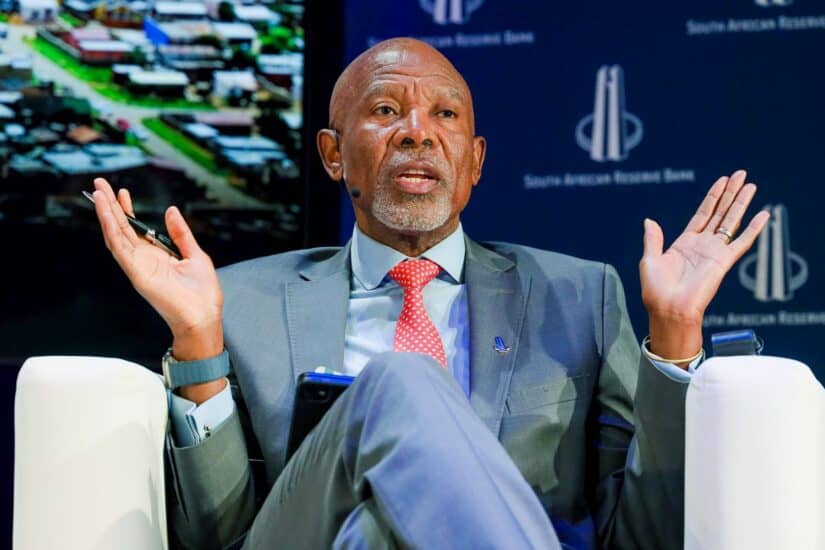
SA Reserve Bank Governor Lesetja Kganyago. Picture: Gallo Images/Fani Mahuntsi


Only seven of the 43 economists participating in the BMR/Unisa Economist of the Year Competition expect an interest rate hike on Thursday, when the South African Reserve Bank (Sarb) announces its final monetary policy decision of 2026.
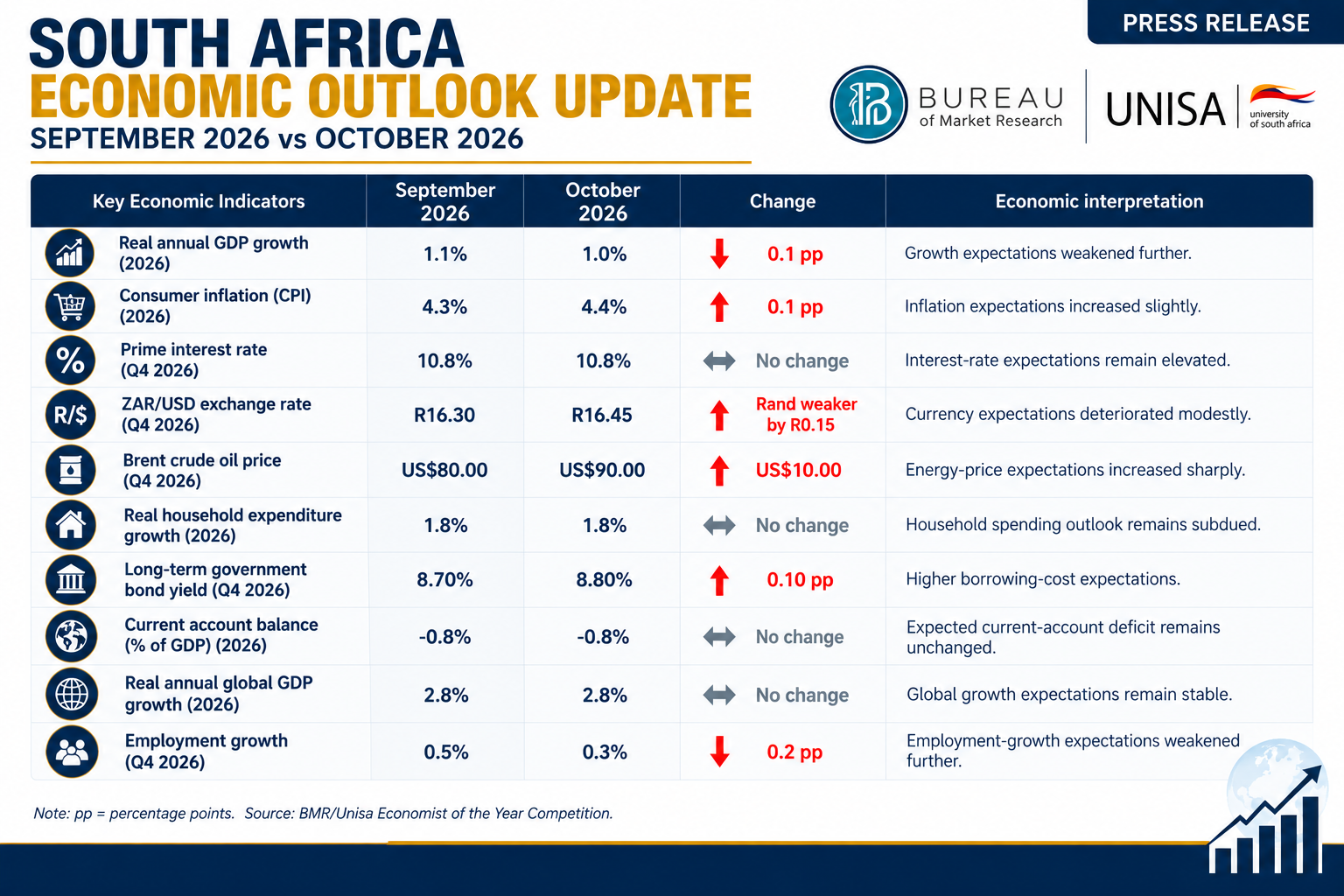
The private- and public-sector economists taking part in the competition make monthly predictions from February to December on key annual and fourth-quarter economic indicators.
In September, there was broad consensus among participants that there would be no further repo rate hikes in 2026.
However, this view has shifted following persistently high inflation, highlighted by Statistics South Africa’s October inflation figure of 5.2%, released on Wednesday.
Professor Carel van Aardt, chief operating officer of the Bureau of Market Research (BMR), told Moneyweb the seven economists, although in the minority, “feel that the central bank may want to curb rising inflation with a 25-basis-point hike”.
The repo rate currently stands at 7.25%, following the Sarb’s 25-basis-point increase in September.
Oil price could rise further
Economists participating in the competition now forecast an oil price of $90 a barrel for the fourth quarter, $10 higher than their September projections and broadly in line with current trading levels.
Several of them believe prolonged hostilities could keep international oil prices elevated for the remainder of 2026, revising earlier expectations that geopolitical tensions would ease, according to the competition’s press release.
Van Aardt stressed that the oil price remains “volatile” and could rise further.
He said, “There were some expectations when the Middle East war started that it would be over in a few weeks, but that is generally not how wars in the Middle East work”.
“They go on for long periods, with relative peace intermingled with escalations of conflict.”
High inflation hurting consumers
When oil prices rise, so do petrol prices, straining households as they divert more income to transport, which also slows the economy, as two-thirds of South Africa’s GDP is reliant on consumer spending.
Van Aardt said the second- and third-round effects of higher oil prices are already being seen in higher costs for businesses, reduced household spending power and companies cutting staff as operating expenses rise.
Fewer jobs created
Economists also downgraded their employment growth forecasts in October, projecting growth of just 0.3% for the year, down from 0.5% in September.
Such weak employment growth is unlikely to be sufficient to absorb new entrants to the labour market, including school leavers and graduates.
Van Aardt said many graduates were taking up positions traditionally filled by people with matric qualifications, making it even harder for school leavers to find suitable employment.
On high unemployment levels, he said: “I am very concerned about the effects of growing poverty in South Africa giving rise to growing instability.”
He said economists are predicting a period of stagflation for South Africa and globally.
This is an economic condition where three things happen at the same time: slow economic growth, high unemployment, and high inflation or rising prices.
Some good news
Despite the challenging economic environment, Van Aardt said South Africa had shown resilience, with the country continuing to demonstrate fiscal discipline and financial stability.
“There is sound fiscal management by the National Treasury and very good monetary policy management by the South African Reserve Bank.
“From the view of rating agencies, there are good things happening.”
* Moneyweb is the media partner of the 2026 BMR/Unisa Economist of the Year Competition.
This article was republished from Moneyweb. Read the original here.