Woolworths Food in South Africa remains the group's star.
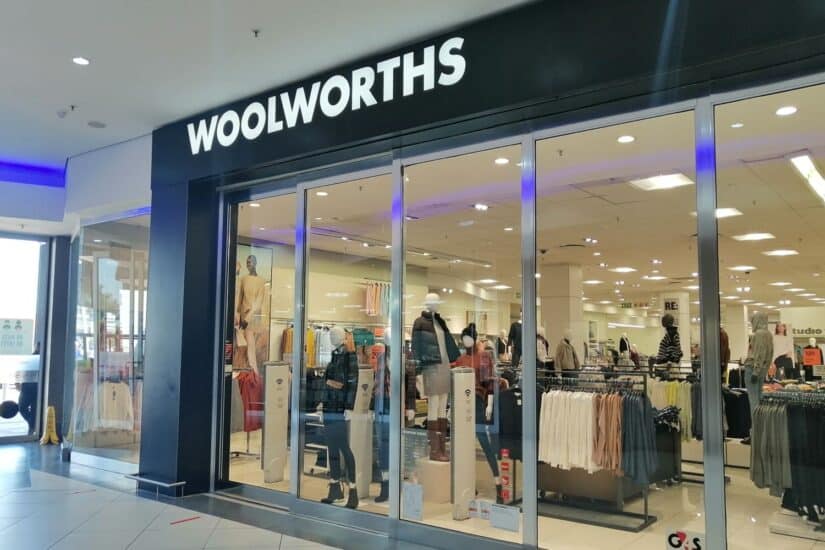
A Woolworths store in South Africa. Picture: Gallo Images/Luba Lesolle


Woolworths Group has released its trading update for the 19 weeks ended 8 November 2026, revealing a constrained consumer environment in South Africa and Australia. However, the update mostly focused on South Africa.
The premium retailer has attributed the challenging environment to high fuel prices, inflation and interest rates. Woolworths is a South African company founded in 1931, and it also operates in Australia and New Zealand.
The trading update released on Wednesday showed that Woolworths Food in South Africa remains the group’s star, with online sales contributing significantly during the period.
Woolworths sees progress in strategy
Woolworths’ financial year runs for 52 weeks, ending on the last Sunday of June each year. For the 19 weeks into financial year 2027, the retailer said it is “making good progress on our identified strategic shifts”.
It noted that its trading environment remains challenging across South Africa and Australia as households’ discretionary spend remains under pressure.
“Shoppers [are] increasingly prioritising promotional offerings and essential purchases. Within this context, Group turnover and concession sales for the period grew marginally by 0.2%, and by 0.1% in constant currency,” said Woolworths.
Woolworths Food remains the star
According to the update, Woolworths South Africa grew turnover and concession sales by 1.6% for the period, reflecting the impact of the constrained consumer environment.
Within this, the Food business delivered a turnover and concession sales growth of 1.9%, and 0.1% on a comparable-store basis.
“We continued to focus on delivering quality and innovation with convenience and value, achieving strong growth in newness,” the update read.
“Price movement averaged 3.0% for the period, while net trading space increased by 2.7%, and by 2.1% on a weighted basis. Pleasingly, online sales growth accelerated to 24.1%, and contributed 9.1% to SA Food sales, as we increased capacity and improved our customer experience.”
Current economic state in South Africa
Fuel prices in South Africa have been increasing significantly since the outbreak of the Middle East war in late February 2026.
In November, fuel prices decreased by 1 cent. 93 and 95 unleaded petrol cost R29.87 and R30.24 per litre, respectively. Diesel with sulphur content of 0.05% (500ppm) and 0.005% (50ppm) cost R30.86 and R31.60 per litre, respectively. This followed the implementation of the fuel levy cut announced by Finance Minister Enoch Godongwana.
The repo rate sits at 7.25%, and the commercial bank prime lending rate at 10.75%, effective from 25 September 2026. The next South African Reserve Bank (Sarb) Monetary Policy Committee (MPC) meeting is on 19 November 2026.
South Africa’s annual headline consumer inflation rate rose to 4.5% in September 2026 (up from 4.4% in August and 4.3% in July).
Australia
The Reserve Bank of Australia (RBA) raised the cash rate target by 25 basis points to 4.85%, marking the fifth rate hike of the year and reaching its highest level since 2008.
Australia’s annual inflation rate sits at 4.3%, up from previous months and remaining above the RBA’s target range of 2% to 3%.
Average retail prices across major Australian capital cities have risen to about 241.9 cents per litre (A$2.42/L), up roughly 23.6% to 25% over the past year due to global oil pressures and conflicts in the Middle East.
Retailer expands
The update added that Woolworths has completed the acquisition of in2food on 5 November 2026, following the fulfilment of the suspensive conditions. In2food is a South African prepared food and beverage manufacturing company.
“This acquisition will support our gross profit margin to offset the dilution from higher fuel prices and online growth,” said the retailer.
When it comes to the Fashion Beauty Home division, which has been underperforming for a few years now, its total and comparable store turnover and concession sales declined marginally by 0.3%.
“Price movement averaged 1.2% over the period, with Fashion deflation at 0.3%. Homeware – a key growth priority – grew sales by 6.4%, supported by an enhanced offering. Beauty continued to deliver positive growth, with sales growth of 3.1%, notwithstanding increased competition in this category,” read the update.
“Our ongoing focus to optimise space productivity and efficiency, resulted in net trading space decreasing by 0.7% relative to the prior period, and reduced our overall inventory level relative to last year.”
“A further trading update will be released in mid-January 2027, following the festive season trade,” said Woolworths.