Inflation for June 2026 is expected to reach 4.7%.

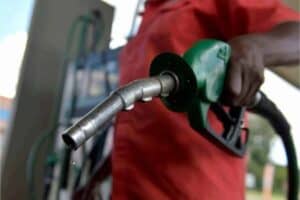
For illustrative purposes. Picture: iStock


Data specialists have warned South Africans that a loaf of bread could cost R45 by 2036, more than double what it costs today, turning a basic staple into a much heavier expense.
The warning comes ahead of the release of the consumer price index (CPI) for June 2026 by Statistics South Africa (StatsSA). CPI is the primary tool used to calculate the rate of inflation.
CPI in May was 4.5%, up from 4.0% in April 2026. Most analysts believe inflation will increase to at least 4.7% in June.
Inflation to reach 4.7%
Before we get to the prediction of the price of bread, senior research fellow at the University of Johannesburg’s School of Economics, Dr Charles S Saba, told The Citizen that consumer inflation is likely to increase largely because of higher transport and fuel costs arising from the Middle East conflict. Petrol prices increased in June, while diesel dropped.
“Bank of America forecasts that inflation may reach approximately 4.7% in June, although the actual outcome could be slightly lower if food and core inflation remain relatively contained,” he said.
He said the disinflationary effect of the substantial fuel-price reductions implemented in July should become more visible in the July CPI figures released in August.
“Lower petrol and diesel prices should directly reduce the transport component of inflation and indirectly moderate distribution, agricultural and production costs.”
Relief in July may be temporary
Saba warned that the relief experienced in July may be temporary. “Renewed US-Iran conflict, the failure thus far to conclude a durable negotiated settlement, and renewed restrictions and military tensions surrounding the Strait of Hormuz have increased crude-oil prices.
“Brent crude recently moved above $84 per barrel. Because South Africa imports crude oil and refined petroleum products, sustained increases in international oil prices, particularly if accompanied by rand depreciation, would eventually raise domestic fuel prices, transport costs and broader inflation.”
Dr Bonke Dumisa, an independent economic analyst, shared similar sentiments. “In the short-term, at least for June, the inflation for June will still increase, albeit at a decreasing rate, which is not as sharp as it was in May,” he said.
Dumisa added that prices usually increase much faster than they decrease. Even when costs fall, businesses often make only small price cuts or don’t reduce prices at all.
Inflation outlook remains less certain
Tertia Jacobs, treasury economist and fixed income specialist at Investec, told The Citizen that July inflation is likely to ease, but inflation in August is less certain.
“Looking ahead, July inflation should ease, as the sharp decline in fuel prices following the ceasefire and lower international oil prices is expected to more than offset the removal of the remaining fuel levy relief,” she said.
“August is less certain. While another small petrol price cut is still possible, refined fuel prices have increased more sharply than crude oil because of global refining capacity constraints. More broadly, the outlook for oil prices remains uncertain.
“We think the geopolitical risk premium is likely to remain higher than before, suggesting that oil prices around $72 per barrel were probably a temporary low rather than a new normal. As a result, we expect headline inflation to remain above 4% until the first quarter of 2027, even though inflation pressures outside of fuel remain relatively well contained.”
Higher petrol price hurting SA
Johann Els, chief economist at PSG Financial Services, said higher petrol prices are the biggest reason why inflation will rise, following the increase of 143 cents per litre during June. He anticipates that food inflation will remain fairly moderate.
“I expect inflation to ease back to around 4.3% in July (following a 201 cents per litre price reduction in petrol), remain around that level in August, and then drift towards 4.0% by year-end. On average, I expect inflation to come in at around 4.0% in 2026, then ease further to around 3.5% in 2027.”
South Africa’s inflation target is 3%, with a tolerance band of 2% to 4%. If forecasts of rising inflation prove accurate, inflation could move above the SA Reserve Bank’s target range, increasing the likelihood of a repo rate hike.
However, the expected rise in inflation is being driven largely by higher fuel prices rather than stronger consumer demand or increased borrowing.
Els noted that the June inflation print is unlikely to materially influence the Monetary Policy Committee’s decision the following day, as the South African Reserve Bank would have already finalised its inflation forecasts before Statistics South Africa releases the official data.
Price of bread in 2026
Daniel Weston, founder of SEO Backlinks, noted that CPI figures for May showed food and non-alcoholic beverage inflation eased to 1.9% in May 2026, while the monitored white loaf was still 3.6% dearer than a year earlier.
“The latest comparable urban price was R19.61 in May 2026, up from R18.93 in May 2025. An earlier January 2026 reading was R19.21, but neither 2026 figure was used in the projection workings,” said Weston about how they reached a R45 projection.
Price of bread over the past years
Weston noted that the price of bread was R13.51 in 2019 and R18.68 in 2024. “Those observations are the December 2019 and July 2024 urban averages for the same 700g white loaf. The selected method treats them as the five-year measurement window,” he said.
“The total increase was converted into a simple average yearly rise of 7.7%. Applying that rate to R18.68 and compounding it through 2036 gives R45.26, rounded to R45.
“The analysis tested simple and compound rates across the available shorter and longer spans, then used the highest rate. That makes R45 an upper-end scenario based on past price movement, not a guaranteed shop price.”
The households most affected would be those buying bread several times a week. For families buying two or three loaves weekly, a R45 price would turn a small basket regular into a noticeably larger monthly cost and could make a basic white loaf feel closer to a premium purchase.