It's been a back-and-forth social media and legal showdown.
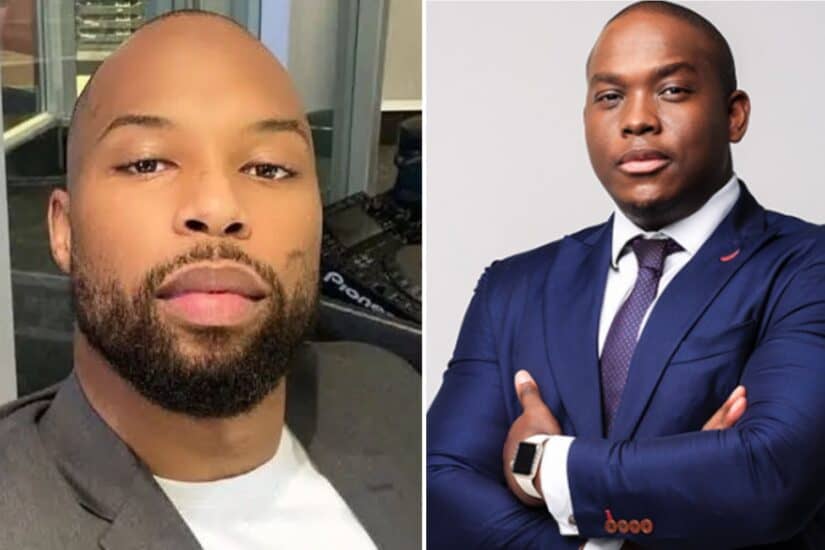
Sizwe Dhlomo and Vusi Thembekwayo. Picture: Supplied


Sizwe Dhlomo has set the record straight after a follower asked why he sued businessman Vusi Thembekwayo. This followed his latest legal victory in the Pretoria High Court.
The radio personality responded bluntly, making it clear that he was not the person who launched the court proceedings.
The court judgment confirms that Thembekwayo was the applicant and Dhlomo the respondent. It also states that the application was dismissed with costs.
“I’m not the one who sued, bruh. He is… I offered him a chance to squash this whole thing for free, but he thought he was smart. So, I whacked him. 🤷🏽♂️”
The comment has reignited interest in the long-running war between the two public figures. This feud has played out across social media and now in the courts.
Why did Vusi Thembekwayo sue Sizwe Dhlomo?
According to the Pretoria High Court judgment, Thembekwayo approached the court seeking a final interdict against Dhlomo.
He wanted Dhlomo stopped from publishing what he described as false and defamatory statements about him. The application also sought the removal of previous social media posts, an unconditional apology and retractions.
Thembekwayo argued that Dhlomo’s statements had harmed his reputation, dignity and business interests.
Dhlomo admitted publishing several of the statements. However, he argued that they amounted to opinion or comment on matters of public interest.
The judgment records that between 2020 and 2024, Dhlomo made several posts about Thembekwayo. These included describing him as a “punk” and a “fraud” and accusing him of being an opportunist.
Court delivers major blow
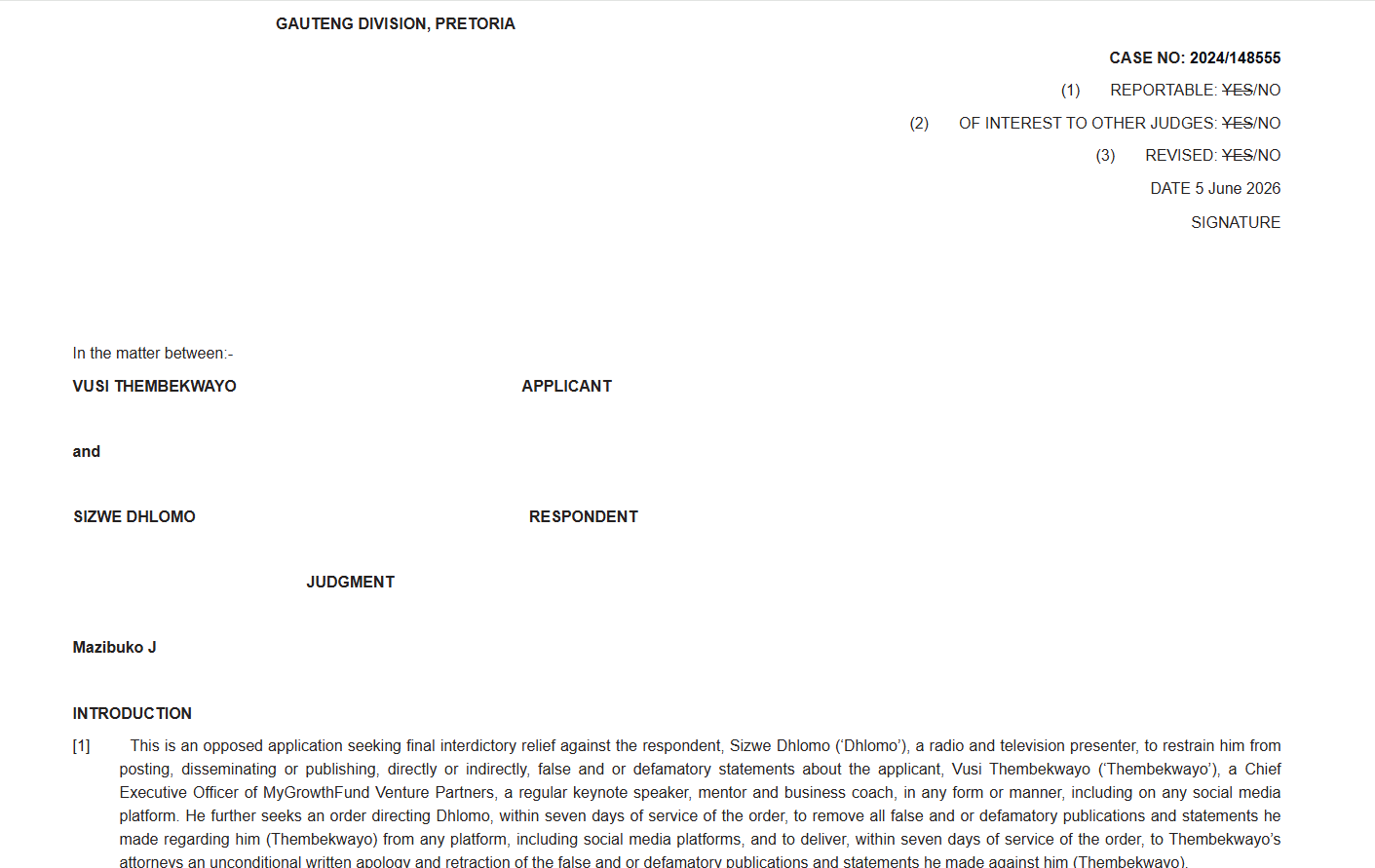
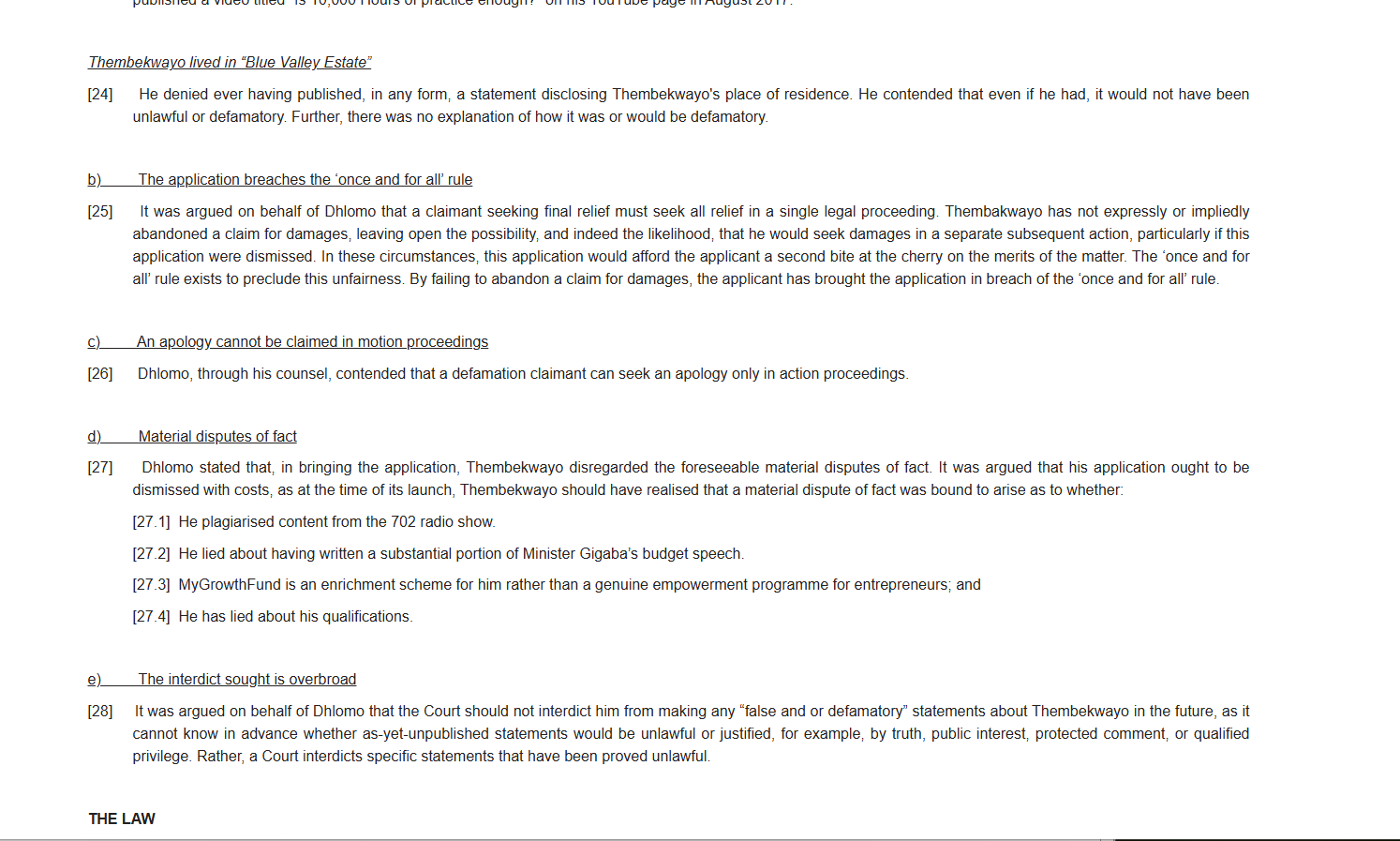
Justice Mazibuko dismissed Thembekwayo’s application with costs on 5 June 2026.
The court found that there were material disputes of fact that could not appropriately be resolved through motion proceedings. Instead, these would require oral evidence.
The judge also found that the requested interdict against future publications was too broad. Moreover, previously published statements could not simply be undone through the relief sought.
The ruling was therefore not a finding that every statement made by Dhlomo was true. Instead, the court found that Thembekwayo had not established the requirements for the final interdict he sought in these proceedings.
The case is recorded on SAFLII as Thembekwayo v Dhlomo (2024/1485555) [2026] ZAGPPHC 667.
For Dhlomo, however, the outcome has provided another opportunity to respond to questions about the bitter public dispute.
And judging by his latest comment, he believes Thembekwayo made the first legal move. Still, the court battle ended in his favour.