
Trevor Noah's latest promotional post for South African tourism has sparked a heated online exchange, complete with competing Community Notes on X.

Trevor Noah’s tourism ad also drew sharp replies from across the continent, and renewed scrutiny of the country’s record on violence against foreign nationals. Picture: Screenshot, YouTube


Comedian and former Daily Show host Trevor Noah shared a light-hearted video for the Tourism Business Council of South Africa (TBCSA) campaign “Don’t Say We Didn’t Tell You”. In the clip (a follow-up to a previous successful ad), Noah fields common questions from would-be visitors about the country’s varied climates, cultures and value for money.
His accompanying caption read: “Apparently, I’m still the person the internet asks about South Africa. So I went looking for answers. Whatever holiday you are looking for, South Africa has you. Just don’t say we didn’t tell you.”
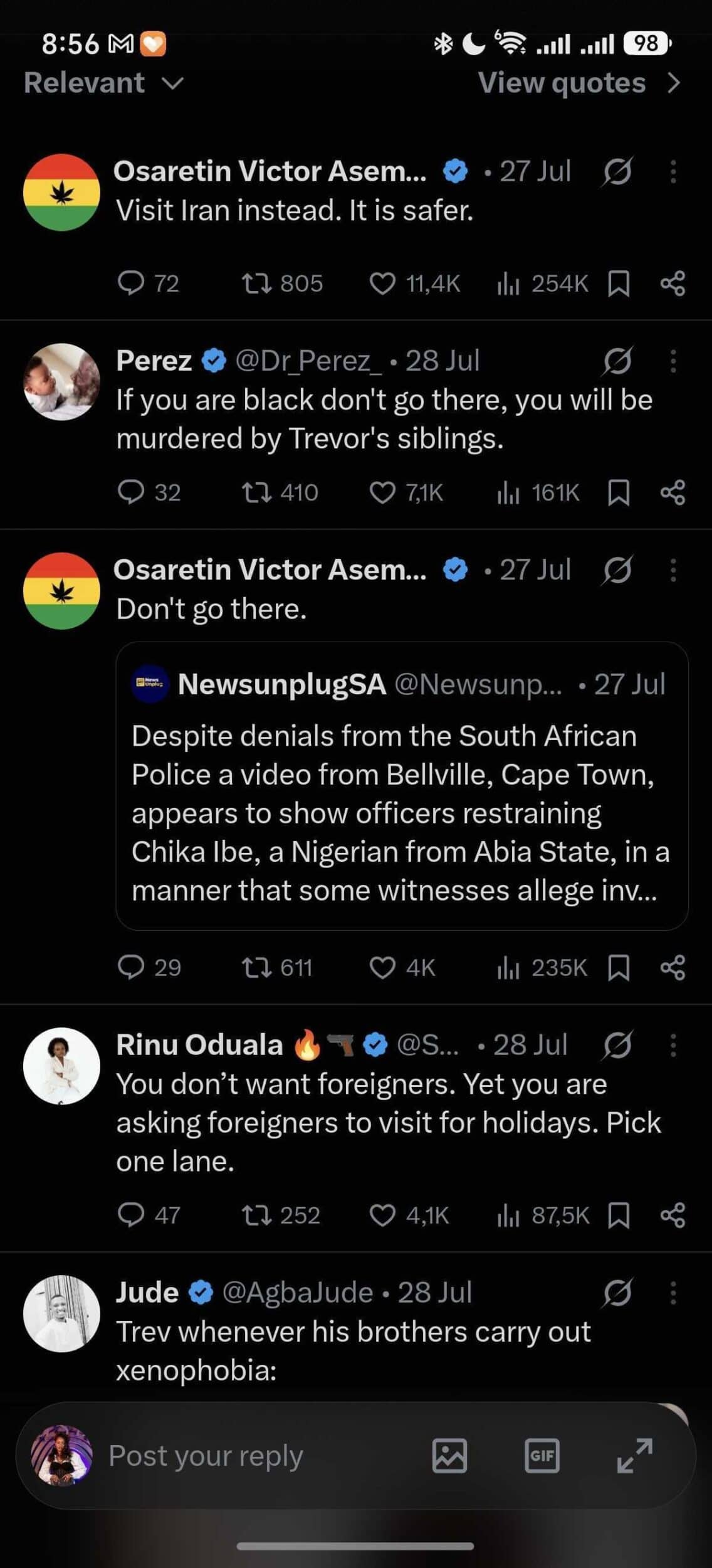
The post quickly racked up millions of views as well as a wave of critical replies, many from Nigerian and other West African users, warning black travellers against visiting the global star’s home country. Comments ranged from “Visit Iran instead. It is safer” to claims that black visitors risk being “murdered by Trevor’s siblings” and references to alleged ongoing xenophobic incidents.
X Community Notes emerge
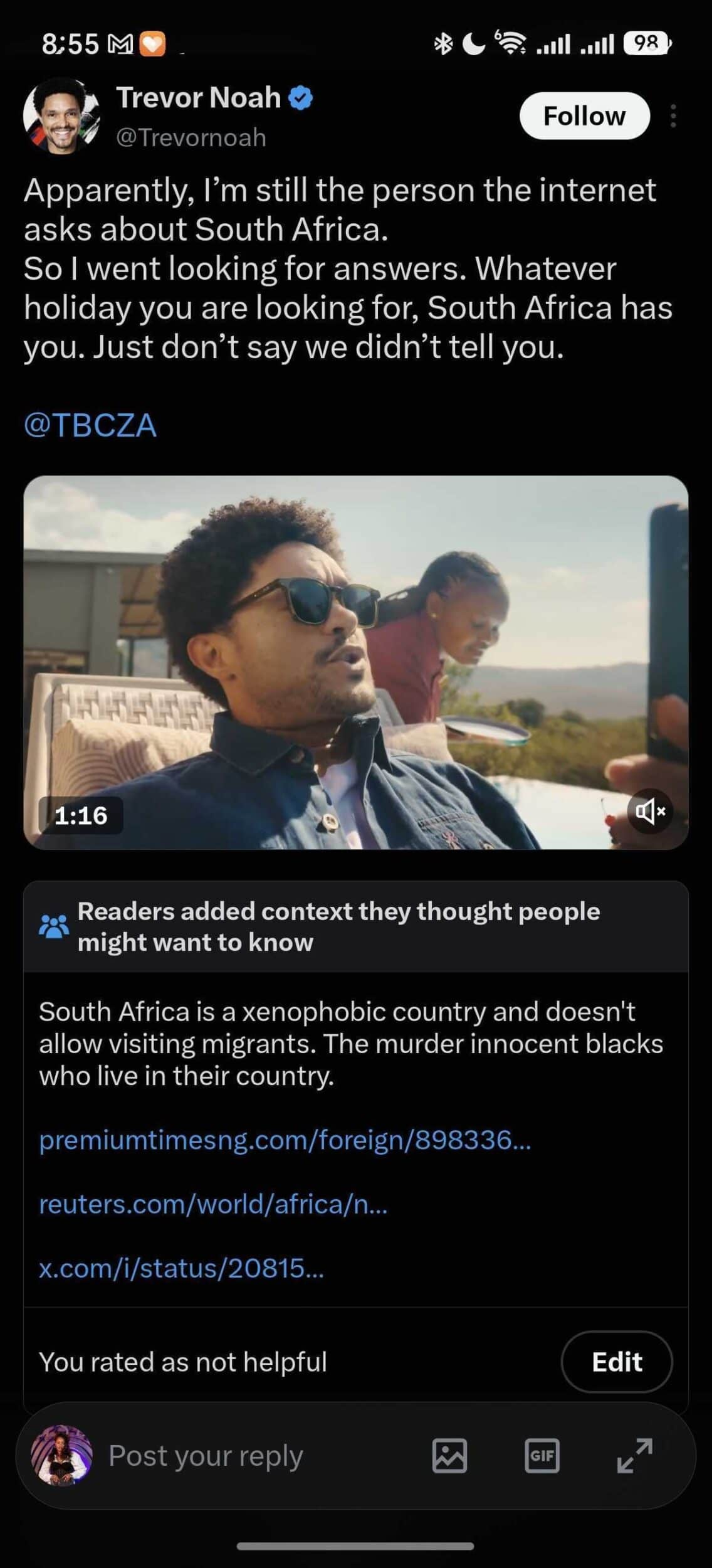
X users added context notes pointing to recent violence against foreign nationals, particularly African migrants.
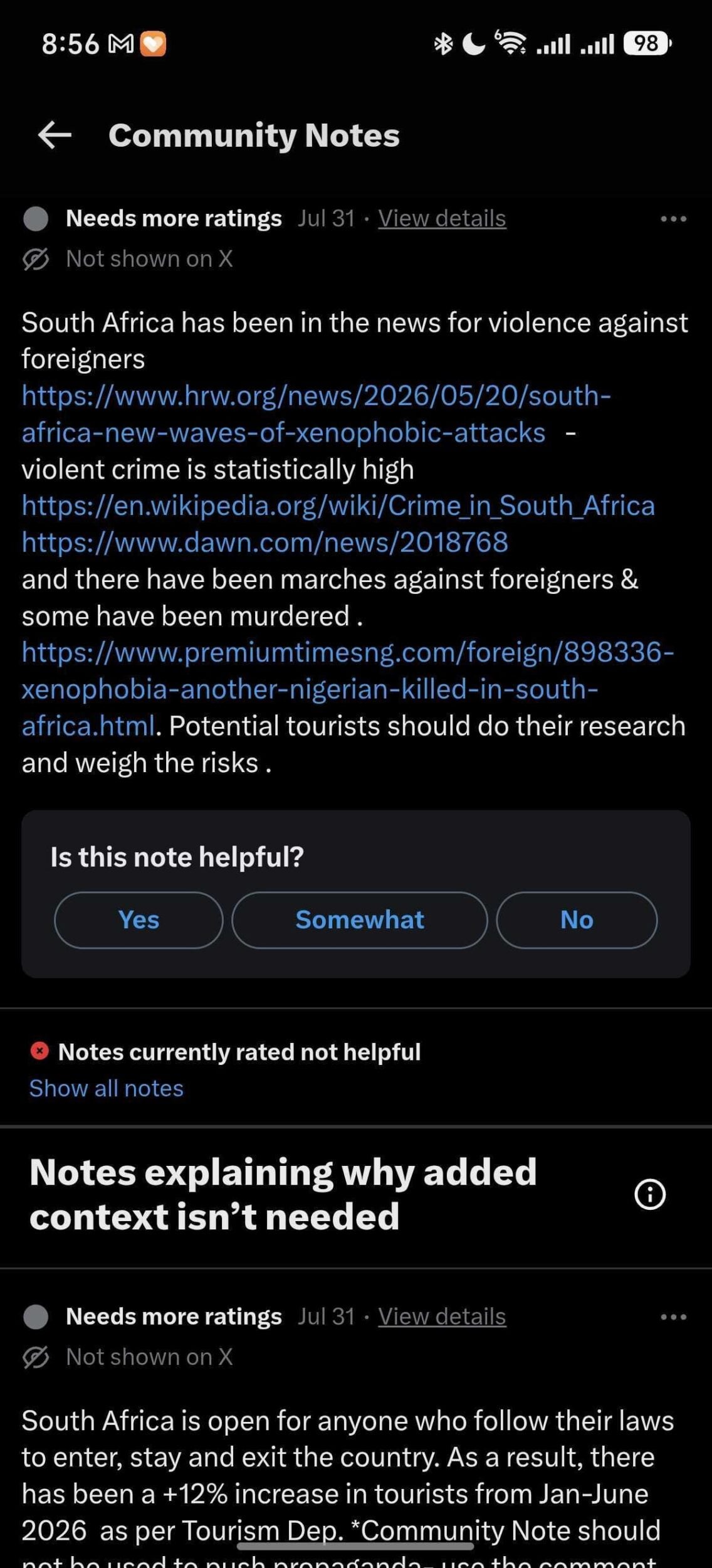
One note stated that South Africa is a “xenophobic country” that “doesn’t allow visiting migrants” and claimed that “innocent blacks who live in their country” are murdered, linking to reports of Nigerian deaths and related coverage. Other proposed notes pointed to high overall violent crime rates and marches targeting foreigners.
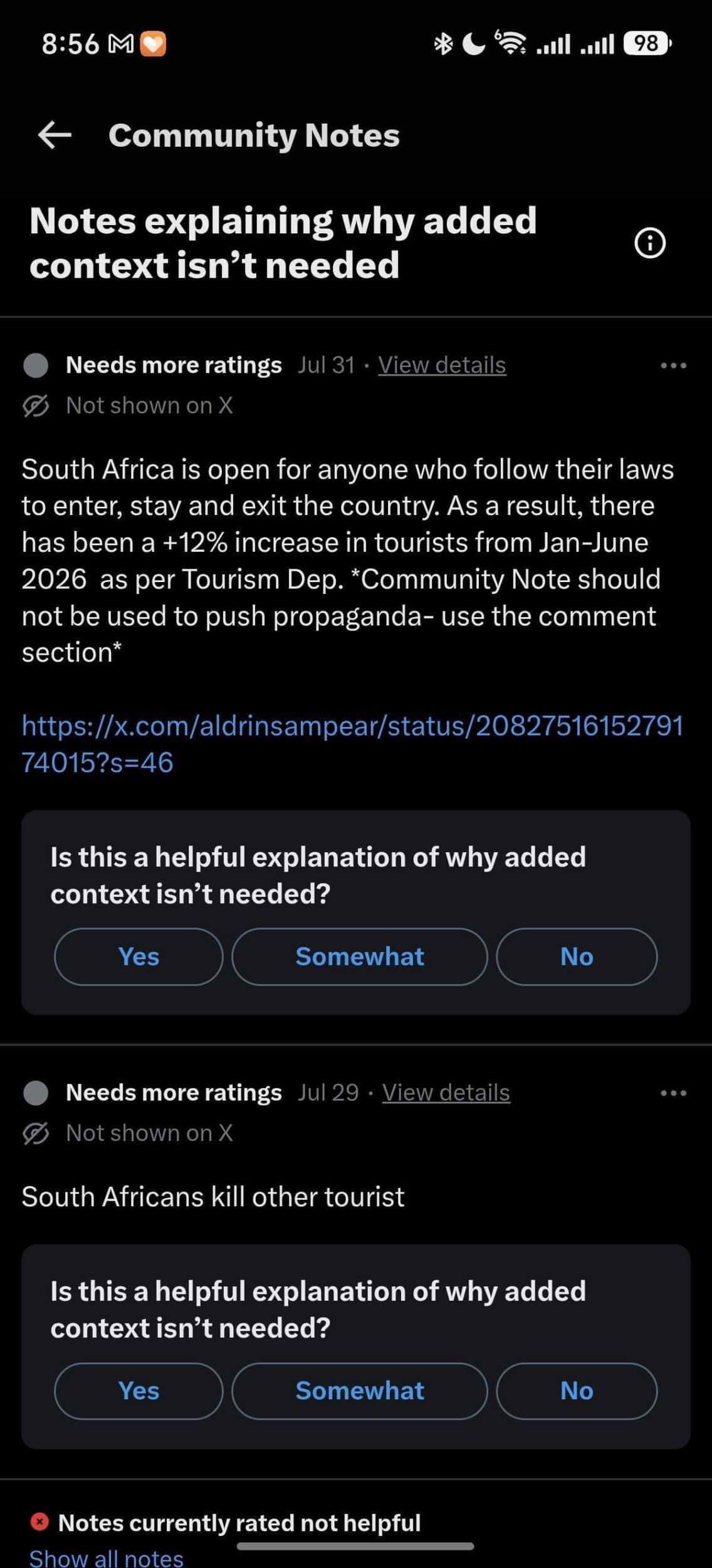
Counter-notes argued that South Africa remains open to legal visitors who follow immigration rules, citing official tourism data showing a roughly 12% rise in international arrivals in the first half of 2026. Some of those explanatory notes were rated “not helpful” or remained in the “needs more ratings” stage before being reviewed by the platform’s automated system.
The intensity of the reaction stems from a documented surge in anti-migrant activity earlier in 2026. Human Rights Watch and other organisations reported waves of vigilante attacks promoted in part by groups established on a ticket of anti-foreigner sentiment, targeting African and Asian foreign nationals.
Fear stemming from protests in major cities, an unofficial “30 June deadline” for undocumented migrants to leave, looting of foreign-owned shops, arson of dwellings, and a handful of alleged killings prompted mass repatriations.
Nigeria alone facilitated the return of around 1 500 citizens; Malawi, Mozambique, Ghana and others also organised evacuations while tens of thousands of people were displaced.
What the facts show about the claims
Fear of xenophobic violence is rooted in historic events
South Africa has a history of anti-illegal immigration protests that have often targeted undocumented migrants. The 2026 wave spread unverified claims of deaths, widespread displacement and international diplomatic friction.
Rights groups have criticised insufficient police protection and the scapegoating of migrants for structural problems such as unemployment and inequality.
At the same time, South African authorities and some citizens distinguish between legal tourists or documented residents and undocumented migrants, some of whom are accused (often unfairly and without evidence) of involvement in organised crime, drug trafficking or illegal businesses.
Although not every foreign national is targeted, attacks have disproportionately affected poorer African migrants living in townships rather than visitors in tourist areas.
Tourism is growing, not collapsing
Official figures show international tourist arrivals rose by about 12-13% in the first half of 2026 compared with the same period in 2025, with solid growth from both African and overseas markets (including the United States).
The campaign featuring Noah is part of a broader push by TBCSA and the tourism department to market the country’s landscapes, wildlife, culture and relative affordability.
Crime risk for tourists exists, but caution is advised
South Africa continues to record rates of violent crime, including murder. Most serious incidents occur in specific urban and township areas rather than the main tourist circuits (Cape Town’s Waterfront and surrounds, the Garden Route, Kruger National Park, Sandton, etc.).
Major governments generally advise travellers to exercise a high degree of caution rather than avoid the country entirely. Standard precautions-using reputable transport, avoiding high-risk areas after dark, securing valuables-remain essential.
Legal visitors are not barred
South Africa maintains visa and entry requirements that apply to everyone. Documented tourists and legal residents face different realities from those living without official documentation in informal settlements.
Community Notes and replies that collapse these distinctions into a blanket “don’t go if you’re black” warning oversimplify a more complex picture.
Despite claims by his fans from other African countries, Noah has previously spoken against xenophobic violence, including endorsing statements that treat such attacks as criminal rather than justifiable.