
Cracked heels, corns, warts and fungal infections can cause summer foot trouble. A podiatrist explains when to seek help.
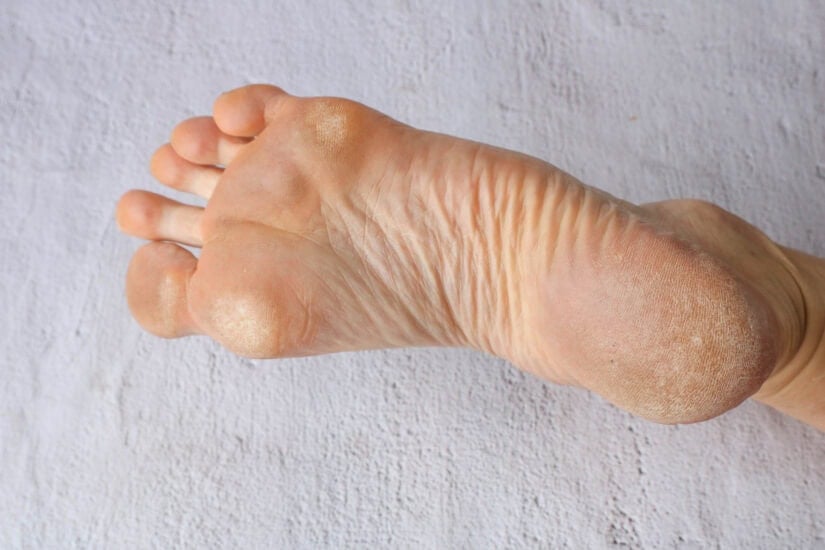
Feet can be eina! in summer. Picture iStock


There’s nothing quite as great as walking barefoot on a freshly mowed lawn. Summer is here, which means it’s slops time, shorts, swimwear and T-shirt time.
But while we think about our skin, our hair and almost every other bit of our bodies, we probably don’t think about our feet enough.
Podiatrist and sports podiatrist Dennis Rehbock said warmer weather isn’t all beach sand and summer fun for your feet. Heat, humidity, open shoes and spending more time barefoot all affect them.
“Sweaty feet, or hyperhidrosis, can be particularly troublesome for teenagers and sportspeople and may also be associated with odour,” he said.
“At the other end of the spectrum, feet can become excessively dry, especially around the heels, when people wear sandals or go barefoot more often.”
Increased moisture can also predispose people to fungal infections of the skin or nails, including athlete’s foot.
We often forget about our feet
Lynsey Hammond of Kroko foot care products said feet are often forgotten until something starts hurting.
“Foot care is often spoken about as something cosmetic, but it is really about comfort, movement and being able to show up for everyday life,” she said. “Our feet carry us through work, family, errands and celebrations.”
Think about it. They’re at the end of our legs, carry us everywhere and take a pounding every day. Also, when something goes wrong, we tend to attack the problem with a cream, a pumice stone or sometimes even a blade.
Cracked heels, painful corns and strange bumps on the soles of your feet are not always just cosmetic problems. Some can become painful, infected or need professional treatment, while playing doctor at home can sometimes make matters worse.
Cracked heels, the bad and the ugly in this equation, may start as little more than an irritation, but Rehbock said there is a stage where they stop being just unsightly.
“Minor fissures may mainly be unsightly or uncomfortable, but they become a medical concern when the cracks extend into the dermis and cause bleeding, pain or possible infection,” he said.
Rehbock recommends gently filing heels a few times a week with an emery board and using a foot or heel cream containing urea after bathing.
“Severe fissures should be treated by a podiatrist, who can reduce and smooth the dry, cracked skin,” he said.
Corns and calluses may become more noticeable when the sandals come out of the closet, although Rehbock said they were not necessarily more common during summer.
“These are thickened areas of skin, known as hyperkeratosis, that usually develop because of pressure and friction, often from incorrectly fitting shoes,” he said.
“The first step is to identify and remove the source of pressure or friction, with correct shoe fitting being particularly important.”
Don’t DIY your corns
But cutting them at home is not the answer. “Self-treatment can cause problems, particularly if someone tries to cut a corn or callus with a blade. This can damage the skin and lead to infection,” Rehbock said.
Acid-based treatments also need caution.
“They may be too aggressive and can damage the surrounding skin. This is particularly important for people with diabetes or anyone with impaired circulation to the feet,” he said.
“Pain, itching, bleeding, signs of infection or any unexplained change should be assessed. Most importantly, if you are unsure about something on your feet, get it checked.”
Summer also means more bare feet around swimming pools, communal showers and changing rooms, where plantar warts can be picked up.
“Yes. Plantar warts are caused by the human papillomavirus, HPV, and can be contagious,” Rehbock said. “Children and teenagers can be particularly prone to them, while some adults may have greater resistance to the virus.”
He did add, though, that walking barefoot can be good for the feet, particularly if you are accustomed to it.
In keeping with a hot summer’s theme, heated-up paving and sand present another danger, particularly for people with peripheral neuropathy, because reduced sensation can prevent them from realising just how hot a surface has become.
“This can result in burns, blisters or ulcers,” Rehbock said.