Second elephant poached in Kruger this year
Various journalists are currently in the KNP where the affects of poaching is again highlighted and ironically they witnessed an elephant darting on Tuesday - the same day the second one was poached
SKUKUZA – A second elephant has been poached in the Kruger National Park (KNP), almost three months after the first one had been slaughtered for its tusks. Elephant poaching is flaring up again after a quiet period of 10 years.
Both animals were poached in the Pafuri region. Suspended SANParks managing executive of conservation services, Dr Hector Magome, said in December last year, that they had been warned that the scourge of ivory poaching which has been affecting the rest of Africa, was likely to hit the country this year. This prediction came true in May when the first Kruger elephant was targeted.
Various journalists are currently in the KNP where the affects of poaching is again highlighted and ironically they witnessed an elephant darting on Tuesday – the same day the second one was poached.
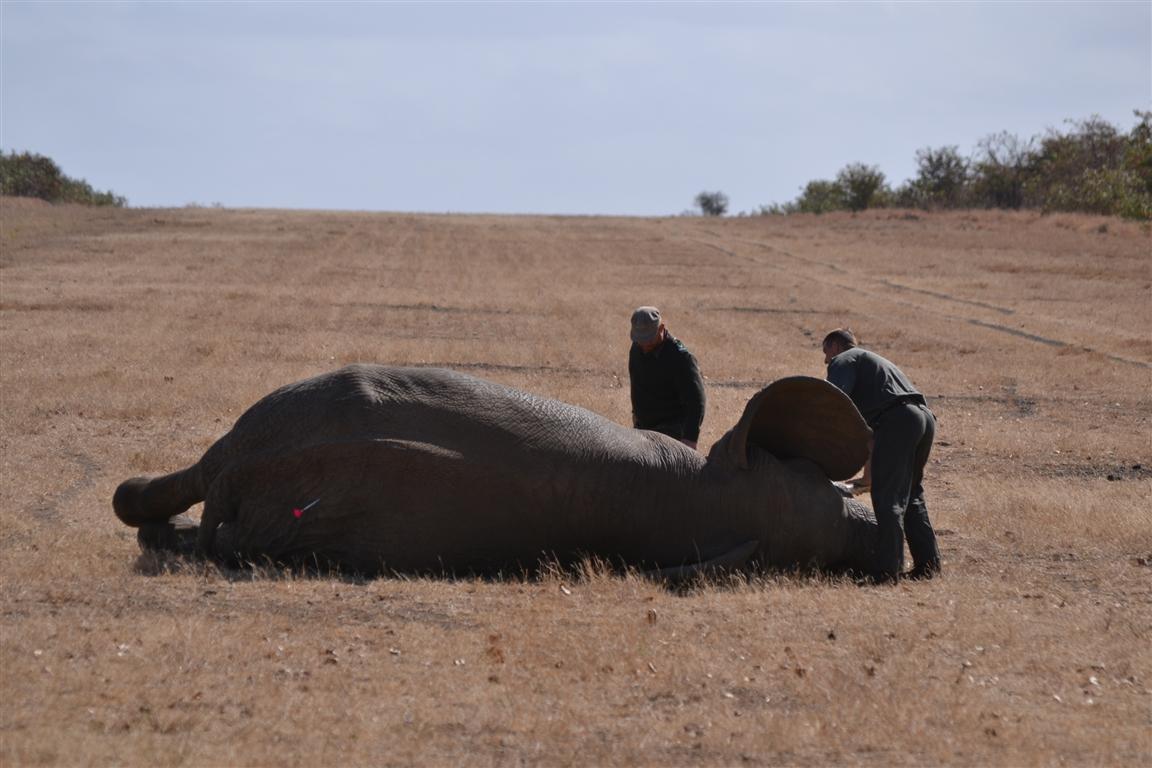
By that time, still unaware of the poaching incident, the SANParks Veterinary Wildlife Services (VWS) team had one goal – to take DNA samples of an elephant. Through this, they gain knowledge of the side effects of drug combinations on animals and how to mitigate them. As Mr Peter Buss, veterinary senior manager, points out, there is always room for improvement.
They took off and within minutes found the target. With the dart firmly piercing the rump, the team led by head of VWS, Dr Markus Hofmeyr, carefully manoeuvred the helicopter around to herd the animal into the open, so it wouldn’t fall asleep in the dense bush.
But it can take up to 20 minutes for the etorphine M99 opiate dart to come into effect. In this case he lost all resistance after 11 minutes as the drug influenced the brain receptors. It felt like a lifetime before the 25-year-old bull thumped to the ground. A single injection reversed the tranquiliser.
Hofmeyer folded the giant leathery ear over the eye to expose the giant veins, the size of human fingers, where blood was drawn. A number of ticks had the same idea.
A lot can go wrong in an operation like this, but luckily the team is well trained, so the chances are very slim. Hofmeyr pointed out that the trunk needed to be opened. “It is difficult for elephants to breathe through their mouths,” he explained as the elephant groaned, probably unconsciously aware of the people around him.
Someone is armed and ready in case anything goes wrong. It has never, reassured Mr Paul Viljoen, logistics assistant in the team.