Kruger meat gifts debate rages on
Meat gifts to disadvantaged communities on the border of the Kruger National Park remain a controversial matter.
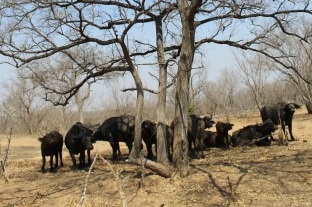
SKUKUZA – An ongoing debate about the Kruger National Park’s (KNP) plan to sustainably harvest about 350 animals during the drought, continues to draw attention. This culling is aimed to test different models for meat distribution to disadvantaged low-income communities on the border of the park, and visitors to the KNP and interested parties in conservation circles are not letting go.
“A major objective of distributing meat gifts to communities is to build relationships with neighbours through sharing the benefits from a national asset. We will never be in a position where we can help all schools in need, at a scale and scope that will really supplement their feeding schemes,” said Mr William Mabasa, acting head of communications of SANParks, to Lowvelder.
According to Mabasa, the reason why the project is done at this small scale, “is about slowly building small bridges where they have not been before”.
He emphasised that the Kruger has no set model of distribution of the meat gifts as yet.
“We are learning as we go and adapting as we learn. It is important to remember that in a complex system we will never have all the answers. That is why it is very important to monitor impact in order to inform processes going forward,” Mabasa explained.
There are more than 1 362 primary and secondary schools falling within the three district municipalities that share the western boundary of the Kruger.
He commented that it is not and will not be the KNP’s intention to deliver to all of these schools.
The ones that benefited are the approximately 30 that came into the park during SA National Parks Week in September for environmental education day programmes.
Each of the five environmental education centres (Berg-en-Dal, Skukuza, Satara, Letaba and Punda) were given 450 small packets of buffalo biltong each to distribute to the pupils who came for the project.
The seven KNP community forums were asked to identify three local primary schools each to receive the biltong that remained after SANParks Week.
The KNP also uses this an opportunity to engage with the learners on conservation-related issues.
Addressing questions around the processing of the meat, Mabasa explained that the KNP abattoir was a facility which was funded by SANParks, mainly for research purposes. Carcasses are processed as and when they become available.
“It is not a business on its own and some of the meat that was processed from there, was sold to staff on a small scale,” said Mabasa. “We do not have a butchery in the park.”
The abattoir was refurbished in 2015.
One of the questions in the debate concerned the payment and application of community levies.
One per cent of tourist entrance fees goes into a fund that supports much-needed educational infrastructure in local schools close to the KNP, both in Limpopo and Mpumalanga. This includes building administration blocks and computer labs.
Dr Jeremy Anderson of Wessa Lowveld said his organisation supported the Kruger’s decision, as the number of animals involved were so low in relation to total populations, that they would not have any impact on these populations.
“We strongly support sustainable utilisation of wildlife on private and collectively owned land,” said Anderson. “In the case of publicly owned protected areas it has the potential of becoming a case of the tail wagging the dog, and should only be undertaken when done in the interest of habitat or species conservation.”
Dr Elisa Galgut from the One Web of Life programme of the South African Faith Communities Environment Institute told Lowvelder: “This initiative is a step in the wrong direction. It sees animals as a resource for humans to be exploited at will, rather as moral beings with interests that need to be protected.” Galgut is of the opinion that feeding local communities with the meat from the park’s animals is going to set a precedent. “Locals may begin to see the animals in the Kruger as a legitimate source of bush meat.”
• A new round of revisions to the KNP Management Plan has started. Here management actions and plans like meat gifts will be discussed and will come into full swing next year. Interested parties are encouraged to register with the office of the senior manager: park planning and co-management on 013-735-4361 or marisa.coetzee@sanparks.org and take part in this p