Kyiv to Mbombela: Ukrainian woman tells of evacuation
Nadiya Bezhnar and her husband and son left Ukraine following the invasion of her country by Russia. She shares details of their journey to South Africa and the challenges faced along the way.
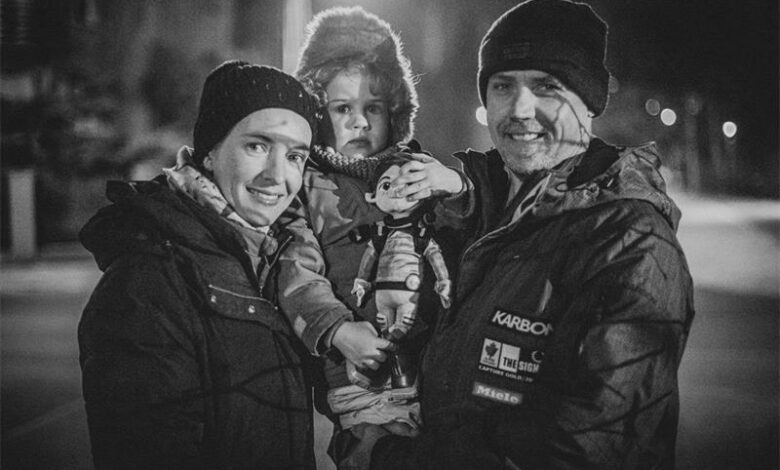
One moment they thought Ukraine’s capital, Kyiv, would never be invaded, the next they were packing their bags in 30 minutes and starting a two-week journey to Mbombela, South Africa.
Nadiya Bezhnar, a Ukrainian national, has been in the Lowveld for almost a week now. Following a Russian invasion, she started fleeing Ukraine with her husband, a South African, Derrick, and her two-and-a-half-year-old son, Lev, on February 24.
Seeing as her husband is a foreigner, she was one of the lucky few who was able to leave with her spouse – Ukrainian men aged between 18 and 60 are not allowed to evacuate at the moment.
Bezhnar said the looming threat of war in her country did not only emerge when reports spread throughout the world that Russia had invaded Ukraine; it has been ever-present since 2014, when the “neighbours” annexed 30% of Ukrainian territory (Donbas and Crimea).
“I was fairly naive,” she said. Because it has been such a long time, they disregarded the reality of the Russian threat. She explained that there was a strong buzz in the news that said the invasion would take place on February 16. They started thinking, “What if it is not just talk?”. But, the date came and the date went and the situation was still relatively calm. “It was ridiculous to imagine that the capital of one of the biggest countries in the centre of Europe will be bombarded by Russian people fiercely, blackguardly in the middle of the night.”
Though those alerts about the 16th turned out to be false, Bezhnar and her husband agreed on one rule in place: the car’s fuel tank must be full at all times. They also agreed with a friend in the west of Ukraine to go there for safety in case the need arose. And it did.
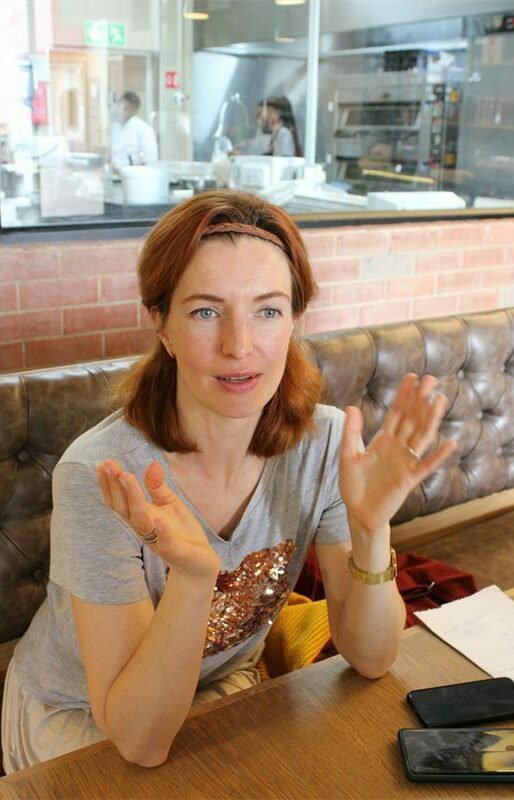
On March 22 when Lowvelder interviewed Bezhnar in a local coffee shop, she kept glancing at her phone every now and then to take note of the alerts for air attacks on Kyiv. By 11:20 there had already been three red alerts. This meant a few million people (in Kyiv) had to run to the bomb shelters immediately with kids and animals, regardless what they were busy with at that moment; this had to be done for each alert.
At 05:30 on February 24 a call from a friend living half an hour away from them woke Bezhnar up. Her friend asked what the plan was. Hearing a sleepy mumbling in reply, the friend said, “Nadiya, they dropped bombs on Kyiv. The war is here.”
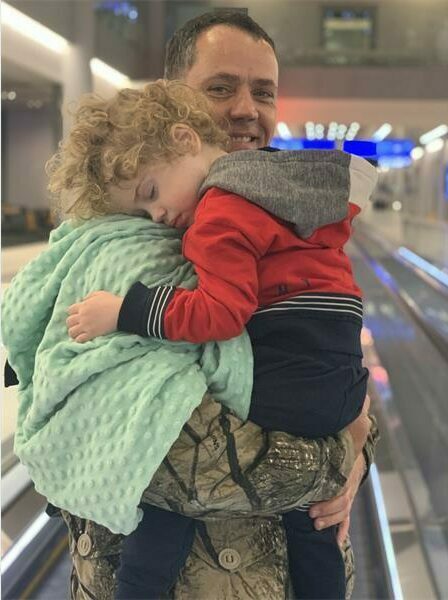
Now, evacuating with a toddler is no small feat. Through their son’s relentless crying and screaming, Bezhnar and her husband packed quickly, trying to focus on the necessities. The traffic was a nightmare; the trip to western Ukraine took them about 15 hours, where it would normally take only five. They spent one night there, but the attacks over Ukraine continued and the next day the family moved towards Poland where she also had friends.
It took another 42 sleepless hours in total to drive to and through the Ukrainian-Polish border. Luckily, despite the temperature outside (it was still a freezing cold winter) and lack of any comfort, their son slept overnight in the car.
ALSO READ: Last roar from well-known lion of Lionspruit echoes through Marloth Park
“We were relieved about the minimal paperwork that was required. My classmate, living in Warsaw, whom I had not spoken to in 10 years, sent me a Facebook message: ‘Our doors are open to you’.” Although Poland accepted refugees, this was not the family’s final destination.
On the day of the invasion, Bezhnar and her son had to pick up documents in Kyiv to allow them entry into South Africa. Now, they had to start from scratch at the embassy in Poland. They ended up staying there for about two weeks.
“During those two weeks that my friend’s family hosted us, they invited more than 20 other Ukrainians to stay, providing them with food and basic necessities.” Bezhnar described this friend as just having a middle-class job and a normal house (three bedrooms), but he and his family (a wife and two little sons) went out of their way to help others and never complained once.
“I think the biggest advantage our people have in this war is that we are united as never before and we are fighting for our country so heroically. No one could expect this.”
She said there is a proverb in Ukrainian that, loosely translated, says, “My house is on the side, I don’t care,” implying that each person is only preoccupied with their own problems. Looking back at it now, and thinking of the help they had received along the way and had seen others receiving, she thinks this famous phrase is no longer a part of Ukrainian culture.
While in Poland, Bezhnar also volunteered to help more than 400 Ukrainians to get from Warsaw to Sweden and apply for social support there, since Poland is already overloaded by refugees. She mentioned helping others, for her, is a kind of syndrome of survival. “It is important to know that you are not standing aside and are doing your best for your country when you are fortunate to be safe.”
Being so far away now, she said her roots are still there. After all, her brother, parents and grandmother remained behind. Her father, a surgeon, said he will not leave Ukraine. Her mother, in turn, refused to leave her father’s side. Her grandmother (86) made it through WWII and said she had a lot of things to do, like watering her flowers at home.
In South Africa, they first spent time with her husband’s parents in Pretoria and then made their way here where they are currently staying with her brother-in-law in Alkmaar. The idea is not to settle here permanently, though. She just hopes everything is still standing when they go back. “In my network, I am the luckiest, my home is still standing.” Lots of her colleagues and friends have not been so fortunate. When it comes to the reason for the invasion, there are multiple complex elements to it. Widely discussed and disputed, these range from language issues (Ukrainian vs Russian) and oppression to reestablishing the Russian Empire to NATO interference and the difference in ideologies in Russia and Ukraine.
ALSO READ: Mbombela’s Stonehenge residents issue petition to stop student accommodation
Bezhnar maintained, though, that Russia’s intentions are anything but honourable. She said you only have to look at the civilian casualties and destruction of essential services buildings to realise this. “They call it a special operation, but it is a war.” Describing the emotions she feels right now is difficult for her, she said. When they arrived here people embraced them and had tears in their eyes. She said, “You appreciate this level of empathy, but at the same you stand there and think, ‘What are you crying over? I feel emotionally paralysed’. “I cannot let fear occupy my mind right now, I have to keep myself strong.”
Arriving here brought a new set of challenges. She is working remotely and also having to take care of her son while looking at preschool options for him. He speaks both Ukrainian and Russian and understands Afrikaans, but cannot yet respond in this language, which could be an interesting challenge.
Although they are comfortable with her brother-in-law, the infrastructure difference is also a challenge. In Ukraine she had all basic needs and services within walking distance from her apartment; this is not the case here. Safety is also a concern for her. Though Bezhnar admits, it cannot be compared to the constant fear of being in a place that is heavily bombed.
She said if there was one thing she could ask of South Africans, it would be to not pay any mind to Russian propaganda messages. “Russia and Africa have economic ties, of course, but I hope that people here will not stand on the side of aggressors.”
Do you have more information about the story?
Please send us an email to editorial@lowvelder.co.za.
For free breaking and community news, visit Lowvelder’s website: Lowvelder
For more news and interesting articles, like Lowvelder on Facebook, follow us on Twitter or Instagram