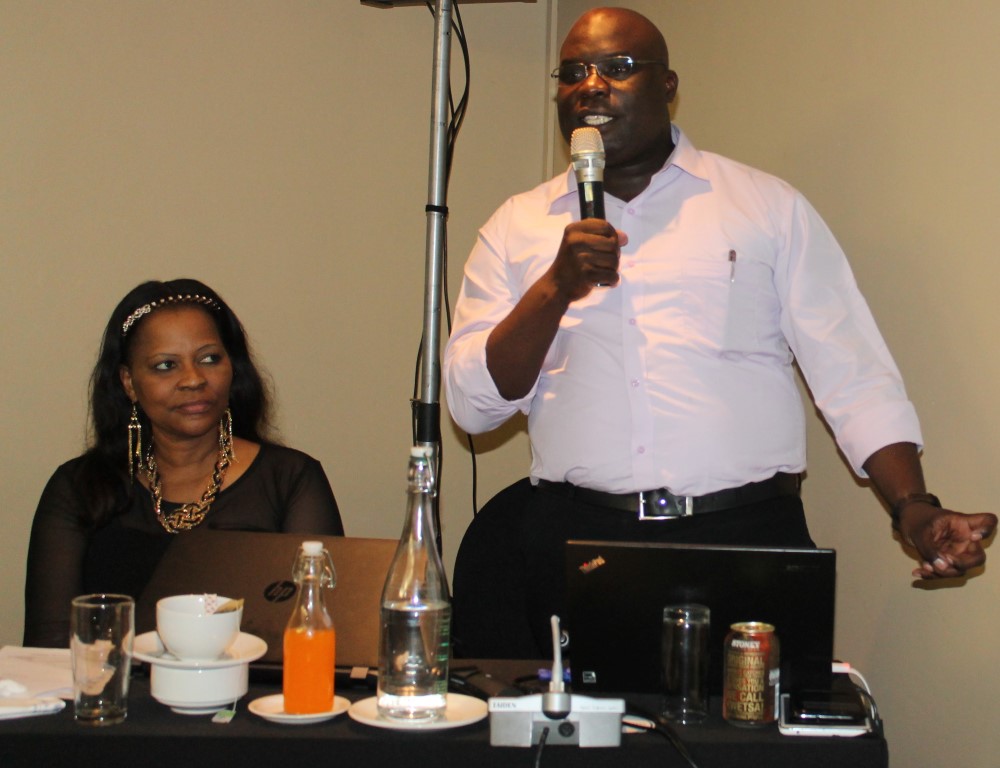
MBOMBELA – Many children know their parents only as “Mom” or “Dad”. Should children go missing, it becomes extremely difficult to reunite them with their parents. Save the Children specialist, Mr Martin Odhlambo, advised parents to teach children their real names.
He addressed South African and Mozambican delegates during a cross-border coordination meeting at the Protea Hotel last Thursday.

The gathering aimed to improve cross-border interactions and communication between child-protection activists and service providers in both countries. “This continues to assist in the monitoring of the current repatriation policies and practices for the purpose of advocacy and policy advancement,” explained Ms Miranda Mhlanga, coordinator for the Provincial Anti-Human-Trafficking Task Team at the Department of Justice and Constitutional Development.The departments of justice, education and social development, private NGOs and delegates from the Mozambique government attended to address the reunification of children across borders.
Odhlambo, a family tracing and reunification (FTR) specialist, shared his experience of reuniting children with their families in war-torn South Sudan, where Save the Children has successfully reunited 4 000 children with their families.
He said in 2013 there were over 8 000 children which Unicef had identified as displaced from their homes.
Their greatest challenge was that, due to the ongoing conflict, parents or children kept moving. Some people were fleeing to the countries bordering South Sudan. They started a central online database.
“A social worker can put the details of a child on the system. Other social workers can then check if there are any reports in another area, if parents have notified them of the missing kid,” Odhlambo said.
Due to poor Internet connection, they added a central data system. Another challenge faced was transporting the children to the parents once found.
“We rely on UN aircraft as the roads are in terrible conditions and continuous fighting poses danger. The costs of transporting a child is around US$270 per trip,” he said.

Department of Social Development deputy director, Ms Lizzie Nyoni, said throughout South Africa, thousands of children migrate through irregular channels every year.
“Children often leave their homes as a survival strategy after the death of their parents or caregiver from HIV/Aids and other causes,” she said.
According to Nyoni, the alarming levels of poverty, vulnerability, and political instability and conflict in countries of origin, also contribute to minors migrating from their home countries to others in search of asylum and for other reasons.
“In some instances, children often migrate alone or with a caregiver in search of a better life, to find relatives, look for work and go to school,” she said. Throughout their journey and upon arrival at their destination, children are extremely vulnerable and many become subjects to abuse and exploitation including exploitative forms of labour and commercial sex work.
Read more here: Plans afoot to better fight human trafficking