Floods of 2000 Part 4: Kruger rivers will never be the same again
The floods of 2000 in the Kruger National Park was a once in every 200 year occurrence say scientists. It changed the face of some of the rivers in the Park forever.
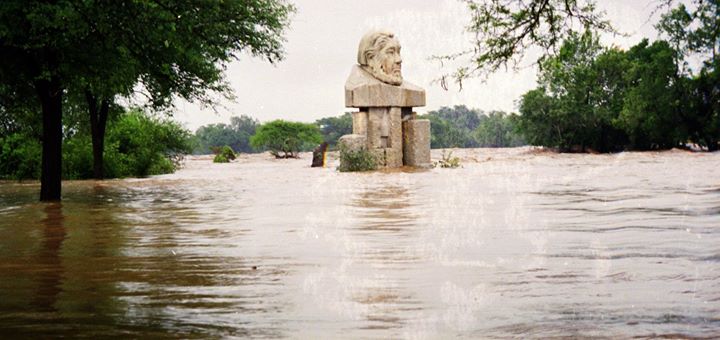
SKUKUZA – The 2000 flood in the KNP has left an imprint that may influence river ecosystems for decades to come, according to research by the Centre for Water in the Environment at the University of the Witwatersrand.
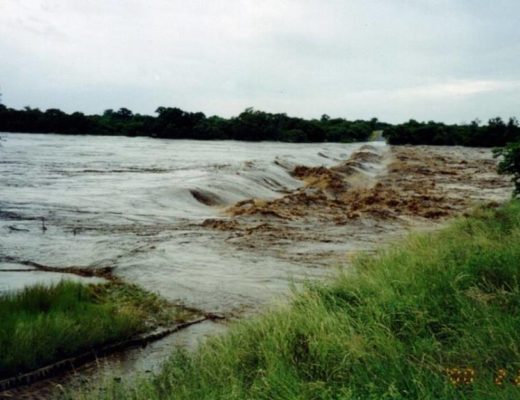 During the night of February 6 that year, heavy rain fell in the catchment areas of the Sabie and Crocodile rivers causing record water levels to be reached by 17:00 the following day.
Dr Eddie Riddell, KNP manager: aquatic biodiversity management, said it was nature’s way of resetting the system.
“Floods like those happen once every 200 years. It is part of a natural dynamic,” explained Riddell.
READ more about the floods of 2000 in general
Where there once were tall trees like stately fig trees in these river zones, reeds now abound.
Flood damage was estimated at more than R67 million at the time.
Cyclone Eline never hit Skukuza in full force. Nonetheless, the flow peaked at around 3 000mVs at the Kruger Gate entrance.Some places recorded more than 500 millimetres of rain in 24 hours.
Then and now: READ about the recent Dineo floods and dolphins being swept away
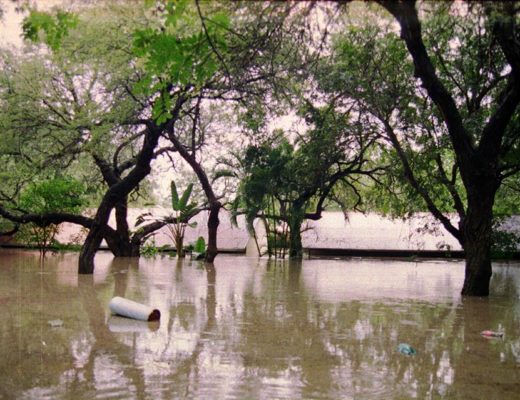
At Skukuza the flooding was the worst experienced in five decades. More than 40 houses in the staff village were flooded. Families lost their life’s possessions.
Then and now: See Dineo tropical storm rage
More than 300 tourists and staff members had to be rescued from rivers.
The old railways bridge at Crocodile Bridge could not bear the brunt of the debris and water. One of the middle pillars was pushed over resulting in the two steel sections crashing into the flooded river.
Letaba Camp was evacuated on February 24 although the river of 490 kilometres never broke its banks. Mr Gerhard Smit, a visitor shortly after the floods, recalled that it was a shock to see the damage.
“But at the same time I realised this was the way of nature to clean up the river.”
It was impossible at the time of the flood to ascertain the extent of the mortality among the wildlife. Some carcasses were spotted and baboons were seen clinging to debris. Many of the animals gathered on roads.
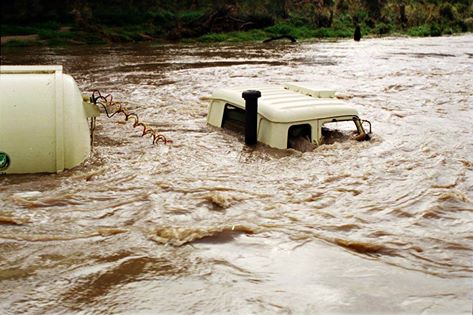
During the floods the Talamati fuel tanker wash away occurred. Just before dark driver, Rogers Khoza, delivered diesel to the Talamati Bushveld Camp generator. He tried to get across the Nwaswitsonto River.
It overturned and went downstream. He needed to spend the night in a tree to try and keep safe.