Zama zamas leave trail of destruction in Schoemanskloof Valley
Zama zamas allegedly pollute Crocodile River and threaten Montrose residents' safety.
“A law unto themselves”
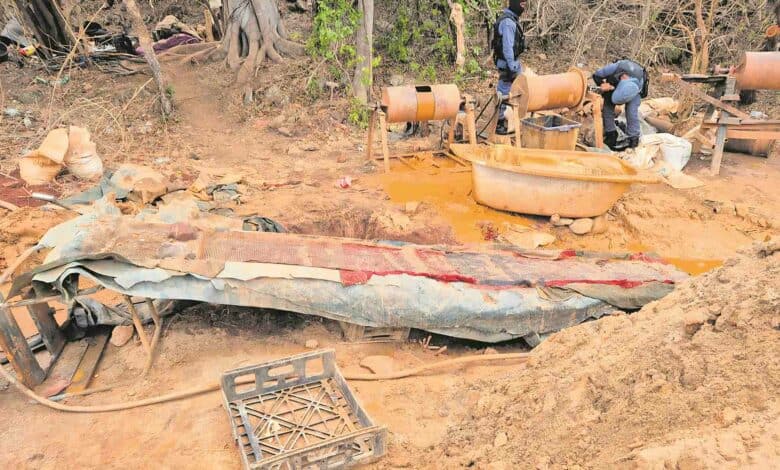
This is how locals in the Montrose area describe the zama zamas operating in the picturesque Schoemanskloof Valley – not only because of their illegal mining activities, but also due to the alleged pollution they cause in the Crocodile River.
Residents say it is not uncommon to find a dead body dumped alongside the Schoemanskloof Road.
ALSO READ: Police raid illegal mining site in Schoemanskloof
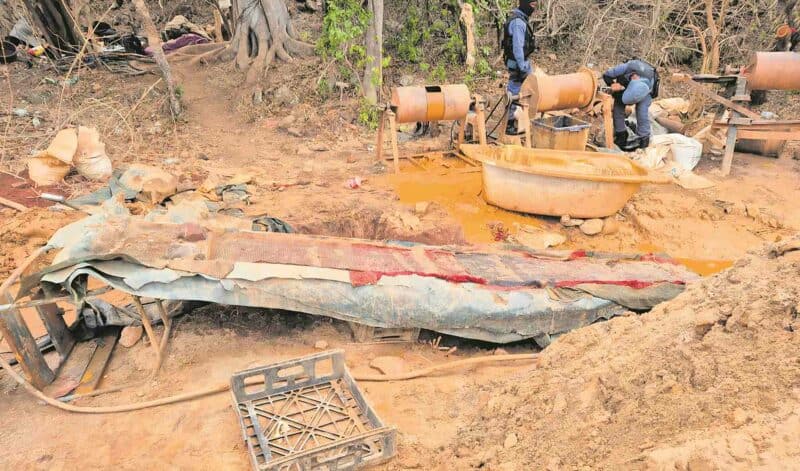
“The chemical mixture they use to extract gold for the ore contains mercury, cyanide, nitrogen oxide, and other toxic substances. It creates a dangerous red slurry, which is then dumped straight into the river,” said Ralph Kirsten, a member of the Schoemanskloof Farmers Association and a property developer in the valley.
According to Kirsten, the Inkomazi-Usutha Water Management Area (IUCMA) is responsible for ensuring water safety and protecting the ecosystem.
ALSO READ: Illegal mining continues to plague Pilgrim’s Rest
“We reported the problem to them numerous times, but received no response,” he said. Kirsten is co-owner and developer of the multimillion Samango Eco Estate opposite the Viva filling station.
‘Mission impossible’
During a stakeholders meeting late last year on the zama zama crisis, a government official described addressing the problem as a ‘mission impossible’ when asked what authorities planned to do about the miners and the water pollution, Kirsten said.
An investigation by Lowvelder, following complaints from residents, revealed that the zama zama site known as Mashobotho was raided by police and the army in April 2025. Ninety-one miners, most of them illegal immigrants, were arrested as part of Operation Vala Umgodi, meaning ‘plug the hole’. The operation, however, was shut down in September 2025 due to lack of funding.
The mining site is located next to the N4, near the Montrose spaghetti junction. Sources, speaking on condition of anonymity due to fear of reprisal, said that barely a week after the arrests, all suspects were granted bail – and within 24 hours, they were back at the site, digging as if nothing had happened.
ALSO READ: Pilgrim’s Rest tourist area unaffected by zama zamas – say locals
No action and death threats
Residents remain reluctant to speak openly about the miners, citing intimidation.
“Numerous residents have received death threats in the past,” one source said.
Complaints reported to the police in Ngodwana have also yielded no results.
“We saw the police go to the site, but no action was taken against the zama zamas,” the source said.
Lowvelder established that about 100 illegal miners are currently operating on the site, confirmed by a helicopter pilot who recently flew over the area. At one point last year, the number of miners on site was estimated at 300.
“The zama zamas reportedly redirected an estuary of the Crocodile River, known as Devil’s Creek, with a pipeline to access flowing water on site,” a source said.
Increase in crime
Brendan O’Kelly, chairperson of the farmers association, told Lowvelder that since the illegal mining started about three years ago, there has been a noticeable increase in crime in the valley.
He declined to comment directly on the zama zama problem, saying, “That is in the hands of the police. We just want to ensure the safety of residents and farmers in the area.”
Another source added that dead bodies are sometimes found next to the road, likely resulting from mining accidents, such as dig site collapses, or from disputes among the miners themselves.
Regarding potential pollution of the Crocodile and Olifants rivers in the Kruger National Park, SANParks said their scientists continuously monitor water quality and have so far found no signs of chemical contamination.
Neither the IUCMA nor Brigadier Athlenda Mathe, national spokesperson for the SAPS, responded to enquiries by the time of publishing.