Floodwaters bring increased malaria risks to Mpumalanga
Mpumalanga is under a malaria outbreak threat according to the Department of Health.
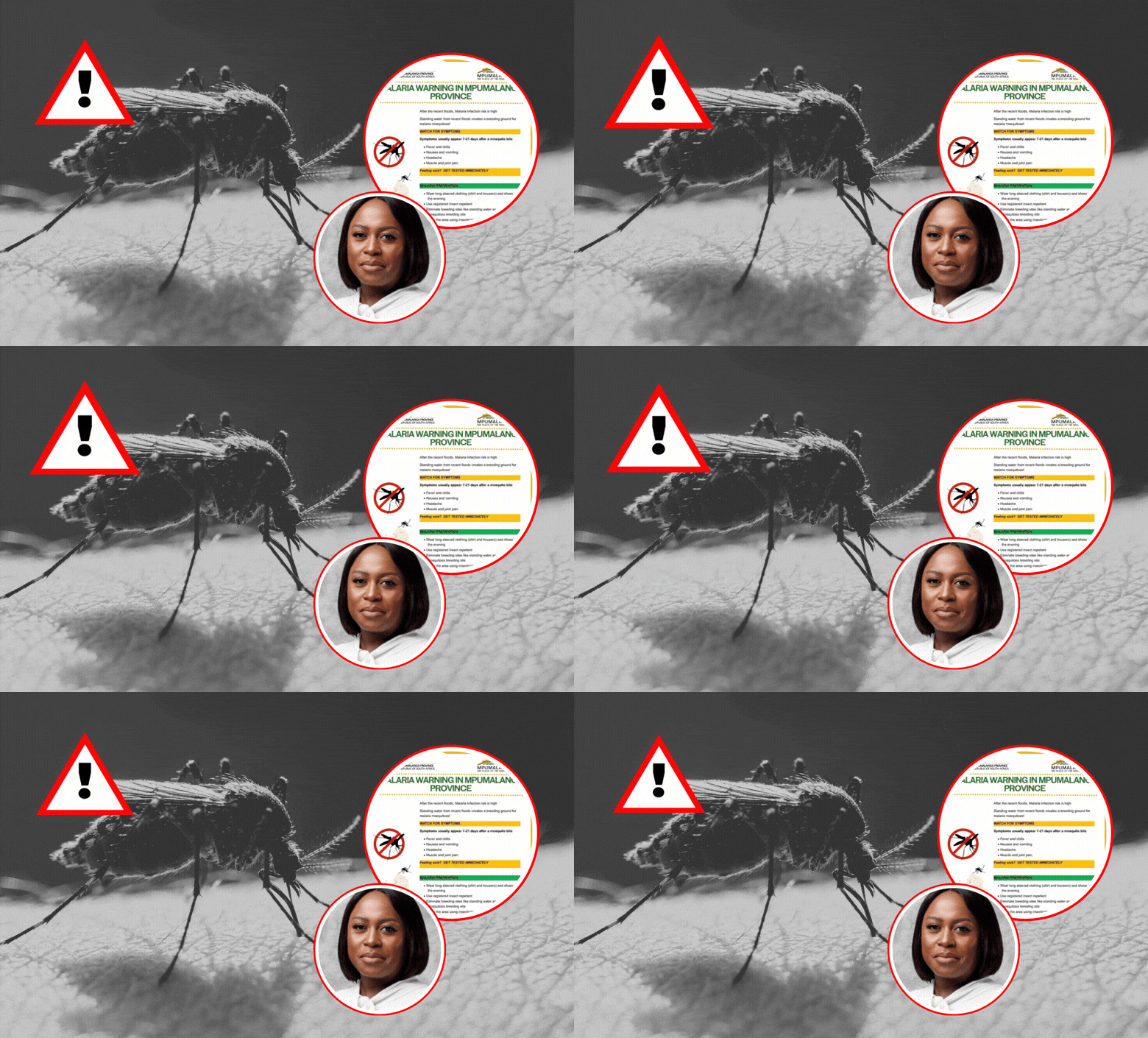
The Mpumalanga Department of Health issued a malaria alert following the recent floods.
ALSO READ: Kruger National Park updates access and restriction information
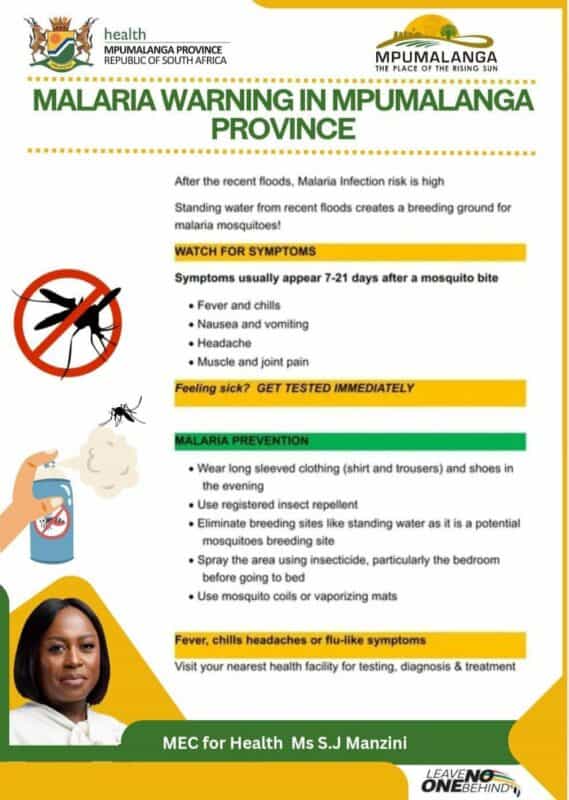
“Standing water creates breeding grounds for malaria mosquitoes, increasing infection risks,” said MEC Sasekani Manzini.
The Mpumalanga Department of Health alerts communities to the high risk of Malaria infection in the aftermath of floods, which have resulted in standing water that facilitates the breeding of malaria mosquitoes.#HealthForAll #GovZAUpdates #malariaawareness pic.twitter.com/PvFvVtjFaW
— GCIS_Mpumalanga (@GCISMpumalanga) January 30, 2026
She urged communities to take precautions.

* What exactly is malaria?
Malaria is a mosquito-borne infectious disease of humans and other animals caused by protozoans, a type of unicellular microorganism parasite. The disease is typically spread through a bite from an infected female mosquito, which introduces organisms from its saliva into a person’s circulatory system.
The parasites mature and reproduce in the liver after entering the bloodstream.
Malaria symptoms appear between 10 and 15 days after being bitten and include fevers, headaches, vomiting, sweating, cold shivers, and body aches.
Malaria cases are sometimes misdiagnosed because the symptoms closely resemble those of the common flu. If left untreated, the infection can lead to coma or death in severe cases.
Which areas are more prone to malaria?
Malaria is primarily transmitted in low-altitude areas of northeastern South Africa. Mpumalanga, including the Kruger National Park, northern KwaZulu-Natal and Maputaland, and the eastern and northern parts of Limpopo, are among the high-risk areas.
Kosi Bay and Sodwana Bay are medium-risk areas, while the North West Province and the Northern Cape are low-risk. Malaria transmission occurs seasonally in South Africa.
Malaria dangers to babies, young children, and pregnant women
Malaria kills an estimated 3 000 African children under the age of five every day. However, the exact number of deaths is unknown because data is unavailable in many rural areas, and many cases are undocumented.
Pregnant women are especially vulnerable to malaria because pregnancy lowers a woman’s immunity to malaria, making her more susceptable to infection.
Malaria is also to blame for stillbirth, preterm birth, and low birth weight in babies.
Malaria Prevention
There is an ABCD for malaria prevention.
Awareness; Bite prevention; Chemoprophylaxis (taking antimalarial medication exactly as prescribed); and prompt Diagnosis and treatment.
Disease transmission can be reduced by using mosquito nets and insect repellents to prevent mosquito bites or by using mosquito-control measures such as spraying insecticides and draining standing water.
Despite the need, there is no effective vaccine, though efforts to develop one are ongoing.
Malaria prevention medications are available for travellers to malaria-endemic countries.
Antimalarial medications are available to those suffering from the disease.
How to prevent malaria
Prevention is better than cure, and a few simple precautions can help protect you and your family from malaria:
- Make a doctor’s appointment six weeks before travelling to malaria-infested areas, and take the prescribed anti-malaria medication.
- When outdoors in mosquito-infested areas, wear protective clothing such as long sleeves and pants, and use mosquito nets over beds. Nets are lightweight, tightly woven, and extremely effective at keeping mosquitos away from your tent or bed at night. Check it for tears on a regular basis, and bring an extra net with you on your trip as a backup.
- Light citronella candles or apply insect repellent.
- In outdoor areas, use mosquito traps.
- Use mosquito repellents directly on your skin. Mosquito-repellent-treated blankets are useful.
* Source: Get it magazine
ALSO READ: Minister reveals plans for Kruger National Park flood damage
@lowvelder The current situation at the Nsemani Dam near Satara Rest Camp in the Kruger National Park today, Friday, January 16. > Video: SANParks #krugernationalpark #floods #satara