Road closures in Kruger ahead of explosions to remove artificial watering holes
Kruger road closures ahead of explosions to remove artificial watering holes is starting on the 27 November.
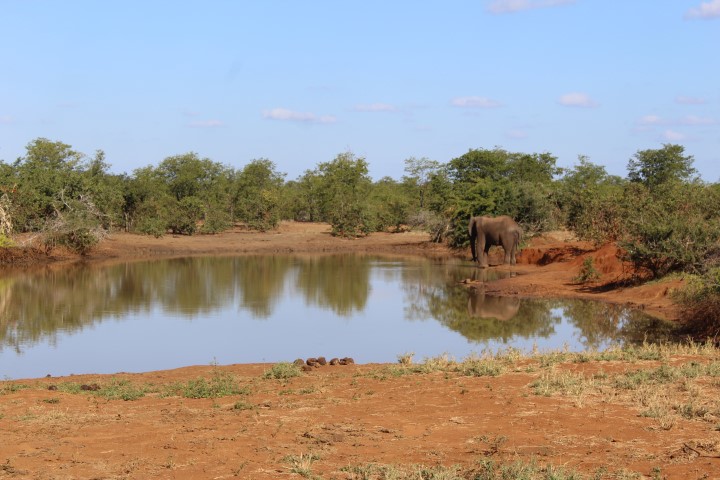
SKUKUZA – The Kruger National Park (KNP) in conjunction with the South African National Defence Force (SANDF) will demolish five redundant artificial water structures found in the northern and central areas of KNP as part of a long term rehabilitation program from 27 November – 9 December 2016.
Explosives will be used to demolish these structures; after which the rubble will be removed and re-used as part of the rehabilitation process.
Structures scheduled for the operation include:
• Sirheni Dam – it was breached by the 2012 floods and partially demolished in October 2015 but work was not completed
• Langtoon Dam – in the Vlakteplaas Ranger Section, this was breached in 2008
• Ngotso and Bangu Weirs – along the S89 and the old main road S90 in the Houtboschrand Ranger section
• Gudzani north windmill located along the S90 and S41 roads also in the Houtboschrand Ranger Section
The following safety measures will be put in place during the operation
• The area around the targeted structures will be cleared to ensure animals and human are safe.
• All roads in the areas will also be temporarily closed.
• Working on Fire, SANDF and Ranger teams will be on standby to extinguish any wild fire that might arise.
• An aerial flight will be dispatched to the area immediately prior to detonation to ensure that no tourists may be in the vicinity of the targeted structure.
KNP has been closing artificial water points for the past eight years, with the last being that of Sirheni in October 2015,” said the General Manager: Communications and Marketing, Mr William Mabasa.
Artificial water holes where water did not naturally occur have led to numerous ecological problems such as erosion and other environmental degradation.
This also resulted in a negative consequence for the rare herbivore species such as roan and sable antelope, increasing grazing competition by the more abundant herbivores. Conservation management has taken steps to rectify these negative consequences by closing and demolishing certain artificial water holes.
To enhance tourist experience, alternative game viewing opportunities will be provided at areas of naturally occurring surface water.
“With the continuous research data at our disposal, we have gradually changed our outlook on biodiversity management over the years. With this data available, policies and procedures can be revisited and revised; and this is evident in the change in policy regarding water distribution in the Park” concluded Mabasa.