
More than 10% decline in rhino poaching, increase in arrests
A total of 1 054 rhino were poached in 2016, compared to 1 175 in the same period for 2015, representing a decline of 10.3% Minister Edna Molewa announced today. There has also been a marked increase in arrests made.
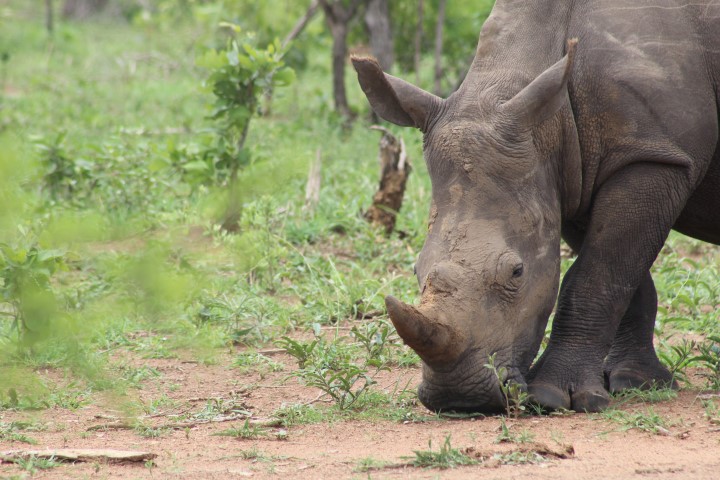
PRETORIA – The 2016 (January to December) statistics released by the Minster of Environmental Affairs, dr. Edna Molewa today, indicate a decline in the number of rhino poached, both for the country as a whole and for Kruger National Park (KNP).
A total of 1 054 rhino were poached in 2016, compared to 1 175 in the same period for 2015, representing a decline of 10.3%.
Specifically for the KNP, a total of 662 rhino carcasses were found in 2016 compared to 826 in 2015. This represents a reduction of 19.85% in 2016.
For 2016 there were a staggering 2883 instances of poaching-related activities (such as poaching camps, contacts, crossings, sightings, tracks and shots fired) in the Park, compared to 2 466 recorded in the same period in 2015. This is an increase of 16.9%.
While there has been a decrease in the number of rhino killed for their horns in the KNP and Mpumalanga, the number of rhino poached unfortunately increased in some other provinces.
“This indicates that syndicates are feeling the pressure from the interventions being employed in the KNP. We are therefore prioritising these pressure points through enforcement operations,” said Molewa.
In 2016 46 elephants were poached in the KNP.
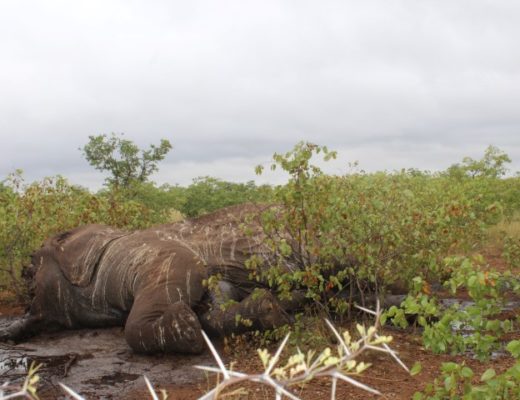
Molewa said that the interventions being implemented to counter rhino poaching are also used to respond to this emerging threat.
During September 2016, a rhino survey using the scientifically accepted block count method recorded that a total of 6 649 – 7 830 white rhino lived in KNP. This is lower than the 8 365 – 9 337 that lived in the KNP during 2015.
A total of 349 – 465 black rhino lived in Kruger National Park in 2016 compared to 313 – 453 in 2015. The drought effect was not as noticeable on the black rhinos.
Molewa pointed out that an agreement between the government of Mozambique and its Private Concessionaires located on the Eastern boundary of the KNP was signed on 22 February in Maputo.
“The essence of this agreement is to formalize the involvement of Private Sector on enhanced protection of wildlife as well as improvement of livelihoods of adjacent communities. This is a replication of what we in South Africa have done with our concessionaires on the Western side of the Kruger national Park and thus a direct result of our collaboration,” said Molewa.
Molewa announced that there has been an increase in the number of arrests for poaching-related offences inside the KNP, the area hardest hit by poaching.
During 2016, SAPS reported that a total of 680 poachers and traffickers were arrested for rhino-related poaching offences nationally. This is a marked increase in arrests from 317 in 2015. Of this number, 417 were arrested both within and outside the KNP.
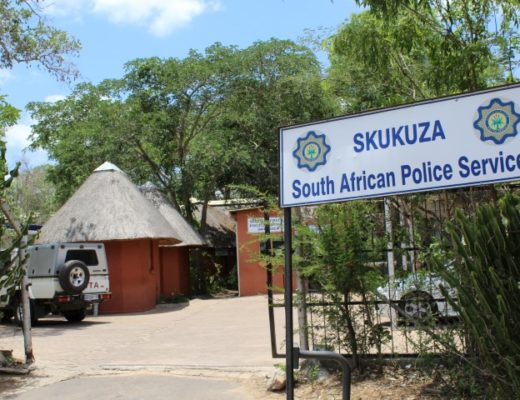
She announced that the the Department of Justice and Constitutional Development has decided to open the Skukuza Regional Court with effect from 7th March 2017.
According to Molewa in 2016, the Green Scorpions trained 905 border officials on initiatives focused on the Illicit International Cross Border Movement of Endangered Species.
“Making communities owners of wildlife remains key to our strategy,” she said.
The Department is currently implementing 30 support projects around the country in the various protected areas with a total budget of R1 334 098 200. An additional 14 projects across all provinces are in the pipeline with an anticipated budget of R352 685 216.
She referred to collaboration with the Government of Mozambique. “The partnership has been greatly successful in the past year.”
Specific interventions focused on the youth of the two countries were agreed upon. As a result, a youth awareness programme was developed as part of the Great Limpopo Transfrontier Conservation Areas (GLTFCA) initiative. The aim of this programme would be to develop interventions which are specifically designed to createawareness amongst the youth on the value of the natural heritage of the two countries.
She pointed out that the Hawks have further strengthened their priority actions through engagement with international agencies, partnering with the Asset Recovery Inter Agency Network Southern Africa (ARINSA), the Wildlife Inter-Regional Enforcement (WIRE) group harnessing the support of international partners for those priorities that involve transnational syndicates.
Read full statement of Department of Environmental Affairs: