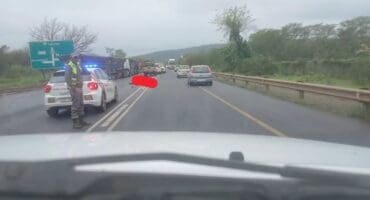
Know your rights as a road user when stopped by traffic officials
After complaints by several readers regarding traffic officials taking bribes or stopping at dangerous places, Corridor Gazette contacted the authorities to find out more about officials' duties and motorists' rights.
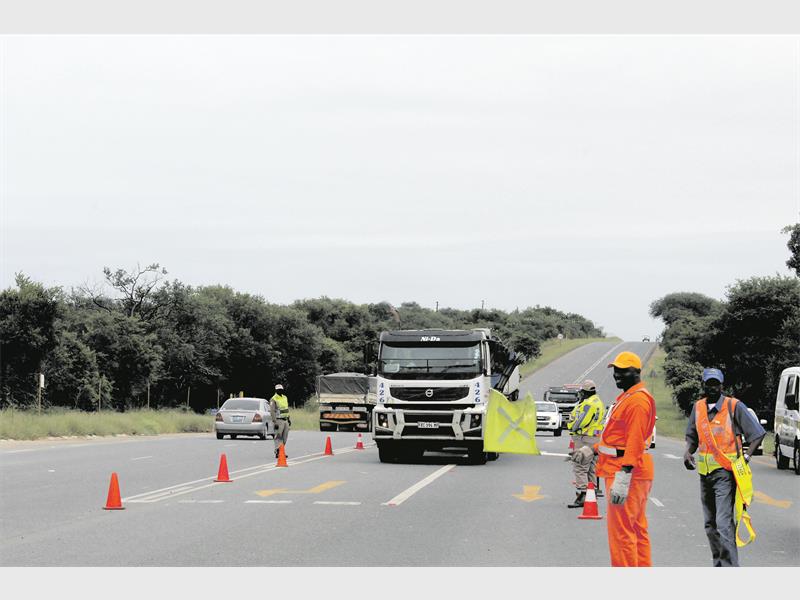
KOMATIPOORT – Several readers have complained to Corridor Gazette about traffic officials pulling cars off the road at dangerous or strange places over the past few weeks. Some have also alleged that traffic officers are only targeting Mozambican vehicles and take bribes to ignore transgressions.
Upon enquiry, Moeti Mmusi of the Department of Community Safety, Security and Liaison (DCSSL), explained that traffic officials are allowed to operate on any part of the road that they deem necessary. “However, the department does not condone officers operating at spots that could endanger motorists,” he said.
Mmusi also said they are aware that some officers are taking bribes and said that they need the community’s support to identify these corrupt officials.
He urged people not to pay bribes and said that such behaviour kept dangerous vehicles and motorists on the road.
READ: Emergency services tested with accident simulation
If an officer demands a bribe from you or if you have witnessed such behaviour, report it to the nearest police station, SAPS Crime Stop on 0800-10111 or the DCSSL’s anti-corruption line on 0800-701-701.
In such cases try to get as much information on the officers are possible, such as their surnames, vehicle registration number and any other details or defining characteristics to enable authorities to track them down.
Motorists are reminded that a police or traffic officer has the right to stop a vehicle at any time. The driver can be required to give their name and address, and any other information regarding their identity.
However, motorists may ask an officer for proof identity such as their appointment certificate or identity card. This applies whether they are in uniform or not.
READ: Job seekers targeted by scammers impersonating SAPS, municipal officials
According to the Criminal Procedure Act, if the officers cannot or refuse to provide this proof, any actions they take will be unlawful.
The National Road Traffic Act gives a traffic officer the authority to demand your driver’s licence, which the driver is required to keep on their person or in the vehicle.
If a vehicle is considered unroadworthy, officials may order that it be taken off the road or specify that it may only used for a limited period. In this instance, they may remove the licence disk from the windscreen to ensure their orders are enforced.
READ: TRAC warns against overloading vehicles
In regards to being stopped for an outstanding fine at a roadblock, many people feel intimidated to pay it immediately. There have been cases where people did not even know they had received a fine until being stopped at a roadblock.
According to law, you may not be arrested for an outstanding fine unless you have received notice of it and there is a warrant of arrest.
A summons to appear in court may be served, which is usually dated for at least two weeks in the future. You cannot be forced to pay on the spot, but motorists are urged to go pay their fines as soon as possible afterwards to avoid legal action.
If a police or traffic officer has any just cause for an arrest, motorists are urged not to resist but to later state their case clearly in front of the investigating officer.