Installation of tribute to Duke the super tusker in its final rounds
An exhibition for super tusker Duke will be constructed at the Crocodile Bridge, where a dream is now turning into a reality.
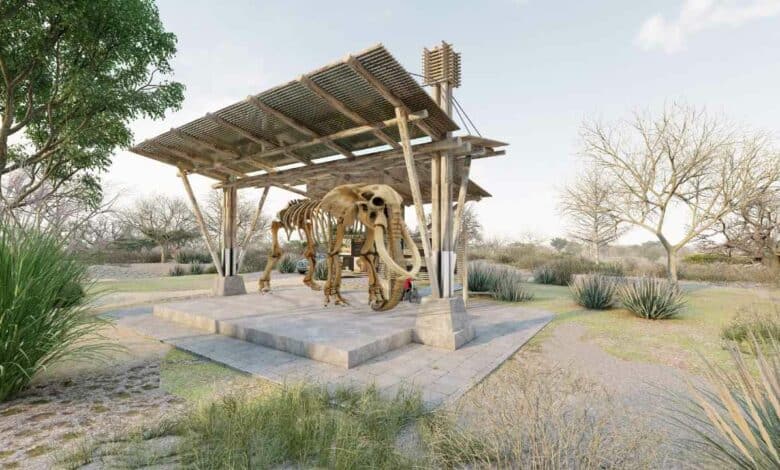
An installation and statue dedicated to the legacy of the legendary Kruger National Park super tusker, Duke, can now become a key destination in the park.
This is all thanks to a 13-year-old dream of regional ranger Neels van Wyk and a team of avid Duke fans.
When you meet Van Wyk, you immediately recognise how much respect and esteem he has for Duke, one of the few super tuskers of the park. Van Wyk’s dream is to honour Duke’s legacy with a reconstruction of his skeleton and mounting it as an exhibition in the park.
Now, thanks to a resolution passed by the park’s management team, Van Wyk’s tireless work, Stop Poaching Endangered African Rhino (SPEAR), artist Dawie Fourie and other role players, this dream will come true.
Duke, named after Thom Duke, an early 20th century Lower Sabie ranger, provoked comments early on in his life when it was realised he might be an emerging super tusker. Such elephants have the DNA to develop extra-long tusks weighing 45kg each. Duke’s tusks each weighed more than 70kg. His left tusk measured 144cm from the skull and his right tusk 133cm.
Duke was such a rockstar in the world of wildlife, he even had his own Facebook page on which you could post photographs taken of him in the park.
Van Wyk first saw the elephant in 1995 when he was based at Lower Sabie doing his practical year towards a diploma in nature conservation.
“I saw Duke one afternoon on the red grass plains next to Muntshe Hill at the Loskop windmill. It was an amazing sighting. I watched him drinking from the cement reservoir. He had to lift and tilt his head sideways, resting on the dam wall to support his enormous tusks,” he said. “I watched him for over an hour around the drinking hole. Little did I know that day that we would have some very special times and adventures in the years to come.”
Many Duke fans saw him in the Crocodile Bridge section of the park, or when he occasionally ventured into the adjacent Lower Sabie and Tshokwane sections.
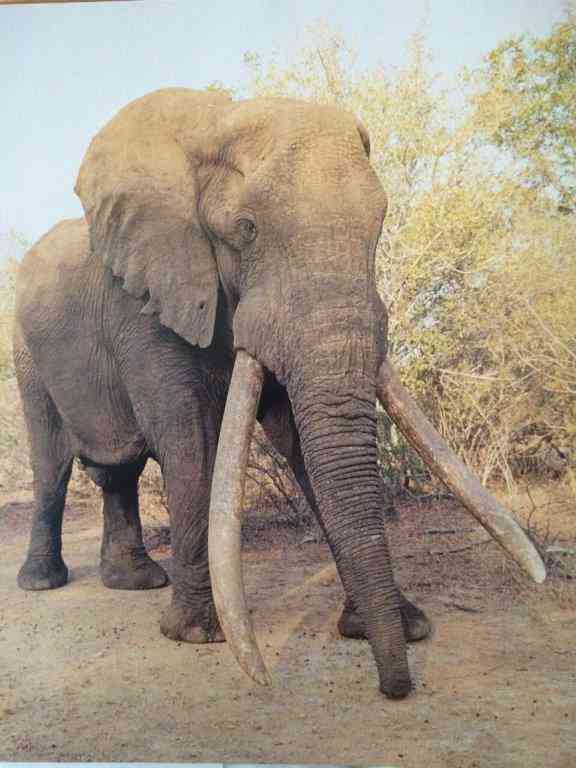
In October 2011, Duke passed away at the age of 55. But the day of his death had a run-up, and this is where Van Wyk comes in. Although both his tusks broke off on separate occasions, they were not lost, largely due to the efforts of Van Wyk and fellow section ranger Steven Whitfield’s teams. It was on Van Wyk’s suggestion that John Turner, chairperson of the Honorary Ranger’s Counter-poaching and Ranger Support Services Unit, raised the necessary funds for a collaring operation and the collar itself.
On the day of the operation, the tusker had an audience. The onlookers saw him wanting to outrun the helicopter, but the dart struck. They watched him run back and forth. Eventually, he sagged to the ground. The entire collaring operation took about 30 minutes, which made Dr Markus Hofmeyr, head of SANParks veterinary services, a happy man.
Van Wyk found a few moments of comfort in his wife’s embrace for an emotional celebration after the elephant was collared and set free again, as his father had passed away two years previously to the day.
“He was very fond of Duke, and the fact that we found both tusks after they had broken off … I knew he would have loved to be part of the collaring process,” said Van Wyk.
Monitoring Duke became a pleasure for Van Wyk. One day, after a short absence of a few days from the park, he noticed that the radio signal was no longer signalling, and went to investigate.
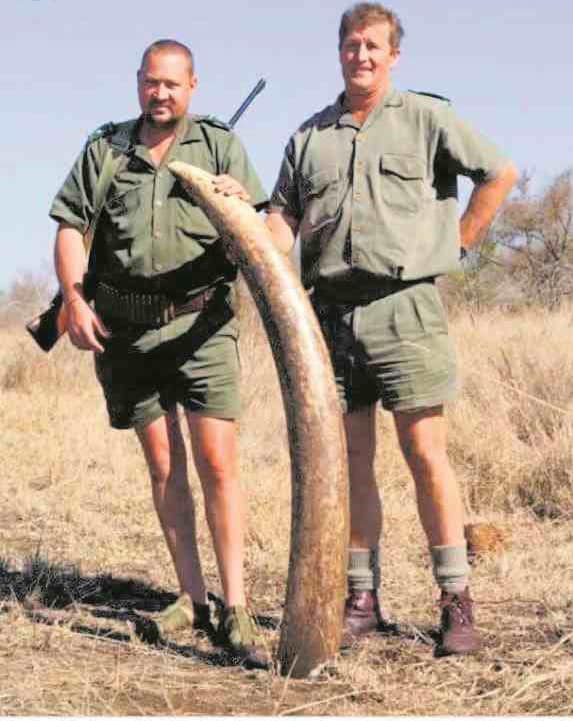
“I received a call from Johan Marais on October 4, 2011, wanting to come and have a look at Duke. I had a look at Duke’s position and saw his last location was along the Makambeni spruit west of the S28 tourist road. I got worried when I saw there was no update since 22:21 on October 1,” he explained.
On a gut feeling, he took the motorbike and drove along the Makambeni. “My gut feeling became reality when I caught the smell of a carcase, and around some spike-thorn trees I came upon Duke’s carcase. A sad but comfortable feeling came over me. The Duke saga was concluded. He died a natural death towards the end of his lifetime. He was not poached or suffered any disease or injury,” said Van Wyk.
Van Wyk and his team raised the carcase with a crane and relocated it to an empty cement reservoir. This ingenious strategic plan became the basis of later reconstructing Duke’s skeleton and skull with replicas of his teeth in place at the gate at Crocodile Bridge. Duke’s soft tissues were burnt off by sun and wind, and then the more than 200 bones found their way to a storage room near Van Wyk’s house two years later.
A plan could now be put into action. Under the leadership of Glenn Phillips, former executive manager of the Kruger National Park, the park developed a new paradigm years ago, to exist symbiotically with the park’s neighbours rather than in isolation. For this purpose, the park divided the game park area into zones and developed private-public partnerships. One such partnership’s management shared Van Wyk’s dream.
The area south of Skukuza, also known as the Intensive Protection Zone, is one of seven such areas and is served from outside the park by its contract parties, the honorary rangers, SPEAR and the Nkomzi Integrated Group (NIG). Together with the NIG, SPEAR is responsible for favourable cross-border relations between the park and communities.
The local Voortrekker movement, one of SPEAR’s community partners, was engaged to help with the reconstruction. Van Wyk’s dream was now beginning to come true. The bones, which had been stored for nine years, could now be put together like a puzzle.
ALSO READ: Some roads in Kruger National Park closed due to heavy rains
The dream was also realised with the help of everyone who had a heart for this cause and was prepared to play a role. Local businesses, including Jock Safari Lodge, BUCO and Fine and Country, and people such as Henk Grobler and professional volunteers, including an architect and engineer, donated resources, skills and support.
During the pandemic, the Voortrekker members rolled a wagon wheel over 400km from their commando area, Oosterlijn, for a fundraiser, and donated the money to the Duke Reconstruction Project. The Komatipoort Voortrekkers have since cleaned and varnished all of Duke’s bones and built the frame for mounting the skeleton.
Jan Engelbrecht, SPEAR’s CEO, praised the invaluable contribution of iconic Marloth Park painter Dawie Fourie. “Dawie’s encyclopedic knowledge of elephants, also specifically of Duke, and his knowledge of elephants are indispensable. He was involved with the Duke Reconstruction Project from the start, along with Neels. Dawie has already made plaster casts of the tooth pieces,” said Engelbrecht.
ALSO READ: Watch: 2 leopards spotted at trout lodge in Mpumalanga
A design of how the Duke statue should be mounted and presented in an appropriate kiosk at the gate was prepared by architect Arma Steyn, after consultation with Van Wyk and the camp manager of the Crocodile Bridge area, Stephan Nel. These plans were presented to the Kruger’s management in October and were approved.
Ike Phaahla, the Kruger’s spokesperson, said the exhibition will enhance the visitors’ experience.
“They can get to know about one of the legendary tuskers to roam those areas.”
The project’s next phase is now being undertaken so that the skeleton can be assembled and exhibited.
Do you also want to be part of this dream and give shape to something big, something beautiful, with the Kruger National Park as the key driver? There is room for everyone to get involved in various projects.
The non-profit organisation SPEAR depends on donations. The construction and maintenance of the Duke statue is only a starting block for significant support for the dream in which the Kruger not only houses treasures, but develops legacies.
Contact Engelbrecht on 082 784 5682 or jan@spearnpo.co.za for possible involvement, or Abel Luger at abel@spearnpo.co.za for community development in the south.