Dr Michael ‘Gus’ Mills remembered as a pioneer of conservation
Dr Gus Mills was a legend in the conservation of some of Africa’s most iconic predators.
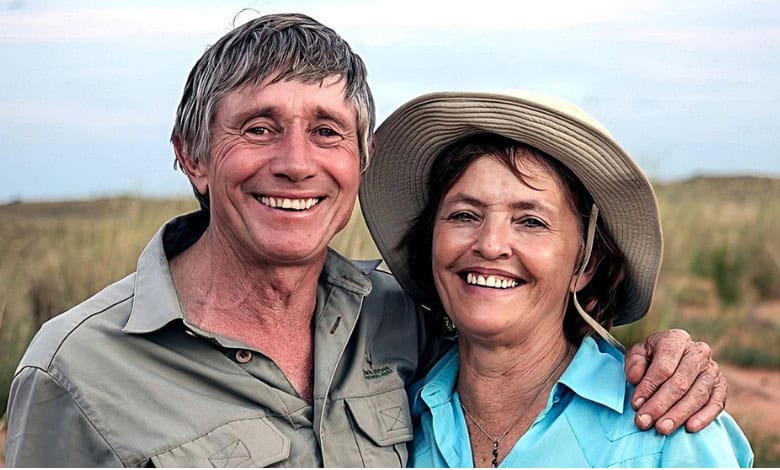
The conservation community is mourning the passing of renowned wildlife researcher Dr Michael ‘Gus’ Mills (77), who died on July 12 after battling cancer.
He leaves a remarkable legacy, built over more than four decades of dedication to Africa’s wildlife.
Mills lived in Mpumalanga and worked as a research associate at the University of Mpumalanga from 2017 to 2019.
ALSO READ: Eugene Cussons: SA’s brave bushveld pilot lives on in Lowveld
He was born in Zimbabwe on June 24, 1949. Mills and his wife, Margie, had three children, Michael, Stevie and Debbie.
He studied psychology at the University of Cape Town and earned an honours degree in wildlife management at the University of Pretoria.
Widely regarded as one of Africa’s most respected carnivore ecologists, Mills devoted his career to understanding and conserving some of the continent’s most iconic predators, including lions, leopards, cheetahs, African wild dogs, brown hyenas and spotted hyenas.
His research resulted in a better scientific understanding of predator behaviour, ecology and conservation, influencing wildlife management practices across southern Africa and beyond.
Mpumalanga Tourism and Parks Agency carnivore scientist Gerrie Camacho said he worked closely with Mills for 25 years.
ALSO READ: Beloved conservationist Eugene Cussons dies in Hartbeespoort
They first met in 1993 at a Kruger National Park meeting about supposed lion camps. “Gus was a very innovative person who could look at things from a different angle,” Camacho said.
Together they gathered data to learn more about leopards. This led to a significant breakthrough in understanding their clades. A clade is a group of organisms that includes a common ancestor and all of its descendants, forming a complete branch of the evolutionary tree.
“I remember sitting around campfires and spending time together, talking about our work. He was an exceptional wildlife ecologist.”
He laughingly admitted that Mills still believed in the traditional method of doing field work and was not overly excited about using technology.
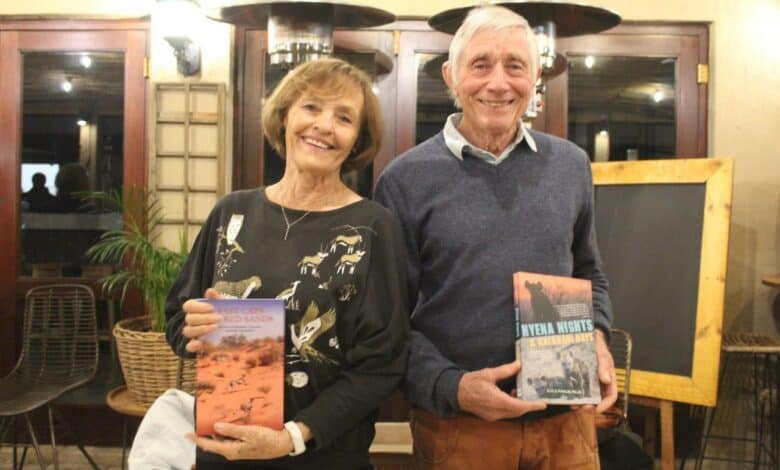
Mills spent much of his professional life working in South Africa’s national parks, particularly the Kruger National Park, and the Kalahari, where he carried out long-term ecological studies.
His work focused on the complex relationships between predator species and how they coexist within the same ecosystems.
His research on hyenas, often misunderstood and overlooked animals, helped change public perceptions by demonstrating their intelligence, sophisticated social structures, and critical ecological role as both predators and scavengers.
ALSO READ: Jane Goodall rests in eternal Eden
Mills developed a passion for wildlife from a young age. He later pursued studies in zoology and ecology before joining what is now SANParks, where he established himself as one of the continent’s leading wildlife scientists.
Throughout his career, he mentored numerous young researchers and conservationists, many of whom have gone on to become respected scientists in their own right.
He was also the founding chairperson of Wild Dog Advisory Group (WAG), a non-profit organisation that ensures the long-term survival and conservation of wild dogs in South Africa. The organisation also focuses on biodiversity conservation.
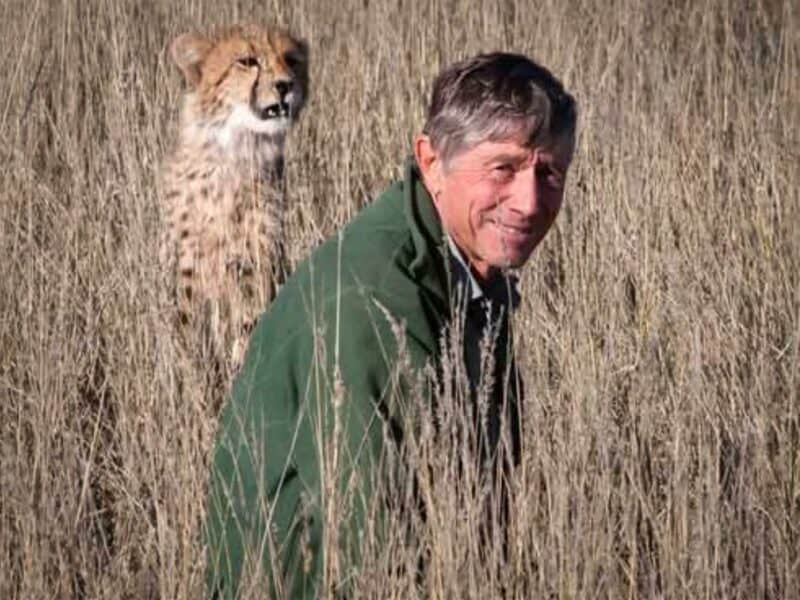
His findings informed wildlife management decisions in protected areas throughout southern Africa, helping authorities better understand predator-prey dynamics, habitat requirements and the importance of maintaining ecological balance.
Friends and colleagues have described Mills as a humble, passionate and deeply committed conservationist whose curiosity never faded. Despite his international reputation, he remained approachable and generous with his knowledge, always encouraging young scientists to ask questions and pursue rigorous research.
ALSO READ: Renowned carnivore researcher Michael ‘Gus’ Mills dies
Tributes have poured in from conservation organisations, researchers and former students across the world, many praising his lasting impact on wildlife science and his unwavering commitment to protecting Africa’s natural heritage.
Alan Holmes wrote: “Marloth old timers will remember our local newspaper, Bos Nuus. I interviewed Mills for an article in the newspaper when he came here and gave a lecture at Grand Kruger Lodge on carnivores.
With more than 40 years experience in the large African carnivores, he opened his talk with the line: “I know nothing about lions! After four decades of close association with them, I have to admit that there is so much about lions I do not know!”
Beverley Johnston said: “Sending condolences to Margie, Debbie, Stevie and Michael. A very sad loss. A wonderful human who leaves a great legacy.”
Stuart Long said: “I loved his talks. A big loss!”