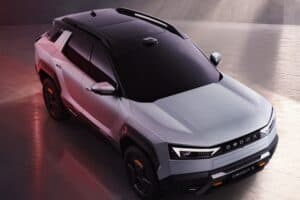
A local market time of reveal, and final specification, will only be formalised in 2027.
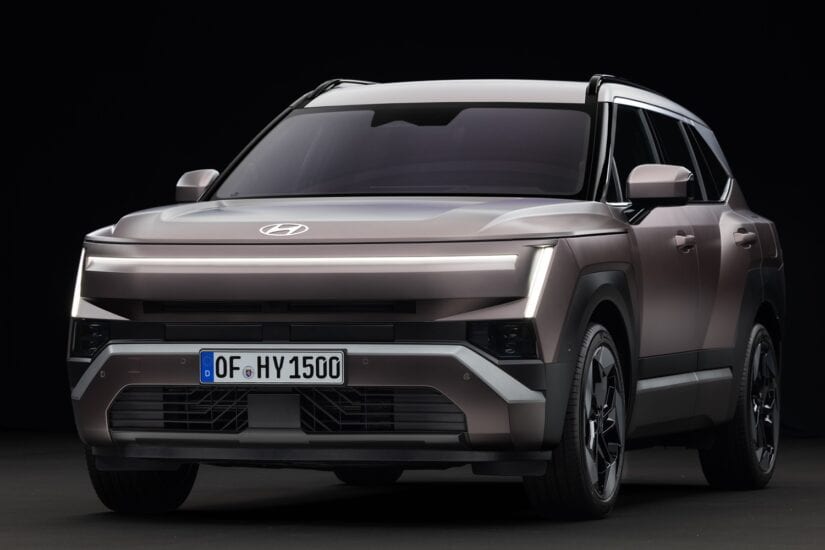
Fifth generation or NX5 Tucson debuts a new styling language called Art of Steel. Picture: Hyundai


Described as its most dramatic generation to date, Hyundai has debuted the all-new fifth generation Tucson ahead of its South African-market arrival next year.
Known internally as the NX5, the replacement for the NX4, which premiered six years ago, introduces not only a new aesthetic direction but also a redesigned interior and, for the first time, no diesel engine.
‘Art of Steel’
In what Hyundai calls its Art of Steel styling language, the Tucson dispenses with the Parametric Hidden Lights and jewelled grille in favour of a rounded, sealed upper section, finished with a smaller lower air intake.
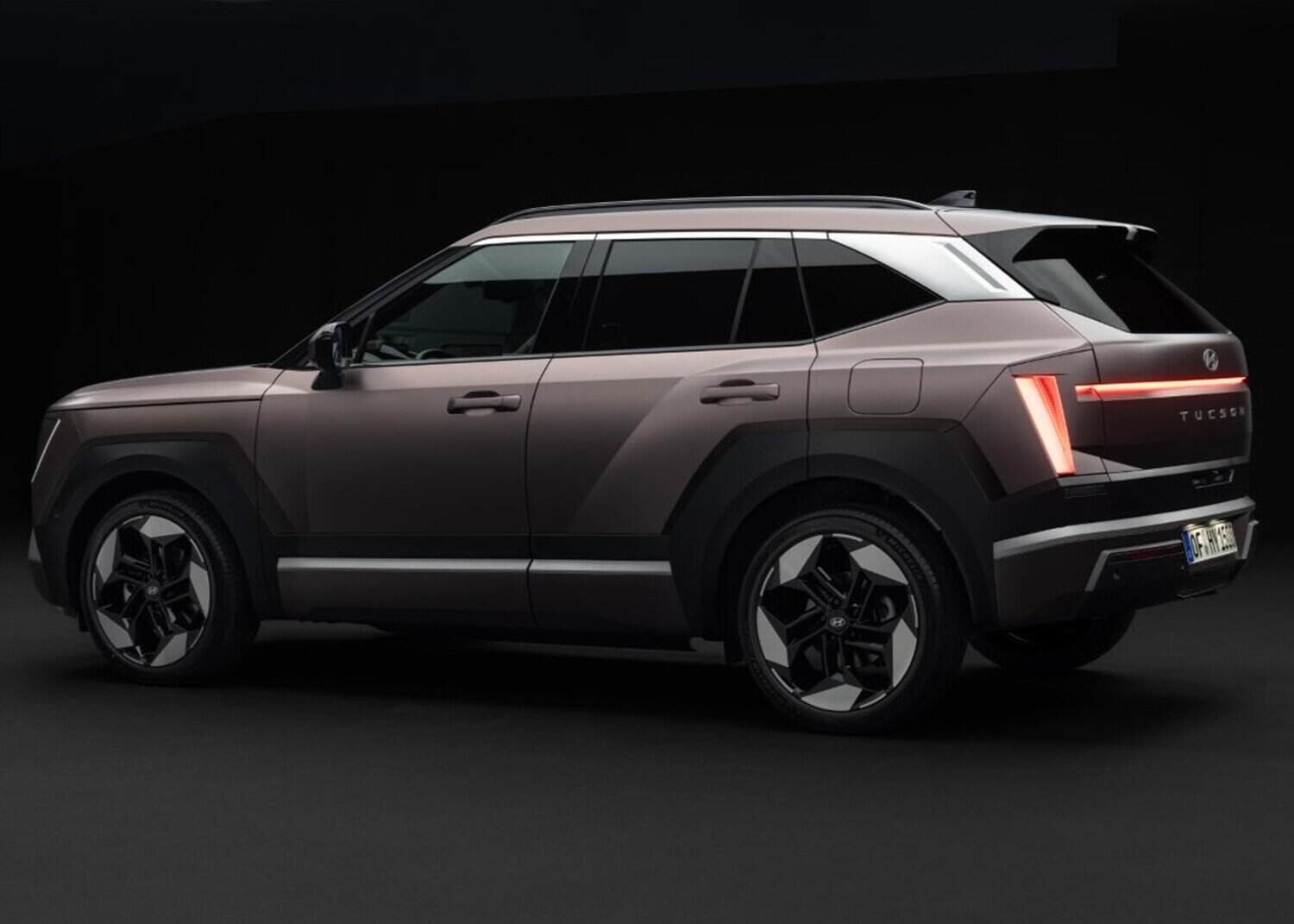
Along with a new bumper, the light arrangement involves a full-width central LED bar “connecting” with the side LED strips to form a new interpretation of Hyundai’s H-pattern.
The same applies to the rear, where an LED light strip runs along the entire width of the tailgate before “joining” up with the main clusters draped down the sides of the rear wings.
Dimensions
As before, the Tucson will have either a long or short wheelbase option; however, the former will be reserved solely for North America and reportedly Australia.
As such, the European short wheelbase variant presents the likeliest option for South Africa.
Riding on the latest version of the N-platform that underpinned its predecessor, the European form of the NX5 Tucson has the following dimensions:
- Length: 4 560mm;
- Wheelbase: 2 720mm;
- Height: 1 670mm;
- Width: 1 900mm.
This makes it 35mm longer and wider, and 20mm taller than the NX4, with its wheelbase increasing by 40mm.
The added result is more boot space at 695-litres with the rear seats up and a slight ground clearance reduction of 12mm, depending on the size of the alloy wheels fitted.
Interior
Inside, the interior introduces an even more radical new layout which Hyundai says “creates a furnished space that prioritises visual refinement and thoughtfulness”.
Incorporating what it describes as a two-layered dash, the instrument binnacle departs in favour of a slim 9.9-inch display that is located on top of the dashboard instead of being integrated.
Its vacancy in front of the steering column is occupied by a storage area and the Driver Attention Alert monitor on top of the column itself.
Elsewhere, the centre console is more slimline and now houses the wireless smartphone charging pad, an armrest and storage area, but not the gear lever, which, for the first time on any generation Tucson, moves to the steering column on automatic models.
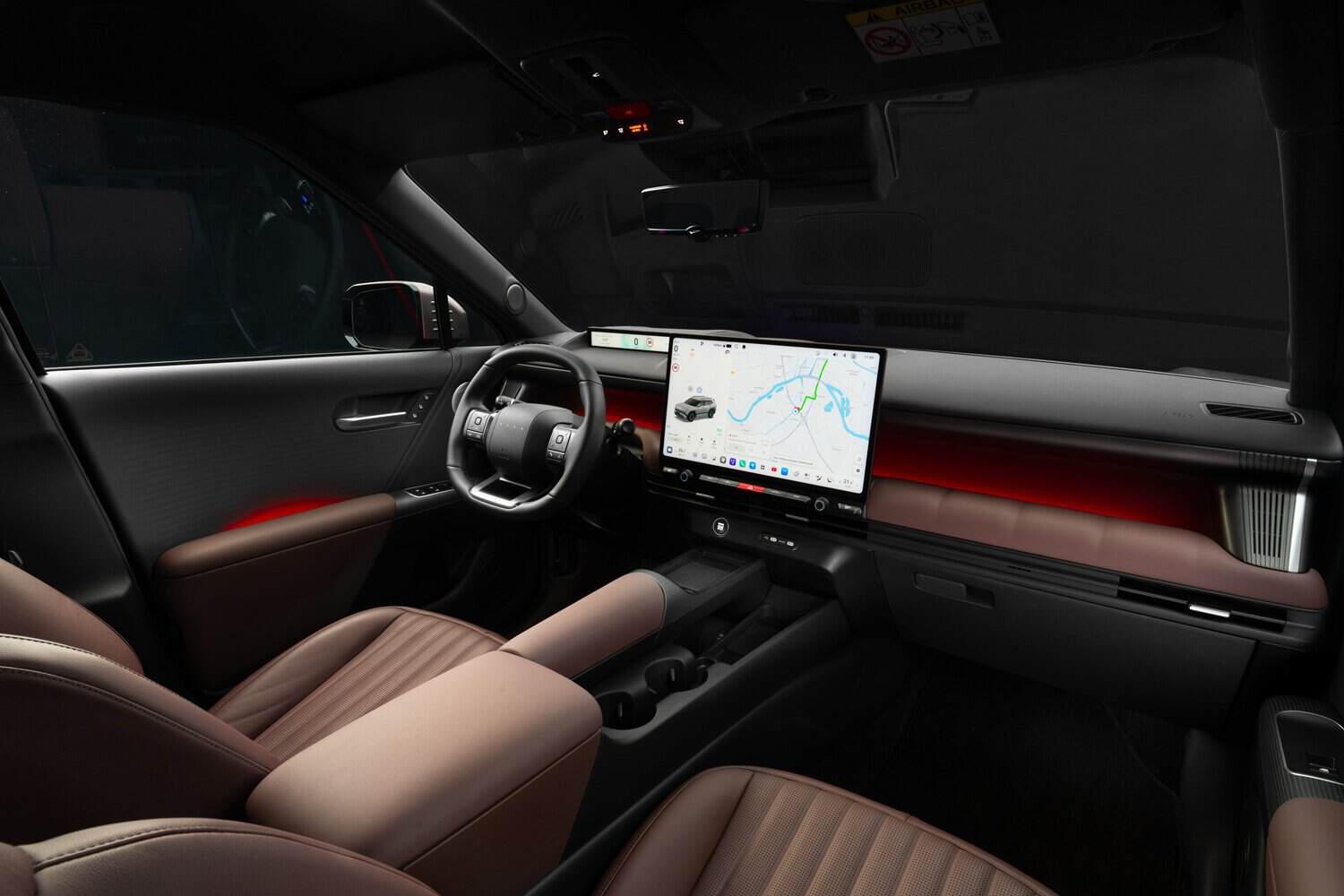
As well as a new steering wheel without any Hyundai lettering or badges, all of the various functions move to the new infotainment system offered in two sizes: 12.9-inches or 17-inches.
Serving as the interface for the mentioned functions, the infotainment debuts Hyundai’s new Pleos Connect interface based on Google’s Android Auto operating system.
Added new features on the specification sheet are heated, ventilated and massaging front seats, a new climate control system called MultiAir climate, ambient lighting, a transparent chassis-view camera and remote park assist.
A first-time digital rear-view mirror, Memory Reverse Assist and an optional 12-speaker Bang & Olufsen sound system rounds the interior off.
Petrol, hybrid or plug-in hybrid
Up front, the European Tucson will derive motivation from a choice of three powertrains, all modelled around Hyundai’s 1.6 T-GDI engine.
In petrol form, the engine makes 110kW/250Nm and will be paired to either a six-speed manual gearbox or a seven-speed dual-clutch.
Opting for the latter, though, comes with the standard inclusion of a 48-volt mild-hybrid system. However, in both cases, drive is routed to the front wheels only.
Moving up to the self-charging HEV hybrid sees the engine being paired with a 1.49-kWh battery pack and electric motor in a capacity similar to that of the Santa Fe.
Combined, the system develops 180kW/380Nm and is paired to a hybrid-specific six-speed automatic gearbox. Unlike the normal petrol, buyers will have the option of front-wheel drive or all-wheel drive.
Finally, the plug-in hybrid pairs the 1.6 T-GDI with a 17.1-kWh battery pack that powers a single electric motor.
The result is a combined 215kW/380Nm, which translates to a projected all-electric range of 81km. As with the HEV, the plug-in hybrid has the same six-speed automatic ‘box and the option of two-wheel drive or all-wheel drive.
Meanwhile, the North American-spec Tucson develops 135kW/265Nm from its 1.6 T-GDI has a result of it lacking the mild-hybrid system.
Moreover, it also swaps the six-speed manual and seven-speed dual-clutch for an eight-speed torque converter automatic.
Both the hybrid and plug-in hybrid models are, however, identical to those of the European versions in both power and range.
Wait has started
Going on sale before year-end in the States and on the Old Continent, the Tucson will make its South African market arrival next year.
While the price and specifications are still unknown, expect a considerable premium over the current line-up updated last year, whose stickers range from R559 900 to R859 900.