


The Changan Hunter K50 REEV will evolve into a more aggressive looking, off-road biased, K70 model, that will land in South Africa at the beginning of 2028.
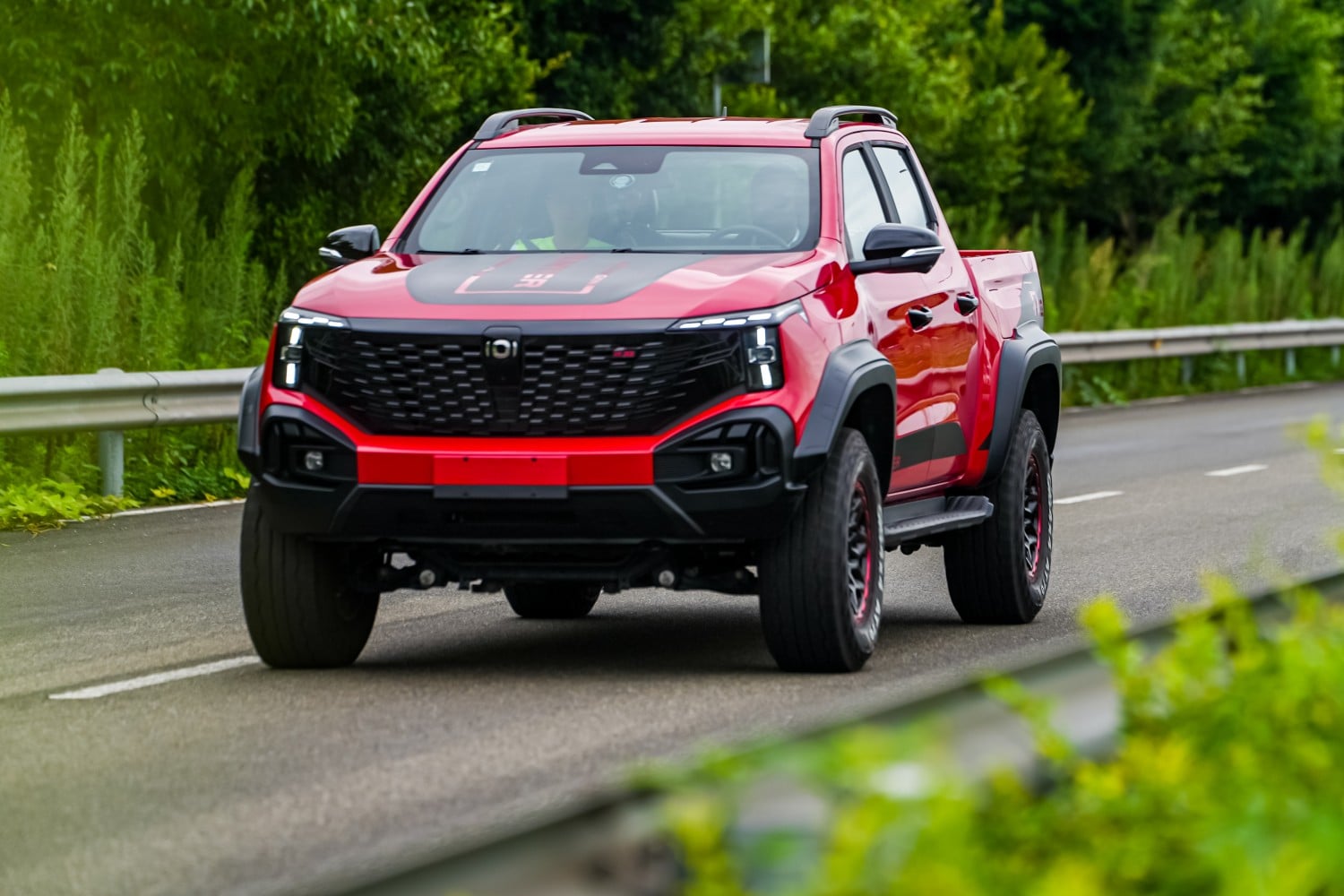
The Hunter K70 REEV is basically the tougher, more off-road-focused version of the Hunter K50 REEV. Picture: Supplied


Changan was the first to market with a Range Extended Electric Vehicle (REEV) when they launched their Hunter K50 REEV double-cab bakkie in South Africa late in 2025. Jampacked with tech and luxury, it is a solid offering that continues to find homes locally.
More off-road credibility
While on our travels to Chongqing, China, the home of Changan Automotive, we came across the new Hunter K70 REEV in R33 guise at one of their test facilities.
Based on the Hunter K50 REEV that we have come to know, the Hunter K70 REEV offers some cosmetic changes you can see and some under-the-skin upgrades that are not so easy to spot.
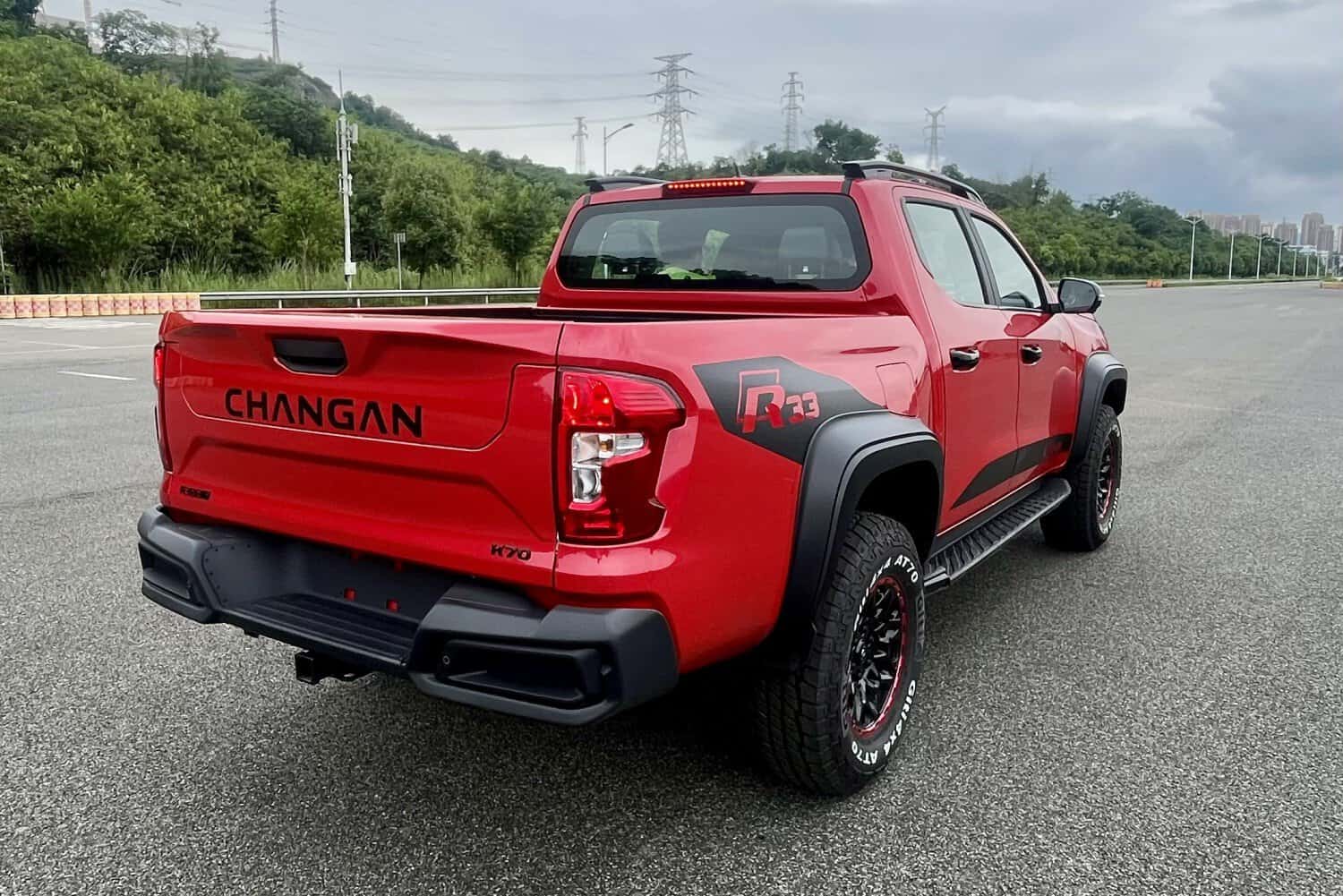
The R33 badging and stripes hints at this being a top of the range offering. Time will tell if this naming convention comes to South Africa.
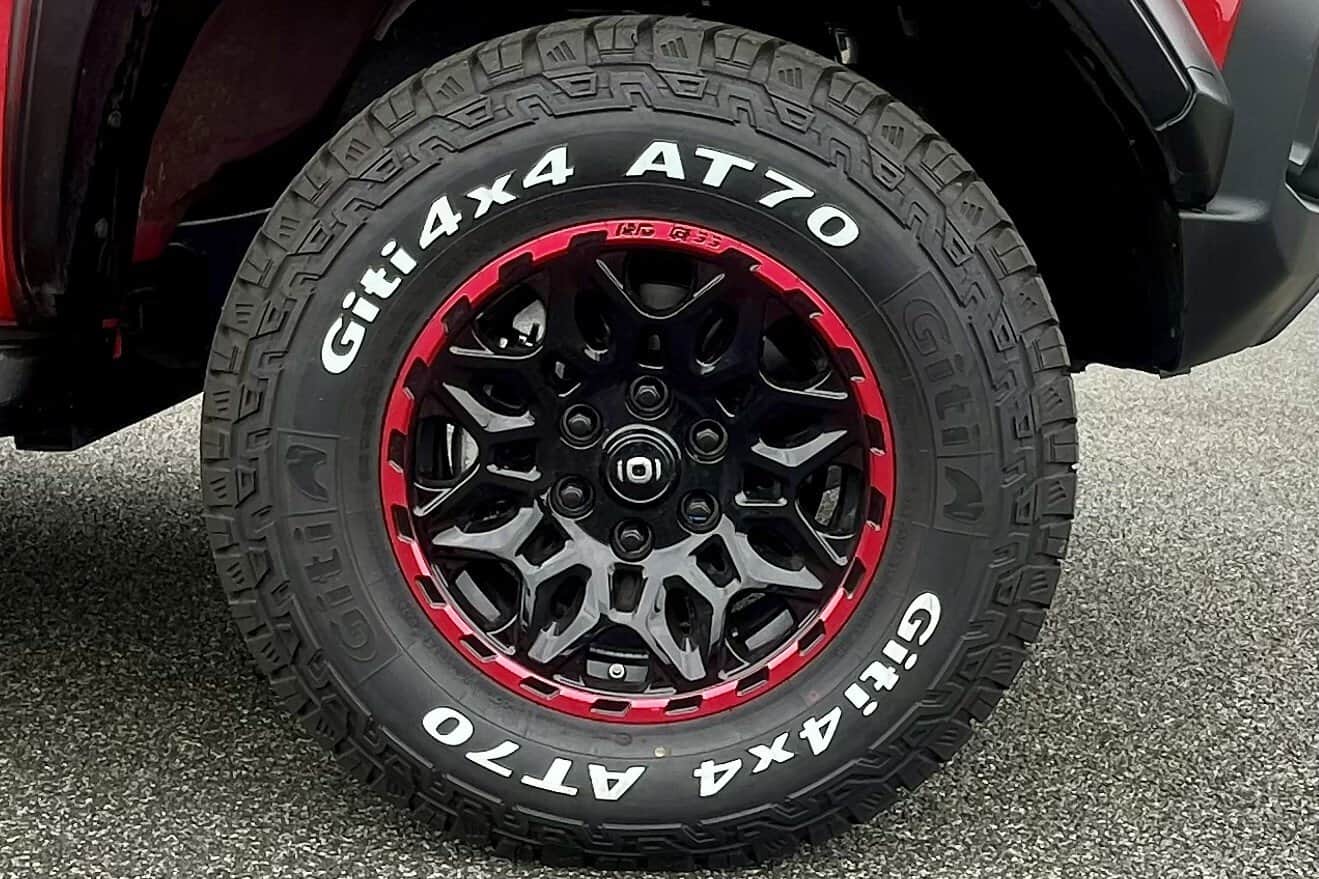
What you can’t ignore is the extended front and rear wheel arches, the chunky 285/65 all-terrain 17-inch tyres riding on new off-road alloys, an aggressive new front and rear bumper, and roof rails.
Handling is said to be improved, but no information on how this was achieved was offered up. But the eagle-eyed out there might notice that the suspension has been raised to offer more than 220mm of ground clearance. Again though, no official number was quoted.
I had a few runs up and down their straight track before I was offered a drive along a lane that offered some ruts and bumps, and a section of axle twisters. Not enough to tell me all I would want to know about the improved handling.
One of the fastest bakkies
But what this drive did show, was that the Changan Hunter K70 REEV is every bit as fast as I remember the Hunter K50 REEV being. And it should be, because we were led to believe that the incoming Hunter K70 REEV will use the same dual-battery, electric-powered/internal-combustion-engine setup as its predecessor.
This means that you will have a combined 200kW of power and 470Nm of torque on tap from the two electric motors – one upfront and one in the rear.
And they, in turn, will be powered by a 31.2kWh battery that can be charged by plugging the bakkie into an electrical outlet or by using the 2.0-litre turbocharged petrol motor as a generator while on the fly.
Something that often gets confused when discussing REEV technology is the fact that the turbocharged petrol engine is not connected to the drivetrain and does not turn the wheels. It is there only to charge the battery.
The performance delivered by the bakkie is driven by the torque produced by the two electric motors, which was good enough to see the Changan Hunter K50 REEV come in at number 3 on the list of the fastest bakkies we have tested.
Fuel efficiency still a priority
Changan claims the same pure electric-only operating range of up to 145km and a combined driving range of 1 000km for the Hunter K70 REEV as they do for the Hunter K50 REEV. Which puts the bakkie near the top once again in terms of fuel efficiency.
But as in the past, it is worth noting that these numbers can vary depending on your driving style and how often you charge the bakkie.
- Pricing and specifications for the Changan Hunter K70 REEV are expected to be confirmed closer to local introduction in 2028.



