Understanding the right to repair is crucial. Discover why complex vehicles may require professional service to ensure safety.
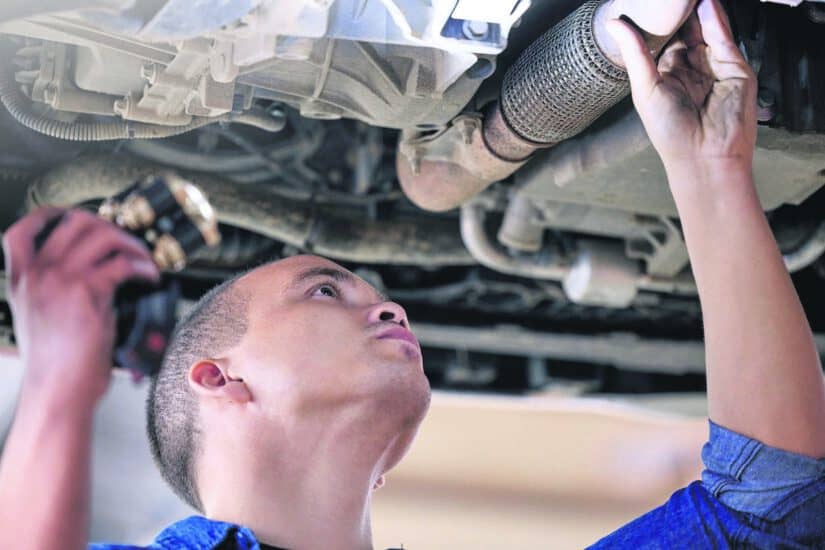
Modern vehicles are becoming increasingly complex to repair, raising questions about consumers’ right to use independent workshops. Picture: iStock


In terms of putting your foot in it as a business leader, it doesn’t often get much worse than Ford Global CEO Jim Farley’s remark a few months ago that, when it comes to warranty work, he wouldn’t want anyone other than a Ford dealer turning the spanners.
“These are very complicated cars, and we don’t think that’s safe for many of the repairs on our vehicles. Someone at home like myself could never do it.
“I have no problem working on a ’73 Bronco, but to work on a brand-new Bronco? I need all sorts of speciality tools. That’s something that, um, you know, we would put people’s lives at risk.”
In other words, trying to do your own work or getting a non-franchise workshop to do it for you could endanger your life?
The right to repair debate
Farley’s comments cut right to the heart of the “right to repair” debate – about whether an owner of a new vehicle should be tied into using a franchised dealer to carry out services to keep the warranty valid.
In 2021, after long wrangles, the Competition Commission in South Africa got carmakers to agree to a set of “non-binding” guidelines, allowing consumers to have their cars serviced or repaired by approved non-franchise outlets.
The attraction of the non-franchise route is obvious. Most of these workshops are small and don’t have the vast overhead costs of main brand dealers. Therefore, they don’t need the same margins, which push up labour and parts costs at main brand shops.
On the other hand, many buyers of new cars are happy to have the guaranteed peace of mind of knowing brand-name technicians have the latest equipment and diagnostic tools for their cars.
AA backs independent workshops
Automobile Association of South Africa CEO Bobby Ramagwede has been outspoken in challenging the local motor industry on issues like car safety and product recalls – and he is a “full supporter” of the right to repair principle.
“Forcing consumers to have their vehicles worked on by the selling brand is uncompetitive, and there is no safety reason – as long as the outside workshops are approved and qualified – that this should be the case.”
The AA is rebuilding its list of approved non-franchise dealers which “comes with the backing of our reputation”, he adds.
Are cars becoming services?
But Ramagwede is, like many people in and around the motor industry around the world, concerned that car makers are moving to the point where their vehicles will not be products but “services”.
He notes that in many vehicles currently, buyers must pay a regular “subscription” fee to continue to use components which were in their car from its delivery – including items like heated seats and even radios.
But locking customers into a product goes much further than that. In many cars today, there are multiple electronic control units which all talk to each other and work together. This includes things like headlight and braking systems.
Repairs are becoming more complicated
In many cases, you cannot merely slip in a new bulb – you may have to replace the entire light cluster to ensure that its electronic communication system integrates and actually enables you to start the car. No, I am not kidding.
Replacing brake pads can in some cases require the use of an expensive scan tool to put the pads in “service mode” and to reset them before and after any work is done.
Modern ADAS (Advanced Detection and Avoidance Systems) have their sensitive sensors in bumpers and vulnerable areas. In some crashes, whole bumpers must be replaced, and then, once that is done, the system has to be separately calibrated before you’re back on the road.
The rising cost of repairs
The result is soaring repair costs, soaring insurance premiums – and the possibility that your car could be written off because of a parking lot bumper bashing, because of the cost.
One way or the other, manufacturers of cars – and it’s effectively all of them – are aiming to keep you coming back, right to repair or not…