Legend 55 signals the end for the seventh generation or AN110 Hilux, which has been on-sale globally since 2015.
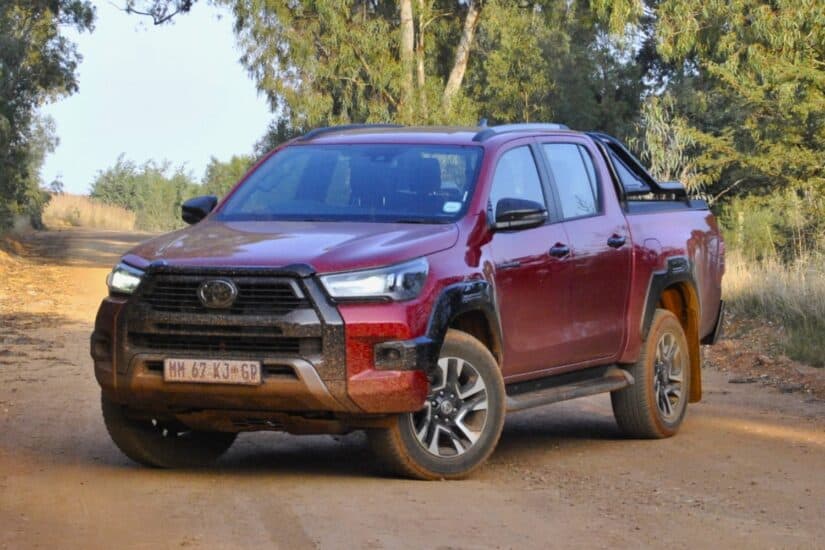
The Legend 55 not only celebrates the Hilux’s 55th year in South Africa, but also represents the end of the eighth generation. Picture: Charl Bosch


With the public unveiling of the new internally named AN220 Hilux at the Nampo Agricultural Expo in Bothaville, Free State, this month, Toyota officially closed the chapter on the AN110 Hilux, which had been in production for 11 years.
End of an era
On par with the seventh-generation Hilux, which also lasted 11 years, the AN110, or eighth-generation Hilux, represented a significant departure from any previous iteration.
More lifestyle-focused in the case of the double cabs, it still set the precedent as South Africa’s monthly best-seller despite sporadically relinquishing its crown to the Suzuki Swift, Volkswagen Polo Vivo, or its arch-rival, the Ford Ranger.
Not the Legend(ardy) send off wanted
Part of South Africa’s landscape, and indeed a local market institution, the roll-out of the special edition Legend models has also become an occasion ever since the Legend 35 debuted in 2004.
A moniker that has, however, also become synonymous with the end of another Hilux chapter, whether it be a facelift or new generation, the arrival of the 55 carried more significance than simply five years of another Legend derivative.
Instead, its initial showing at Toyota’s annual State of the Motoring Industry conference last year marked the 55-year milestone in South Africa.

This, though, presented an unexpected flaw, as the showcased Legend 55 sported the widebody design and extended track of the GR Sport, albeit without the monotube shock absorbers and uprated suspension.
Unofficially dubbed a “mini GR Sport”, the eventual production Legend 55 took leave of its siblings’ aesthetic at its unveiling in September last year due to the former’s global popularity, making parts and component sharing too difficult.
At the same time, Toyota also had to shelve plans to install the GR Sport’s 165kW/550Nm 2.8 GD-6 engine in the Legend 55 as a proper final send-off.
From Nampo to Gerotek
As such, the Legend 55 is once again an appearance package based on the Raider variant, with mainly bespoke touches inside and out.
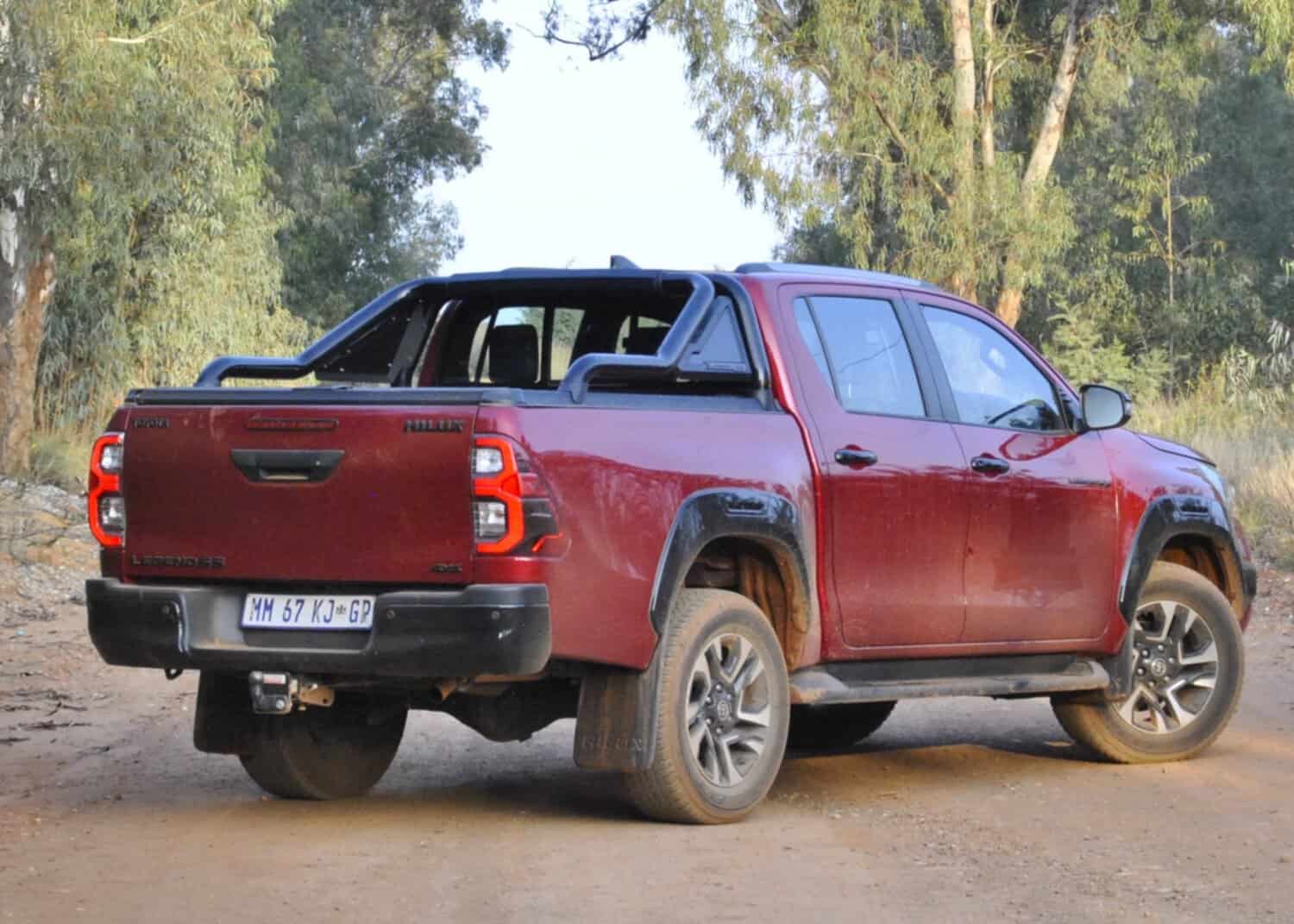
Arriving for the weeklong test, a month before the AN220’s market arrival, the final encore for the AN110 also involved a road trip to Nampo to see its successor’s first public showing.
Finished in Arizona Red, one of nine colours available, the Legend 55 also made the trip to Gerotek as the AN110 Hilux’s final data gathering venture with Road Test Editor Mark Jones.
Legend touches
Once again available as either a double or Xtra Cab, the Legend 55’s bespoke attire is discreet and, understandably, not as special as Toyota might have wanted.
Aesthetically, it receives gloss-black wheel arches, a silver bashplate beneath the front bumper, 18-inch alloy wheels taken from the Fortuner, a rubberised load bin, a standard tow bar, and a Legend 55 animation projected onto the ground.
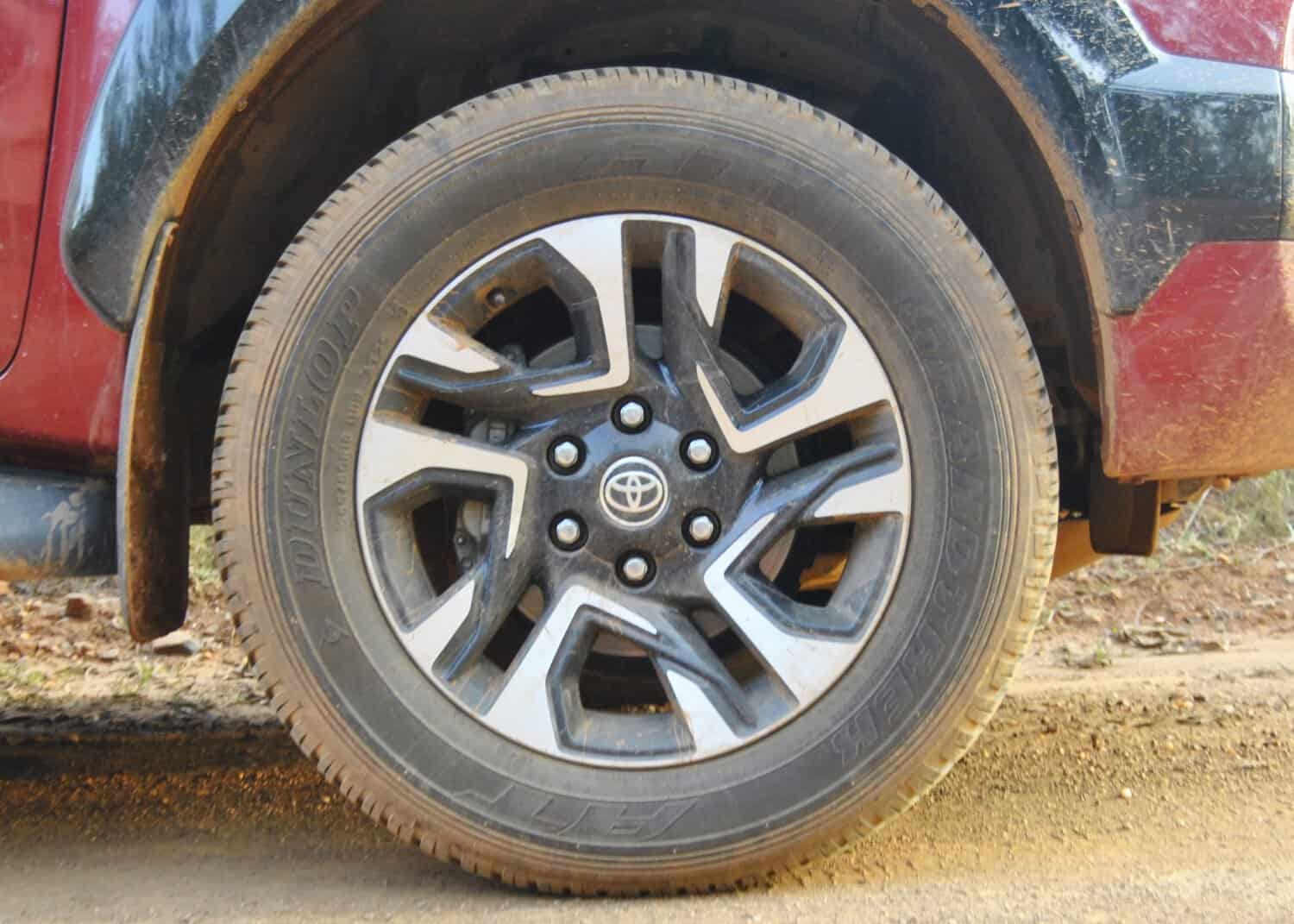
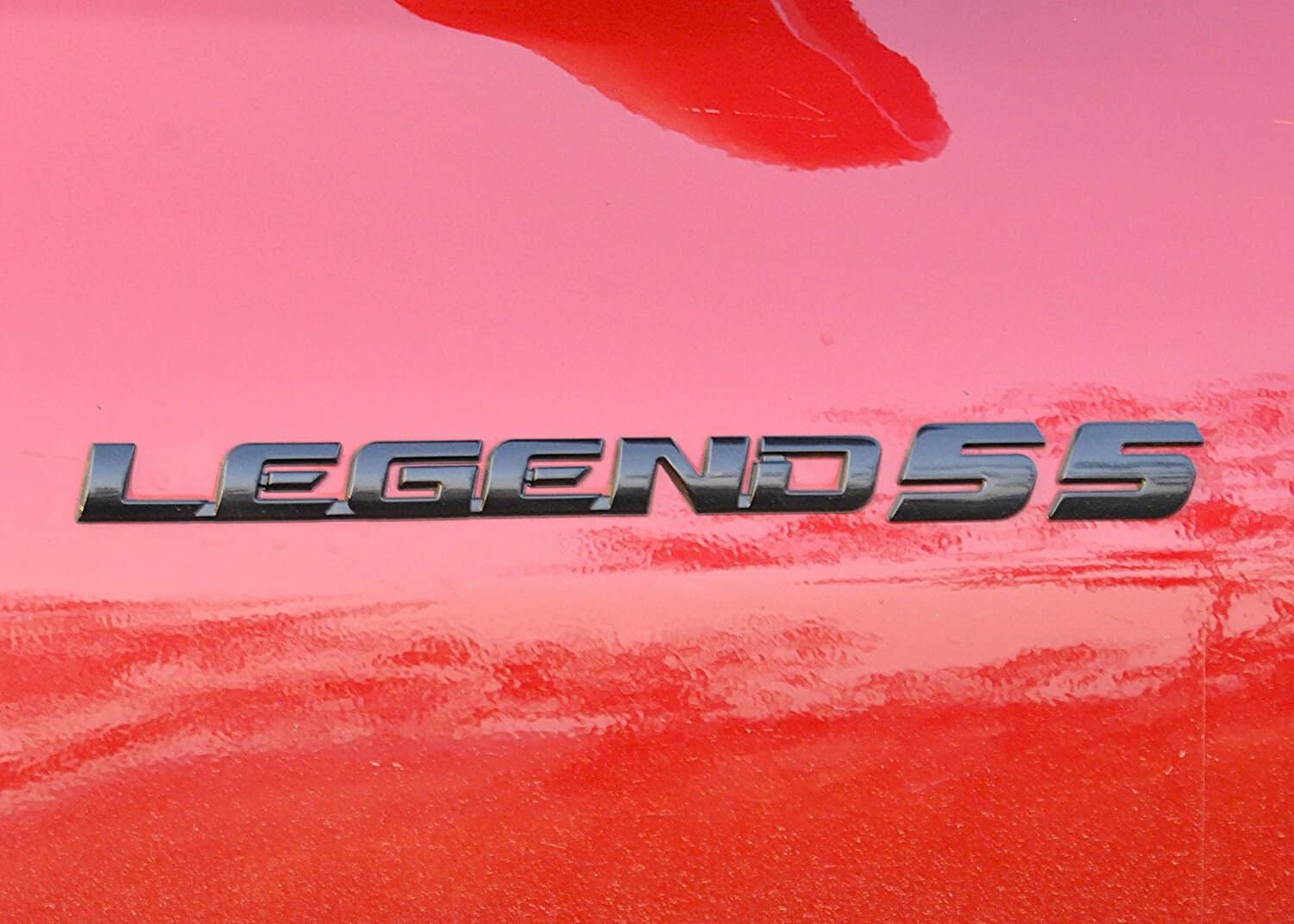
Rounding out the exterior are gloss-black door handles, a gloss-black grille surround, a Legend 55-branded sports bar, Legend 55 badges on the doors and tailgate, and the manual roller shutter from the now-defunct Legend RS.
While admittedly typical of any special variant, the Legend 55 applique does add a sporty touch to a product that has, admittedly, aged rather well when viewed from the inside.
Inside
However, as much as Toyota has done its darndest to hide the Hilux’s age visually, opening the door reveals the opposite.
An area where the Hilux feels and looks the most dated, the Legend 55 touches have been kept to a minimum – an area where, arguably, more could have been done to make the final send off a bit more special.
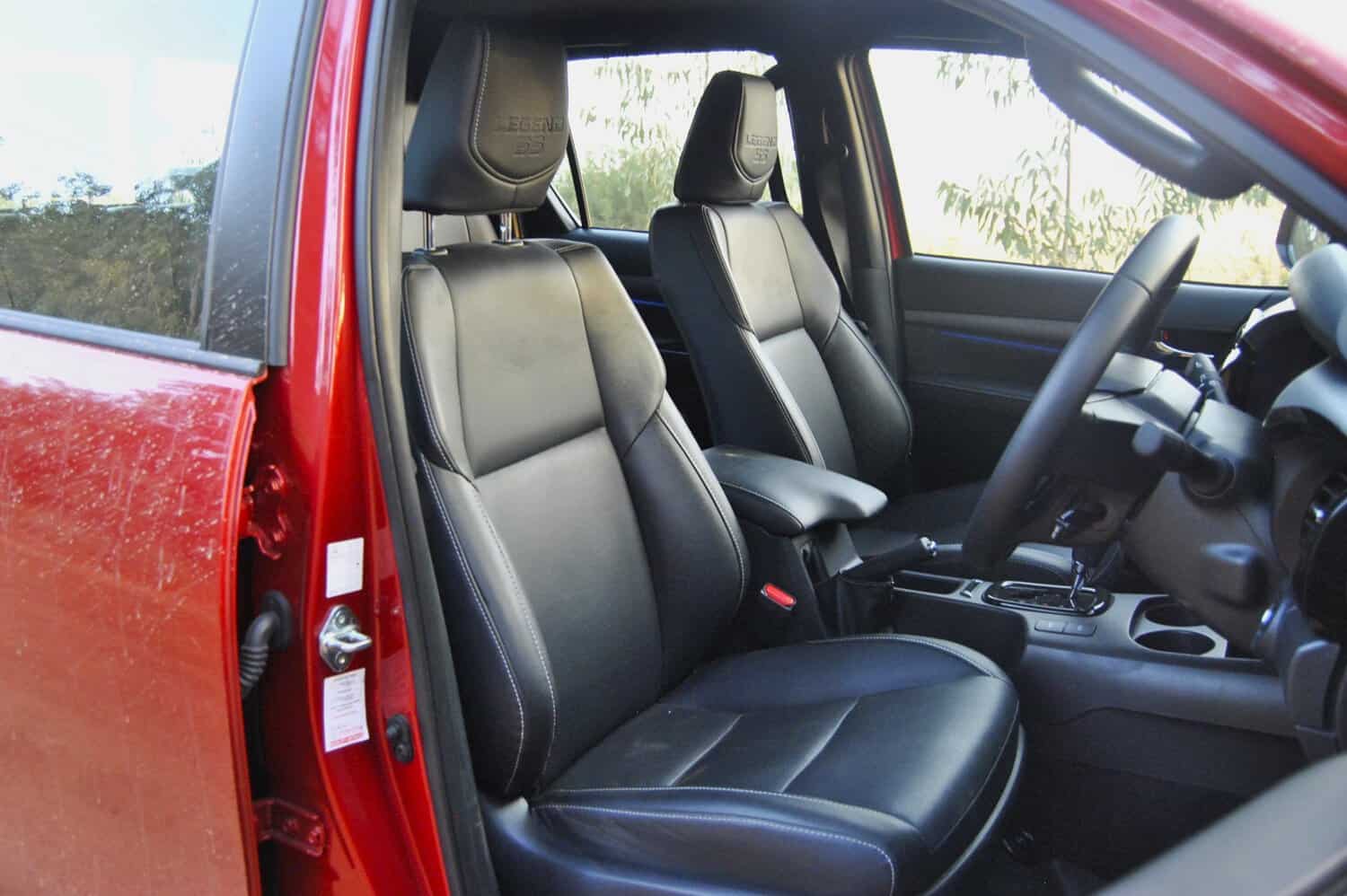
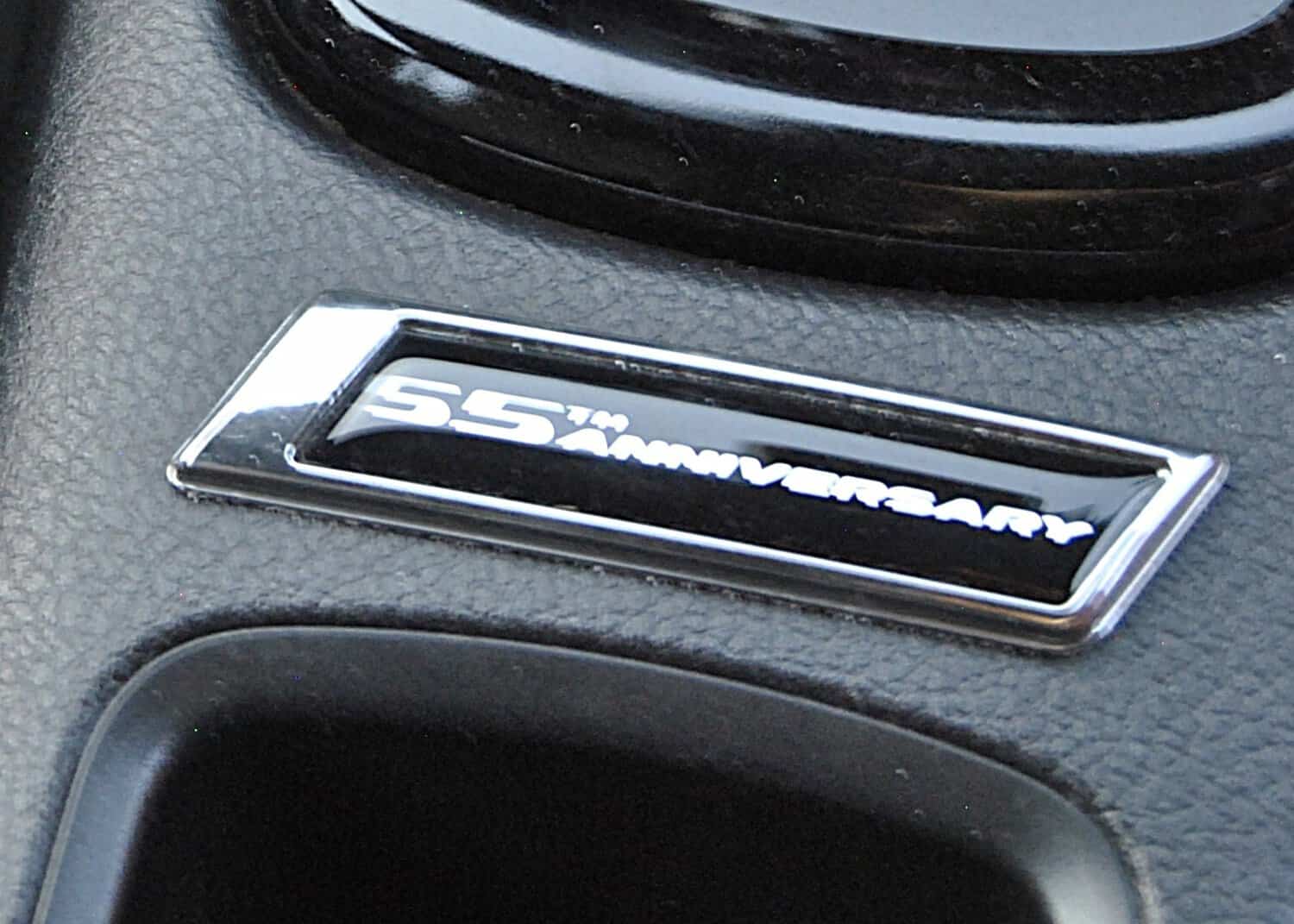
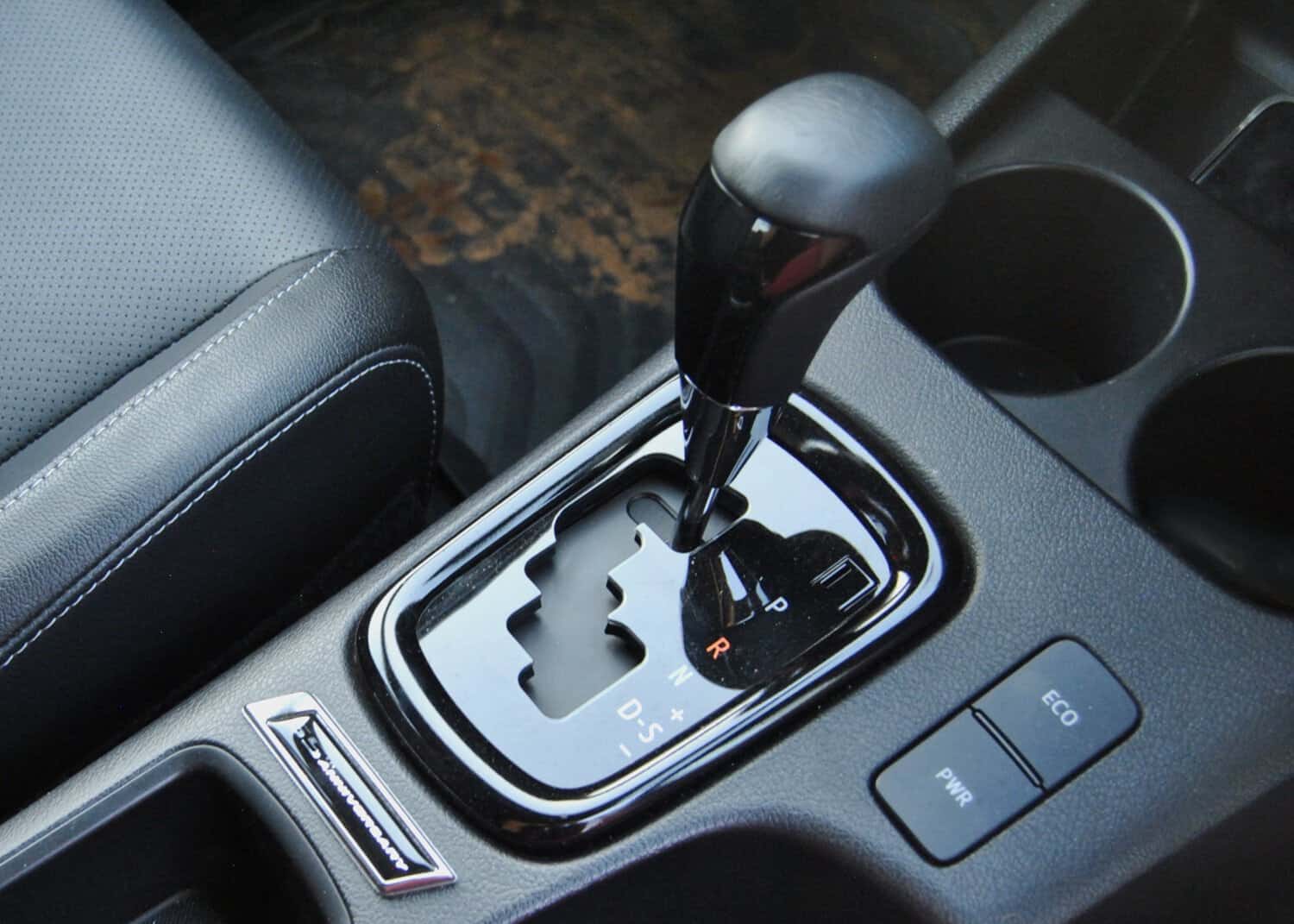
Besides the black leather upholstery, the Legend 55 gets the upgraded JBL sound system reserved for the Legend RS, Legend 55-embroidered front-seat headrests, Legend 55-branded treadplates, and a 55th-anniversary commemorative plaque behind the gear lever.
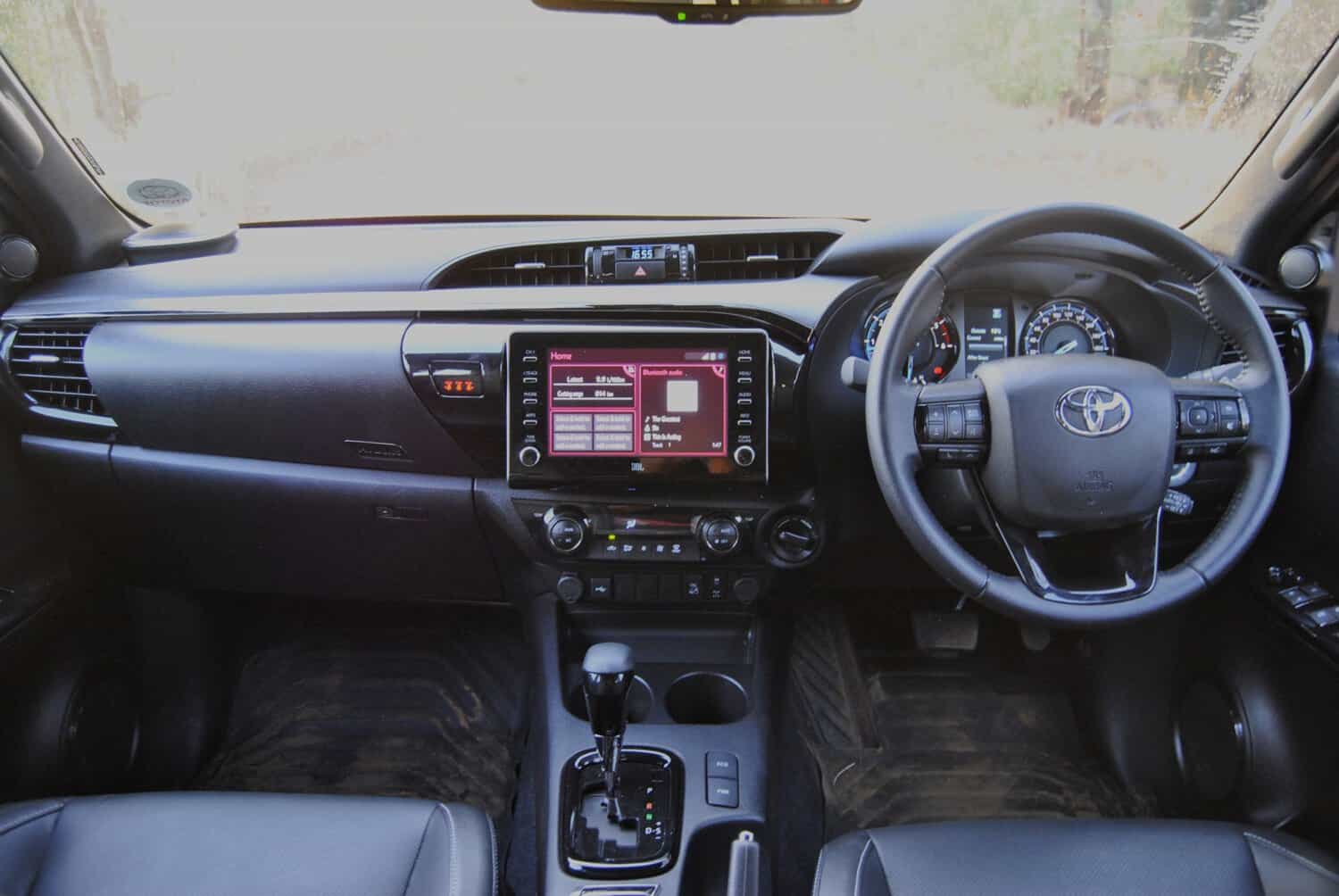
Fundamentally, the interior’s age means ergonomics are still easy to fathom, with proper physical buttons and dials for the climate control and on the steering wheel.
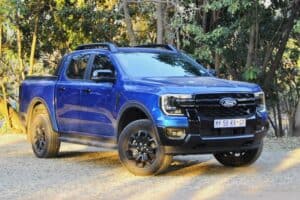
Compared to the Ranger, though, the Hilux has fallen behind on the now ever-important tech front, some buyers are, admittedly, unlikely to be bothered about.
So, while it has Apple CarPlay and Android Auto, it still needs wiring to be compatible with the eight-inch infotainment system, which itself is not as intuitive as the Ranger’s SYNC 4A setup.
While shortcut buttons remain present on the screen’s outer surround, the setup looks tiny and the interface is outdated.
More decent is the quality of the JBL sound system and rear passenger legroom – this despite the seats being too upright and resulting in headroom being pinched for taller passengers.
Front seat comfort is good; however, the cruise control stalk jutting from the steering column remains a problem, whereas the cupholders underneath the side air vents do not.
Unsurprisingly, the cabin’s fit-and-finish also shows the Hilux’s age, with the imitation satin silver strip running the width of the dashboard feeling especially clunky.
Again, though, the materials are solid and likely to last the proverbial distance, even if the piano-key black finishes remain an annoyance when needing to keep clean.
A further nicety is that the seats are snug and supportive, and the traditional floor mats are replaced by heavy-duty rubber items that can be washed using a garden hose.
‘If it ain’t broke”…
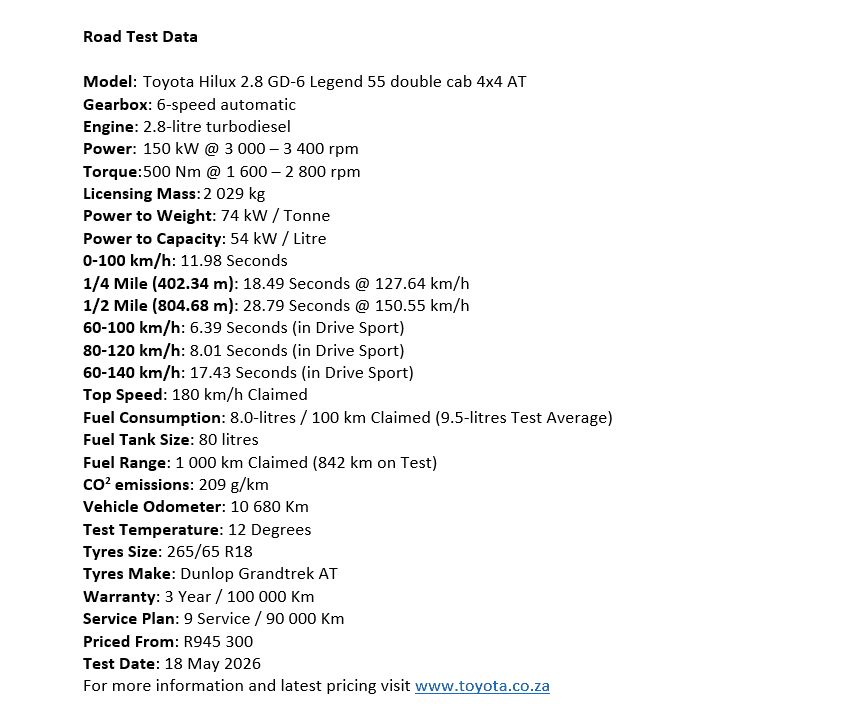
Up front, the status quo is a familiar one. Set to feature in the AN220, the tried-and-tested 2.8 GD-6 turbodiesel engine develops an unchanged 150kW/500Nm, transferred to the rear or, in the case of the test unit, all four wheels.
Equally undramatic is the engine being paired with the six-speed automatic gearbox, a combination that will, without the 48-volt mild-hybrid system for now, feature in the AN220.
Excluding the GR Sport, the GD-6 once again regains the accolade of most powerful four-cylinder diesel bakkie in South Africa following the discontinuation of the 2.0-litre bi-turbo that powered the Ranger and its Volkswagen Amarok twin.
Understandably, it isn’t as responsive as in the GR Sport, yet it still pulls strongly once up to boost.
Pressing the enticing PWR button on the centre console unlocks the response present in the GR Sport, as the Legend 55 feels slightly quicker off the mark without any low-down lag.
For its part, the six-speed automatic ‘box is generally smooth when shifting up, but, even in PWR mode, it becomes somewhat flustered and confused when shifting down.
Fortunately, its foibles can be overridden by using the sequential manual override.
On the move
Once in the confines of Gerotek, the AN110’s final encore registered a best 0-100 km/h sprint time of 11.9 seconds, again on par with all other variants – bar the 48V and GR Sport – Mark had tested since 2015.
As mentioned, the Legend 55’s arrival came after its long road trip down to Bothaville for Nampo.
Tasked with sections of poorly maintained roads around Potchefstroom and Orkney, the typical Toyota’s firmly tuned suspension did its job by smoothing out the corrugations and imperfections as best it could.
With no load in the back, the ride is still bouncy and skewed towards a more workhorse-focused approach than the setup of the Ranger.
That being said, it felt more adept and composed than the reworked suspension of the GR Sport off-road.
Admittedly, the gravel road traversed near the end of the Legend 55’s tenure was smoother and not as rutted or washball as the surface driven over in the GR Sport.
Yet, the Legend still felt more comfortable and pliant with its standard suspension tuning and all-terrain tyres.
Given the AN220 Hilux’s move to an electric power steering rack, the mechanical arrangement of the AN110 is still heavy, but it offers good feedback for what is still a bakkie.
Consumption
As for fuel consumption, the 450 km to and from Nampo, together with an eventual 623 km clocked during the weeklong test, netted a best of 9.3 L/100 km.
Conclusion
The now-familiar “it’s not a bakkie, it’s a Hilux” marketing tagline has arguably become the hallmark of the AN110, keeping its popularity alive despite newer, more powerful, and more tech-advanced rivals.
At R945 300 for the double-cab 4×4 auto tested here, the Legend 55 is a somewhat pricey R78 100 final curtain call premium over the model it is based on, which also makes it R63 700 less than the GR Sport.
However, with the Legend RS no longer offered and the regular Legend exclusively offered with the 48V mild-hybrid system, the Legend 55 can be seen as warranting its price bump not only for its extras but also for being a traditional Hilux in the sense of its “regular” powertrain.
Coupled with the popularity of the Hilux and Legend nameplates, as well as the appeal of special-edition bakkies, the Legend 55 is a fond goodbye as it hands over the baton to the next generation.
Road Test Data