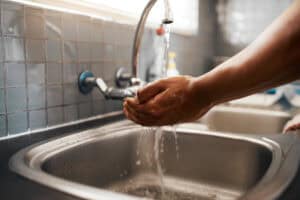
The municipality has yet to establish when normal water use can safely resume.
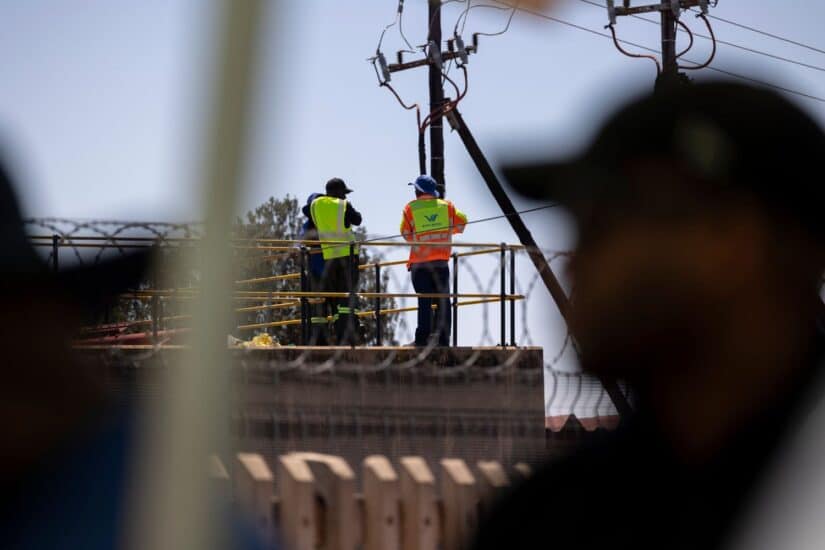
Rand Water workers at Bronkhorstspruit Water Treatment Works on 3 November 2026. Picture: Gallo Images/Alet Pretorius


Residents in several parts of Tshwane’s Region 7 will have to continue relying on alternative water sources for drinking, cooking and other household activities, as the municipality works to resolve ongoing water supply and quality problems following a gastroenteritis outbreak.
The City of Tshwane has warned that tap water in Bronkhorstspruit and surrounding communities remains restricted to toilet flushing only.
The municipality has yet to establish when normal water use can safely resume.
In a statement released on Sunday, 8 November 2026, the metro indicated repair work at the Bronkhorstspruit Water Treatment Plant was progressing, with Rand Water assisting in efforts to restore the system and improve water quality.
Bronkhorstspruit gastroenteritis outbreak
The water restrictions were introduced after the Department of Water and Sanitation (DWS) detected high levels of E. coli and total coliforms in water samples collected on 14 October.
The affected samples came from the treatment plant and the Ekandustria and Zithobeni reservoirs.
The contamination was linked to an outbreak that left residents suffering from gastrointestinal illness.
An investigation by the department subsequently established that problems with the municipality’s chlorine supply had resulted in untreated, unchlorinated water entering the supply system between 24 September and 14 October.
The city also came under scrutiny for failing to notify residents about the potential health risks.
The treatment plant’s manager was placed on precautionary suspension, pending a full investigation.
Strict water restrictions remain in force
Despite ongoing rehabilitation work, the City of Tshwane has cautioned residents against assuming that water is safe even if it has returned to their taps or appears clear.
The restriction applies to residents of Bronkhorstspruit, Zithobeni, Ekangala, Ekandustria, Rethabiseng and surrounding communities.
“Do not use tap water for drinking, cooking, bathing, brushing your teeth, preparing baby formula or washing fruit and vegetables.
“The restriction remains in place until the city and Rand Water issue official clearance,” the municipality’s statement reads.
Water continues to be distributed to communities through municipal tankers.
Repairs and water quality testing
The municipality reported improvements in the quality of water within the clear water sump and bulk supply system, with the latest laboratory results showing compliance with physical and microbiological standards.
However, these results do not yet mean that water reaching consumers is safe.
The remaining work involves flushing and testing the distribution pipelines that supply residential and business areas.
According to the city, low pressure has complicated the process, preventing technical teams from adequately flushing certain sections of the network.
Residents could also experience discoloured water as pressure gradually improves.
“Work has progressed on the equipment that brings untreated water into the plant and on the filtration system. Reservoir cleaning has also progressed.”
Mechanical faults hamper efforts to restore supply
The restoration of a consistent water supply has also been affected by mechanical challenges at the treatment plant.
Although bulk water pumping restarted on 3 November as part of efforts to clean and replenish reservoirs, faults involving the high-lift pumps have prevented the system from operating reliably.
The City of Tshwane said specialists and technical teams were attending to the problems, while some communities were already receiving water intermittently.
“Supply will return gradually to other affected areas as pumping improves and reservoirs refill.”
The municipality highlighted that its immediate priority was to complete the first phase of repairs, which would increase the volume of water the plant can treat.
Further temporary shutdowns may be required to allow technicians to complete outstanding mechanical and electrical repairs.
Residents await clarity on when normal services will resume
While repair and rehabilitation work continues, the municipality has cautioned that a full restoration timeline cannot yet be established.
It explained that the return to normal water services would depend on two key factors: satisfactory water quality results from the local distribution network and reliable pumping.
“The city cannot yet confirm a date for full restoration and will issue further updates as work progresses.
“The city apologises for the prolonged disruption and thanks residents for their patience. Until official clearance is issued, use tap water for flushing toilets only.”