Activists and analysts say SA must plan for life after mining to prevent retrenchments, poverty and illegal mining from devastating communities.
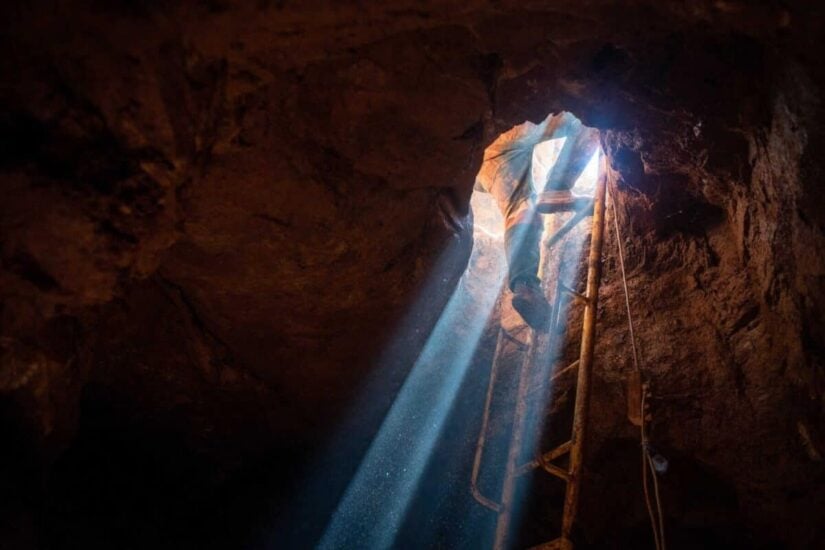
Fourteen years after the Marikana massacre, experts say mining communities need sustainable economies to survive after mines close and workers are retrenched. Picture: iStock


Mining companies that operated in Marikana and other areas in the North West have left behind poverty, which forced former employees to be involved in illegal mining, according to mining activist Brown Matloko.
Matloko was speaking during an online dialogue aimed at looking at how Marikana residents and other mining communities live 14 years after the Marikana massacre, which saw more than 30 protesting mineworkers slain by police.
“Recently we saw on TV 14 illegal miners died and eight were injured when heavy rain triggered the open case mine shaft to cave in,” said Matloko.
“We are not condoning illegal mining, but we are saying some of these people are forced to be involved in these things because they were retrenched when some mines closed down.
“Remember, in every retrenchment there is a family that will lose income. That is why we are saying mining companies come in and leave with a profit, while the host communities live in poverty.
“There is a need to prepare for life after mining so that people can continue earning income. When the mines leave, everyone suffers because they leave the land that is not rehabilitated and cannot be used for other purposes like farming, no infrastructure development, water and air pollution that will cause illnesses for the residents,” added Matloko.
Calls grow for a post-mining strategy
He said there was only one solution, to have a post-mining economy strategy.
Mining analyst David van Wyk agreed the time had come for SA to develop a post-mining economic strategy.
He said the focus should be on developing post-mining activities that would grow the economy.
“We need to repurpose and re-engineer the mines for post-mining economic activities. Minerals are not renewable; mining is therefore not sustainable. We should be looking at planning towards diversification and the evolution of a post-mining economy,” said Van Wyk.
He added large-scale mining was declining because minerals were not renewable and mining was not sustainable.
“The country will have to make an orderly and just transition into small- and medium-scale mining, including artisanal mining.”
Mining infrastructure could power new industries
According to Van Wyk, the country should also repurpose dying mining towns to become suppliers of gas and solar energy.
Old mine electricity substations can be used to feed solar energy from mine wasteland into the national grid and to extract methane from old mining shafts, he said.
Van Wyk added it was evident large-scale industrial mining was in decline.
He said the state should create favourable conditions for artisanal, small- and medium-scale mining and facilitate community-based industries to add value to the diamonds, gold and platinum they extract, such as cottage jewellery manufacturing.
He added the mines left behind huge infrastructure which could be converted and used as important facilities within the affected mining communities, such as clinics, schools and other related useful resources.
He added the strategy could play an important role in creating employment.