The red berets have criticised the speaker's decision not to oppose President Cyril Ramaphosa's interdict.
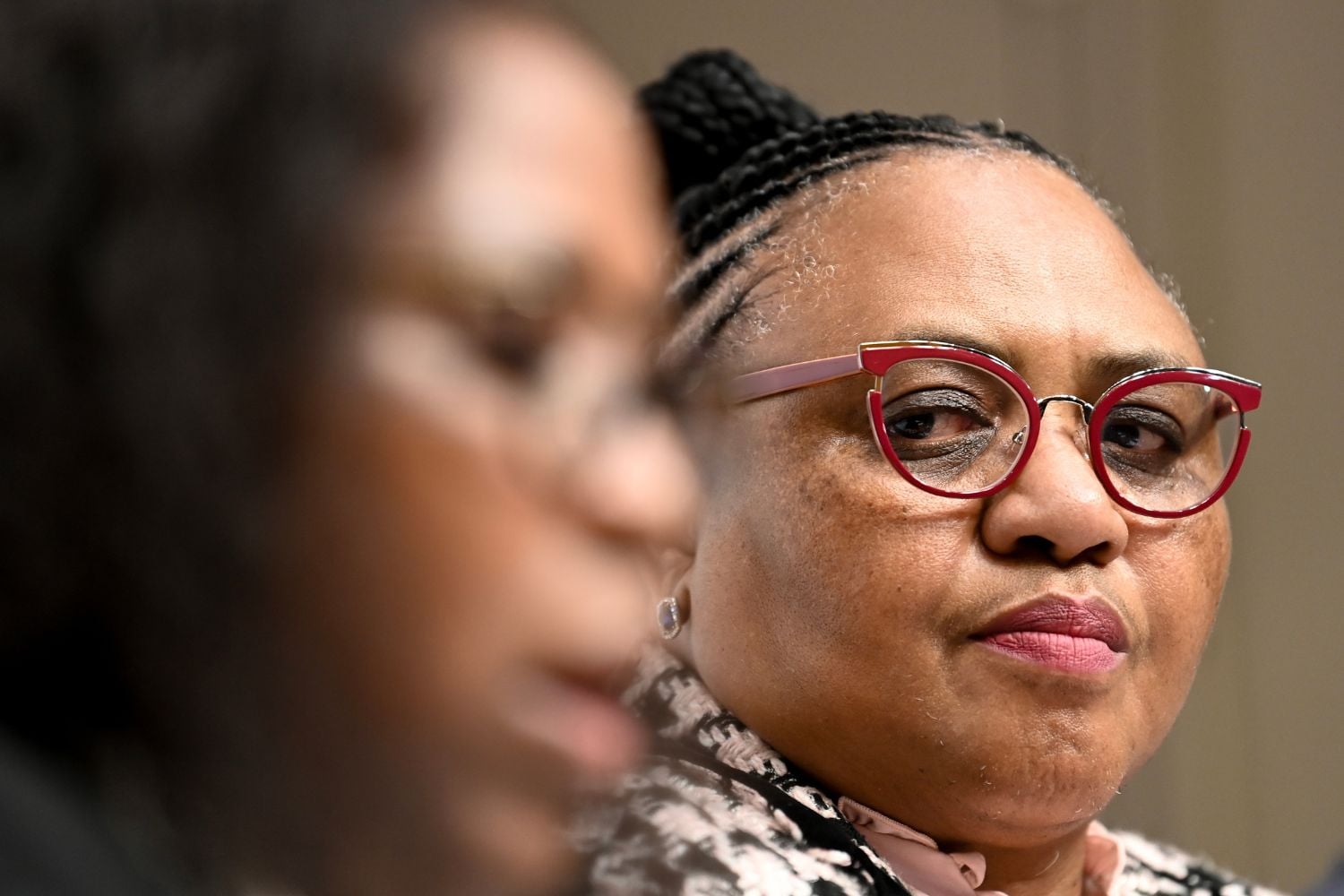
National Assembly Speaker Thoko Didiza. Picture: Gallo Images/Jaco Marais


The Economic Freedom Fighters (EFF) has initiated a bid to remove National Assembly Speaker Thoko Didiza, tabling a motion of no confidence linked to the ongoing Phala Phala controversy.
The party formally submitted its request to Didiza’s deputy, Annelie Lotriet, on Friday, 26 June 2026, calling for the matter to be prioritised in parliament’s agenda.
“The nature of the reasons for the removal of the speaker, as set out in the motion, necessitates that this matter be handled as expeditiously as possible, and we urge you to treat it with the urgency it deserves,” reads the letter signed by EFF chief whip Nontando Nolutshungu.
Central to the EFF’s argument is Didiza’s decision not to oppose President Cyril Ramaphosa’s urgent interdict application.
The application seeks to pause the parliamentary impeachment process pending a separate legal review.
The Western Cape High Court in Cape Town is scheduled to hear the matter on 15 and 16 July, where Ramaphosa aims to halt proceedings until the review of the Section 89 panel’s report is concluded.
EFF files motion of no confidence against Didiza
Didiza’s stance followed conflicting legal opinions presented to her office.
While one opinion recommended opposing the president’s application, another advised compliance with the court’s ruling.
Her decision to adopt the latter position has drawn criticism from opposition parties, with accusations emerging that her actions reflect “political bias” towards Ramaphosa and the ANC – both of whom have come out in defence of Didiza.
“The speaker chose partisan political interests over parliament’s constitutional obligations by refusing to oppose President Ramaphosa’s urgent application to interdict the work of the impeachment committee,” the EFF’s motion reads.
The party contended that Didiza disregarded legal advice obtained by her office “without any rational basis”.
“The speaker misled the public by creating the false impression that legal advice obtained by the impeachment committee justified her refusal to defend parliament, despite that advice having been obtained for an entirely different purpose and despite the speaker and the committee exercising distinct constitutional and procedural responsibilities.”
According to the EFF, this forms part of a broader pattern of conduct that raises doubts about the speaker’s impartiality in office.
“The speaker brought the standing, credibility and authority of the National Assembly into disrepute by persistently placing party political considerations above constitutional obligations.”
Ramaphosa Phala Phala review
In a parallel process, Ramaphosa is seeking to overturn the findings of the Section 89 panel, chaired by former chief justice Sandile Ngcobo.
The panel previously concluded that Ramaphosa had questions to answer regarding the theft of approximately $580 000 (about R9.6 million) from his Phala Phala game farm in Limpopo in February 2020.
The Western Cape High Court has scheduled the review application to be heard between 2 and 4 September, with opposing parties required to file notices of motion by 7 July.
The legal developments follow a Constitutional Court (ConCourt) ruling in May, which found that parliament had acted unlawfully when it blocked impeachment proceedings against Ramaphosa in December 2022.
As a result, the National Assembly was compelled to establish a formal impeachment committee to investigate the allegations further.
The committee – made up of 31 MPs from 16 political parties – is chaired by Rise Mzansi’s chief organiser, Makashule Gana.
Gana has already signalled the committee’s intention to oppose the president’s interdict application.