Museum Africa is still being disputed as a suitable location to store the Johannesburg Art Gallery's pieces on a temporary basis.
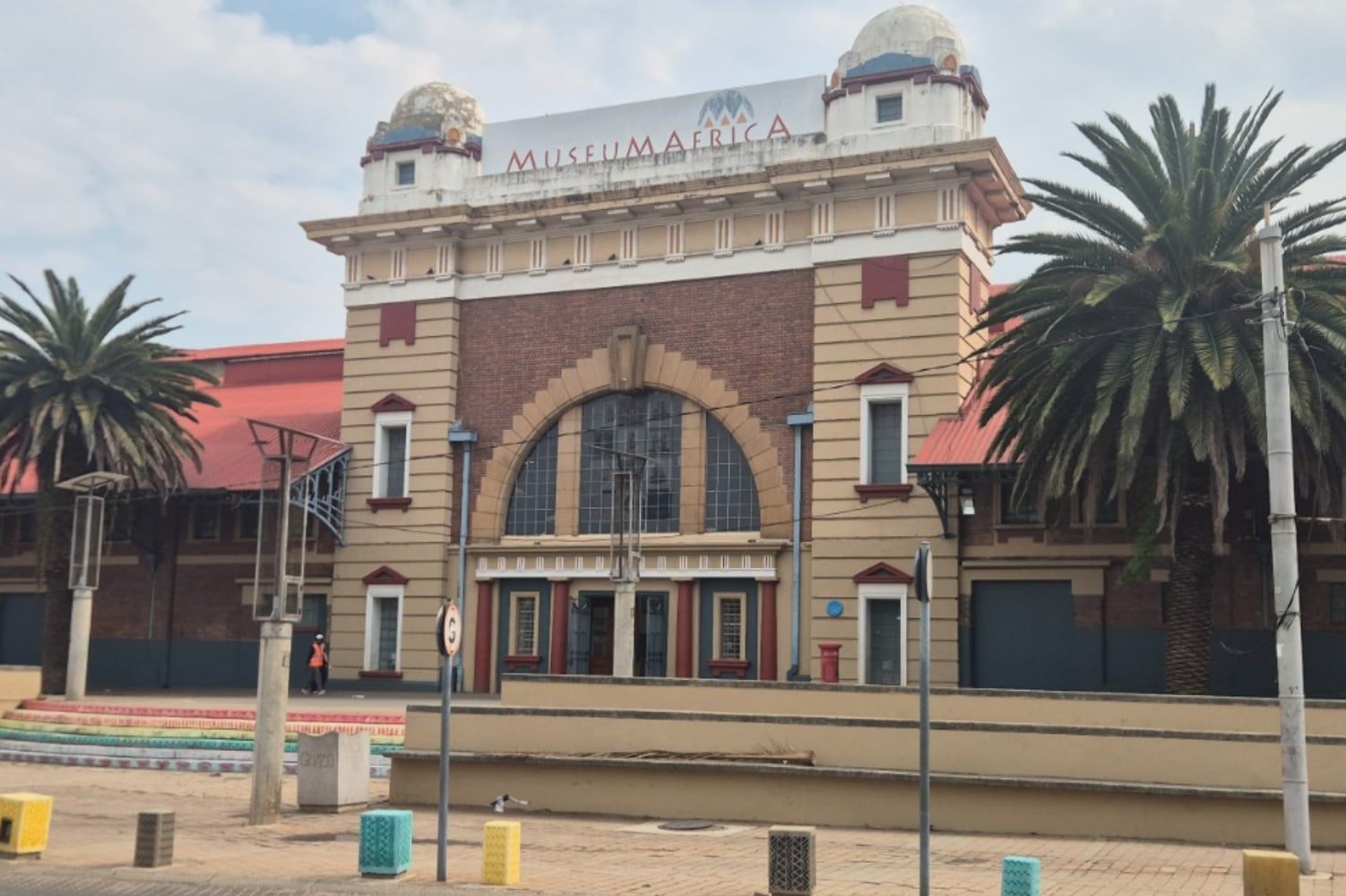
Museum Africa’s suitability to store the Johannesburg Art Gallery’s exhibits remains contested. Picture: Supplied / Democratic Alliance


The temporary relocation of exhibits at the Johannesburg Art Gallery (JAG) remains in limbo while the collection’s home continues to deteriorate.
The Johannesburg municipality approved a refurbishment of the over 110-year-old gallery after a 2024 report by the South African Heritage Resources Agency stated the gallery was structurally unsound.
The municipality in February released its temporary storage plan, and by May said it was busy with renovations to Museum Africa and a nearby municipal office.
Days later, Friends of JAG and the Johannesburg Heritage Foundation (JHF) filed legal papers objecting to the relocation on the grounds of improper governance.
The matter is still under litigation, while a recent site visit by the DA added to the concerns around the temporary storage facilities.
JAG collection relocation
The city had earmarked a repurposed upper level of Museum Africa as the main storage unit, with the city’s statement in February claiming the collection relocation and gallery refurbishment would cost R50 million and be concluded by 2027.
Work being done to improve the temporary storage facilities included HVAC temperature and humidity regulators, waterproofing, roof rehabilitation, backup power supply and advanced fire protection systems.
Three other storage facilities were listed, including the Brixton Community Centre and a municipal office labelled the pink building.
“The relocation of the JAG collection into this environment creates renewed opportunities for cultural tourism, increased public activity, and deeper collaboration between Johannesburg’s institutions of art, heritage, and memory,” the city stated in May.
However, the DA’s site visit last week showed that the storage areas were unsuitable to house the city’s most valuable art pieces.
“Climate control is inadequate, water penetration is causing mould and ceiling damage, and the storage area is secured by little more than a trapdoor.
“The installed alarm system was not functioning. This is despite millions reportedly spent on upgrades,” stated DA spokesperson for Sport, Arts, Culture and Recreation Leanne de Jager.
The DA wanted answers from provincial cooperative governance and infrastructure MEC Jacob Mamabolo, whose team told The Citizen the matter was “squarely in the purview of the City of Johannesburg”.
Questions were sent to municipal officials regarding the relocation’s progress on Tuesday morning and their response will be added if forthcoming.
‘Cart before the horse’
JHF explained that the gallery was established by a Deed of Donation in 1913, which stipulated the conditions by which the collection needs to be handled.
“The Deed of Donation states that the art gallery committee is the only body that is legally allowed to approve anything being moved in or out of the gallery.
“The art gallery committee is not legally constituted and so we have filed court papers to have the committee disbanded and reconstituted correctly.
“We are waiting for the legal process to unfold and in the mean time we do not believe that Museum Africa is an appropriate place to store the collection,” JHF chair David Fleminger told The Citizen.
Fleminger said moving the collection without the proper measures in place would risk the loss of some precious pieces with include works by Pierneef, Monet, Rodin and Picasso.
“At the moment, we cannot get a hold of a proper catalogue and we don’t want to move anything until an independent expert has gone through the collection at the gallery to do a proper inventory.
“Basically, the city has put the cart before the horse in term of Museum Africa. They are trying to rush ahead, but it’s got to be done correctly.
“The problem with Museum Africa, apart from the inherent issues with the space, is that the city’s plan is to move the collection to three or four different locations,” he said.
Fleminger stated that alternatives that centred around digitising and cataloguing of the collection were presented to the city, but were ultimately rejected, although other alternatives are still on the table.
‘That’s how things get lost’
De Jager said blame should not be placed on Museum Africa, but that the location was never suitable.
“This is not a criticism of Museum Africa’s management. Despite limited funding, they do their best to host quality exhibitions, and they deserve credit for it.
“But good management cannot compensate for a facility that lacks the climate control, security and conservation standards that a valuable art collection requires,” she satted.
Fleminger said the ideal outcome would be the moving of the collection to a space that would ensure what goes in, comes out in the same state.
“None of those locations are ideal and we don’t want to split the collection because that’s how things get lost.
“We want one location in a secure place, with temperature control, preferably in a basement, not in the attic space of a corrugated iron roof where there are extreme fluctuations of temperature,” he concluded.