Members of the committee expressed dissatisfaction with both the findings and the processes followed.
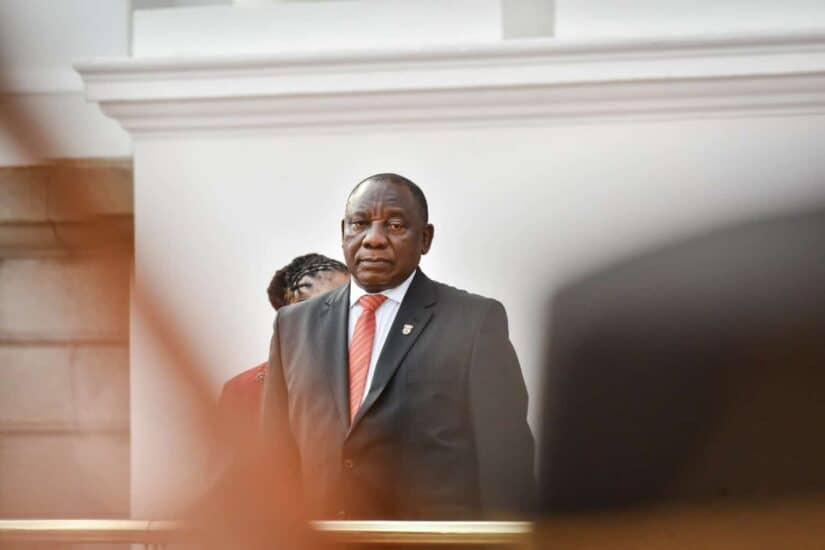
President Cyril Ramaphosa ahead of his 2020 state of the nation address in Cape Town. Picture: Jacques Nelles


The Independent Police Investigative Directorate (Ipid) and the South African Police Service (Saps) faced intense scrutiny in Parliament on Wednesday, 13 May 2026, over their handling of President Cyril Ramaphosa’s controversial Phala Phala scandal.
Officials from both institutions appeared before Parliament’s Portfolio Committee on Police to brief MPs on investigative findings related to the high-profile case, which stems from the theft of $580 000 (about R9.6 million) from Ramaphosa’s Phala Phala game farm in Limpopo on 9 February 2020.
Ipid launched its investigation following a complaint lodged in July 2022.
This was after former State Security Agency (SSA) head Arthur Fraser laid criminal charges against Ramaphosa and Presidential Protection Service (PPS) head Wally Rhoode, alleging wrongdoing linked to the handling of the theft.
The police watchdog’s probe examined a wide range of allegations, including whether the crime was deliberately not reported, whether an unlawful undercover investigation was conducted, and whether state resources were improperly used.
Investigators also explored claims of kidnapping, assault, torture and bribery allegedly linked to efforts to conceal the incident.
Ipid report findings on Phala Phala
Presenting the findings, Ipid’s head of investigations, Thuso Keefelakae, told MPs the probe was finalised in October 2023, with the report being declassified in April 2026.
He said the investigation found that Rhoode failed to report the crime to the then-national police commissioner Khehla Sithole and did not open a case docket for housebreaking and theft.
Evidence also pointed to Rhoode’s involvement in the kidnapping and interrogation of former farm employee Froliana Joseph and her brother, Ndilinasho David Joseph.
Rhoode’s trip to Namibia in June 2020 in search of the siblings formed part of the probe, although Ipid said it could not reach adverse findings on that aspect.
The report further indicated that Sergeant Hlulani Rekhoto had been instructed by Rhoode to track down additional suspects in Cape Town.
A kidnapping case opened by the alleged victims in August 2022 was later withdrawn, while claims of bribery could not be substantiated, according to Keefelakae.
Despite recommendations for disciplinary action by both Ipid and the Public Protector, Rhoode and Rekhoto were cleared in internal Saps proceedings in early 2024, a development that drew concern from MPs.
Hawks outline ongoing and closed cases
Siphosethu Nkosi, deputy national head of the Directorate for Priority Crime Investigation (the Hawks), provided an update on parallel investigations and prosecutions.
He confirmed that criminal proceedings relating to the original housebreaking and theft are ongoing, alongside an investigation into possible violations of customs and excise laws linked to the undeclared cash.
However, Nkosi said the money laundering case tied to exchange control regulations had been dropped after the Director of Public Prosecutions declined to prosecute.
“On kidnapping, torture and assault, the alleged victims vehemently denied that this happened. They withdrew their submitted statements,” Nkosi said.
Acting Police Minister Firoz Cachalia dismissed suggestions that the executive had influenced Ipid’s work or the handling of its report.
“Ipid did not seek my advice or intervention, and I had no role in classification or declassification, no exercise of ministerial discretion, and I am not aware of such a discretion because, you know, Ipid is an independent body,” he told MPs.
Watch the full meeting below:
MPs voice frustration
Members of the committee expressed dissatisfaction with both the findings and the processes followed.
DA MP Dianne Kohler-Barnard questioned the outcome of Saps’ internal disciplinary proceedings, raising concerns about a pattern of conflicting findings.
“That’s a big question I’m asking myself. We have seen this countless times where someone is found to be guilty on one side, but it goes to Saps for an internal investigation, and a hearing finds them not guilty. So, it’s a huge issue,” she said.
African Christian Democratic Party (ACDP) leader Kenneth Meshoe emphasised that the failure to open a criminal case in the first place was deeply troubling.
“It could be because of corruption that they don’t register a case because they are covering for somebody,” he told the committee.
Meshoe also asked whether Ipid had challenged the not guilty verdict.
MK party’s David Skosana said he was “disappointed, but not surprised” by the outcome of the investigations.
“Today, it has shown beyond reasonable doubt that they are closing ranks.
“They are covering up one of their own. This issue of independence does not exist here,” he remarked.
Skosana further questioned why Ramaphosa himself had not opened a criminal case following the theft.
‘Where is the couch?’
ActionSA MP Dereleen James turned attention to the physical evidence, particularly the couch in which the cash was hidden at Phala Phala.
“This entire matter reeks of cover-up and corruption. Did it take Ipid and Saps two years to investigate?” she asked.
“Everyone knows that money was found in a couch: ‘Waar is die couch?’ (Where is the couch?)
“Was it ever booked in as part of evidence because there are no pictures anywhere; we don’t hear anything about this couch,” James said.
She also questioned whether the crime scene had been properly processed at the time.
EFF MP Muzi Khoza pressed officials for clarity on how Rhoode and Rekhoto were cleared in disciplinary proceedings.
“What specific evidentiary or procedural factor led to their exoneration, because that’s of great concern?” Khoza asked.