South Africa's constitution envisages a speaker who serves parliament, not a party.
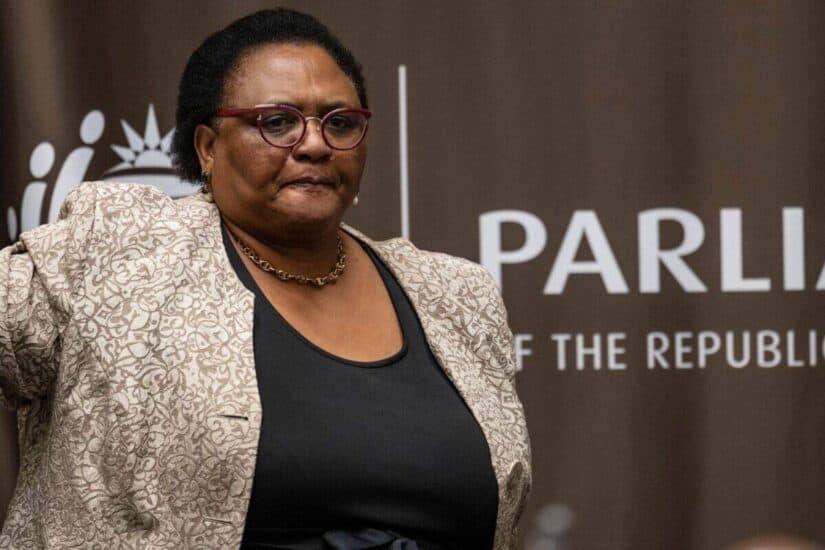
Speaker Thoko Didiza at the social services cluster of ministers address in the National Assembly in oral Q&A session at Good Hope Chamber on 4 September 2024 in Cape Town.Picture: Gallo Images/Brenton Geach


South Africans have grown used to National Assembly speakers acting as presidential bodyguards.
Baleka Mbete bent over backwards to shield former president Jacob Zuma during the Nkandla scandal, drawing fire from opposition parties and constitutional experts, who accused parliament of abandoning its oversight role.
Nosiviwe Mapisa-Nqakula faced similar criticism when President Cyril Ramaphosa’s Phala Phala scandal erupted, with the National Assembly voting against the Section 89 independent panel’s damning report in 2022.
Now, Thoko Didiza stands at the same crossroads after Ramaphosa filed an interdict application at the Western Cape High Court in Cape Town on Friday, to halt parliament’s impeachment process over the Phala Phala scandal.
Legality over loyalty
But Didiza’s refusal to suspend the process is almost revolutionary. Once aligned with the ANC’s instinct to protect its leader, she now appears ready to let an impeachment inquiry proceed.
In doing so, she signals a shift from partisan loyalist to institutional custodian. This shift is not rebellion but obedience.
To block the process now would be to defy outright the Constitutional Court order for parliament to act. Unlike her predecessors, she has chosen legality over loyalty.
Restoring parliament’s credibility
South Africa’s constitution envisages a speaker who serves parliament, not a party. Didiza’s stance suggests she may be attempting something that her predecessors struggled to achieve: institutional independence.
This is not necessarily an attack on Ramaphosa, nor does it mean Didiza has become an opposition figure.
Instead, she may be trying to restore something that has been badly damaged over two decades – the credibility of parliament.
That choice makes her untouchable, even if it leaves Ramaphosa exposed.
Didiza referee, not player
Some ANC members have misread Didiza’s refusal to pause the inquiry as political shade.
She is stripping the process of emotion, denying Ramaphosa the comfort of partisan protection and denying his opponents the satisfaction of personal vendettas.
It is a masterclass in institutional discipline: the speaker as referee, not player. After years of state capture, executive overreach and public distrust, parliament faces a legitimacy crisis.
Many South Africans no longer believe MPs can hold the executive accountable. Every time parliament appears to shield a president from scrutiny, that perception deepens.
Didiza seems to understand what is at stake. If parliament ignores court rulings, delays accountability processes, or selectively applies its rules depending on who occupies the Union Buildings, it risks becoming irrelevant.
The irony is that by allowing constitutional processes to proceed, Didiza may actually be protecting parliament more than she is challenging the president.
Will she face consequences within the ANC? Possibly.
Political parties rarely reward internal dissent, especially when it creates difficulties for a sitting president.
Any criticism directed at Didiza can be met with a straightforward response – that she is carrying out her constitutional duties rather than advancing a political agenda.
Can Didiza restore faith in parliament?
Whether she succeeds remains uncertain.
The ANC still commands significant influence in parliament. Ramaphosa remains a powerful political figure.
Any impeachment effort faces formidable political obstacles. But perhaps success should not be measured by whether Ramaphosa is removed from office.
Perhaps the real test is whether parliament finally demonstrates that no president, regardless of popularity or political power, is above constitutional scrutiny.
If Didiza succeeds in establishing that principle, she will have achieved something far more important than winning a political battle. She will have helped restore faith in one of South Africa’s most important democratic institutions.