Public institutions need people to serve the public interest, even though they might have been placed in their positions by people with evil intentions.
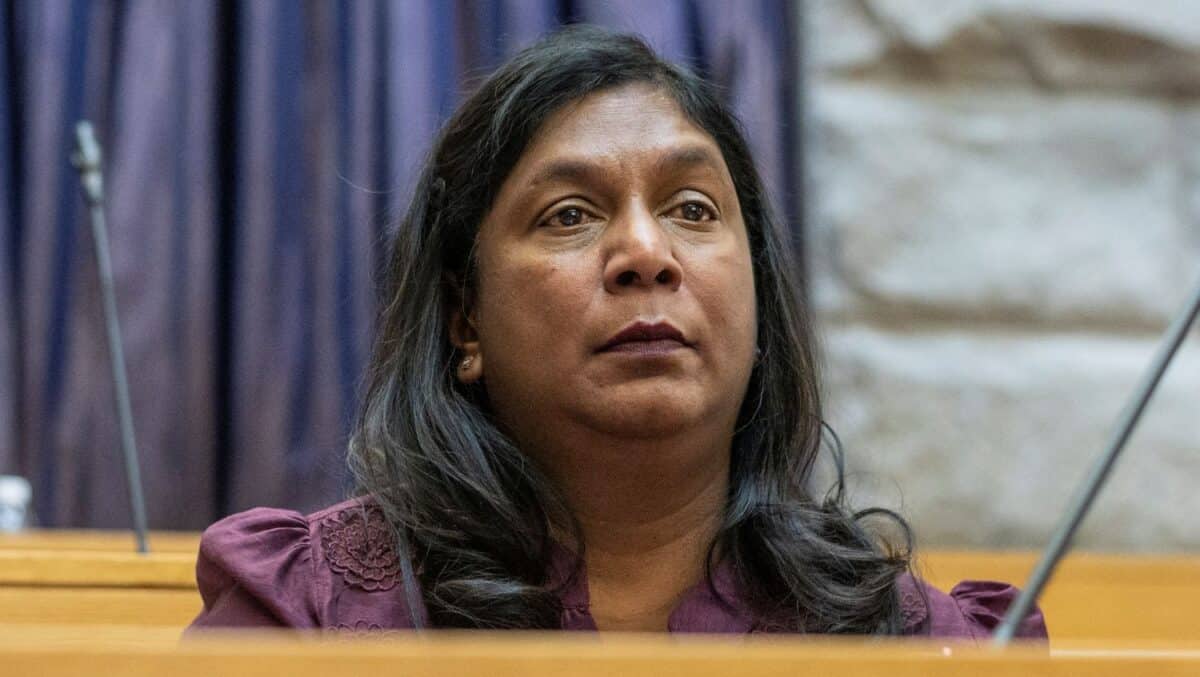
Former Independent Directorate Against Corruption (Idac) head Andrea Johnson testifies at the Parliamentary Ad Hoc Committee inquiry into alleged corruption and political interference in the criminal justice system at Good Hope Chambers on 6 November 2025 in Cape Town, South Africa. Picture: Gallo Images/Brenton Geach.


In the 1987 movie, RoboCop, a middle-ranking junior executive of Omni Consumer Products, Bob Morton, gets given a chance to produce his robot prototype by the company CEO.
The aim was to create a robot whose intentions are good: to protect the innocent, serve the public and uphold the law.
But as is always the case with mega corporations, their interests are not always just for good, but profit. In RoboCop they created good out of evil intentions.
The recent recurring public theme following several Madlanga Commission of Inquiry witnesses is “people must remember that people cannot always be heroes or villains, sometimes they can be both”.
This follows the likes of Andrea Johnson giving evidence and their characters proving to be questionable because they have been shown to be giving inconsistent evidence and even accused of making false assertions under oath.
This attempt to characterise people like Johnson as neither heroes, nor villains, is borne out of the public’s need to have RoboCops running public institutions, people who will stay true to serving the public interest, even though they themselves might have been placed in their positions by people with evil intentions.
But public service requires heroes, always, and that is what people forget. What has happened at the Independent Directorate Against Corruption (Idac) under the leadership of Johnson cannot in any way be excused as simply a hero who had an evil side, because human beings can be both heroes and villains at the same time.
Advocates are not allowed to be villains… it goes against their oath of office: “…truly and honestly…with integrity”.
That’s in addition to swearing loyalty to the South Africa. There is no room for an advocate to be “human”, to allow their not-so-honest side to come to the fore while discharging their duties.
It is exactly for the same reason that doctors take the Hippocratic Oath, they are not allowed to be anything else while in practice. There are no half-measures for them.
Idac was established as somewhat of a successor to the Scorpions, which had scored some serious successes in the battle against corruption in the early days of South Africa’s democracy.
A good case can be made that if the Scorpions were still around, the levels of corruption that culminated in the “nine wasted years” of looting of state resources might not have happened.
The reason for the Scorpions’ successes was that their prosecution-led investigative teams left no room for wishy-washy and flip-flop management that seems to have characterised Johnson’s tenure as head of Idac.
The testimony of Idac prosecutor Drushantha Ramsamy and senior investigator Mantsha Raphesu paint a picture of an advocate who had gone rogue, issuing instructions on pieces of pink or purple notes which cannot be documented.
The “no heroes or villains” brigade has quickly come out to say that neither Ramsamy nor Raphesu are heroes because they stayed in Idac and participated in the mess, even suggesting that Ramsamy will fall apart under the famed Madlanga commissioners’ cross-examination.
Whether or not that happens, Ramsamy and any of her colleagues who have chosen to expose the rot are heroes. They are blowing the whistle on abuse of power and questioning their intentions does not help.
Remember RoboCop? The intentions of his creators were not innocent but he stuck to the script. His oath, so to say: protect the innocent.