From Maimane to Mashaba to Steenhuisen, Leon fingerprints seen in DA exits amid Resolve lobbying and state capture claims.
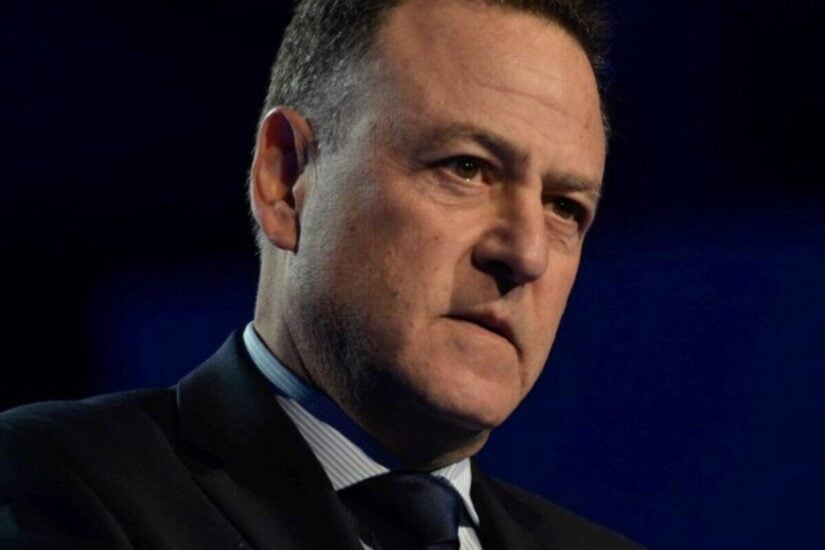
Former DA leader Tony Leon. Picture: Alaister Russell


John Steenhuisen’s political career has always been defined by survival. From his early days in KwaZulu-Natal politics to his rise as leader of the DA, he managed to outsmart rivals and weather storms. But survival has its limits.
Today, Steenhuisen looks more like a man stranded in the departure lounge, waiting for the inevitable flight out of relevance.
The signs are everywhere. His troubles with former forestry, fisheries and environment minister Dion George over credit card misuse dented his credibility. Him stepping aside from the leadership race signalled retreat, rather than resilience.
And his demotion from minister of agriculture to deputy minister of trade, industry and competition stripped him of stature. For a man touted as the DA’s steady hand, the trajectory is unmistakably downward.
Steenhuisen has blamed former DA leader Tony Leon for orchestrating his fall.
Leon, he claims, had a hand in his demotion and driving negative foot-and-mouth disease publicity. Whether true or not, the perception matters.
It paints Steenhuisen as a leader undone by internal plots. And it raises a deeper question: is Leon the DA’s kingmaker – or undertaker?
Leon’s influence in the party is undeniable. Herman Mashaba, Mmusi Maimane, George and now Steenhuisen – all have been removed or sidelined in ways bearing Leon’s fingerprints.
He was also instrumental in shaping the government of national unity deal, positioning the DA as a central player in the coalition. His voice carries weight. The party punted him last year as a potential South African ambassador to the US to replace Ebrahim Rasool.
Now Leon is under direct fire. There are claims that Leon’s PR firm, Resolve Communications, approached DA mayors in Tshwane, Joburg and Cape Town for business – an allegation that blurs the line between political strategy and commercial opportunism.
Resolve has also been accused of lobbying DA ministers on behalf of corporate clients, including Elon Musk’s Starlink.
“What is beginning to emerge resembles a state capture racket,” ActionSA national chair Michael Beaumont wrote in an open letter, daring Leon to “please remember to send those papers” so the matter can be tested under oath.
The contradiction is glaring. The DA has long presented itself as the party of renewal, of fresh leadership, of breaking with the ANC’s culture of recycling compromised figures. Yet, within its own ranks, renewal seems elusive.
Steenhuisen’s demotion is not just about his personal mistakes. It is about a party where influence is hoarded by veterans, where new leaders are cut down before they can grow, and where the promise of change is constantly deferred.
Leon’s dual role – as elder statesman and corporate lobbyist – has been criticised, with accusations of “party capture” echoing the language once reserved for the Guptas.
Heading into the November local government elections, the DA faces the perception of capture and scandal.
Voters who once saw the DA as a credible alternative to ANC patronage politics may now view it as compromised by its own internal networks of influence.
The lobbying claims and the demotions have created a narrative of a party trapped in its past, unable to embody the renewal it promises.
Steenhuisen’s departure lounge moment is not just his own. It is the DA’s.
Unless the party can convincingly break free from Leon’s shadow and take disciplinary action against Steenhuisen, the November elections may expose its credibility crisis at the ballot box.