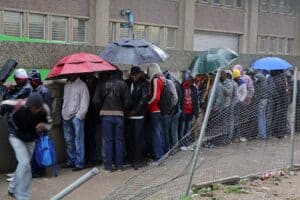
The 30 June deportation deadline of undocumented foreigners has split South Africans between anger and empathy.
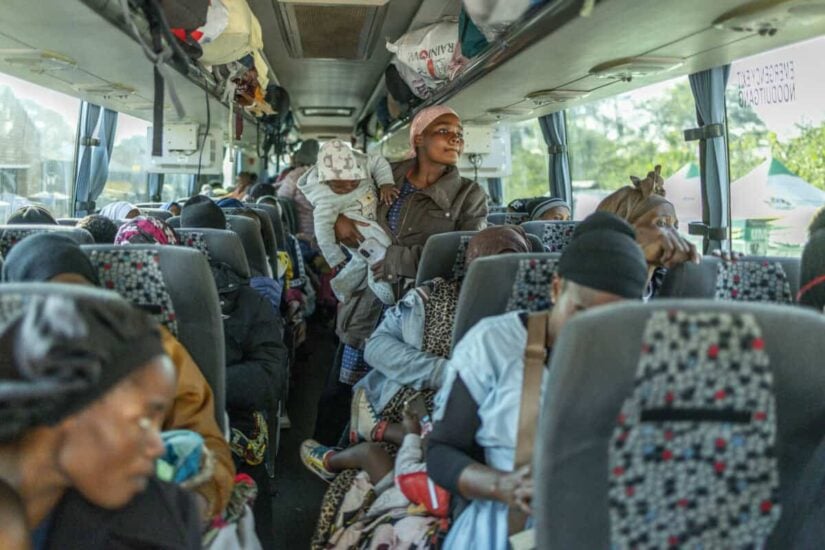
Displaced women and children from Malawi board the first bus to leave at an abandoned municipality building on Mayor’s Walk in Pietermaritzburg on June 23, 2026 after fleeing their homes amid fears of xenophobic attacks and threats from anti-illegal immigration groups. Picture: Rajesh Jantilal / AFP


As the “might is right” 30 June deadline looms for illegal foreigners to deport themselves from South Africa, I must admit I feel torn.
Apart from the obvious – that we are all, to some extent, migrants, if we go far back enough in history – there is the reality that my family and I are immigrants.
But, if you March and March people want to chuck me out, first see the hoops I had to jump through over the 40-plus years I have lived in South Africa so I could first be granted permanent residence and then, finally, citizenship.
No one ever objected, in that time, to the tax I had to pay, even though, for the first two years I lived here, I was on a work permit, which had to be renewed every three months.
The tax kept on being paid for the 10 years I lived as a permanent resident to qualify to be a naturalised South African.
In other words, I stuck to the rules – rules which included having to prove to the then Nat government (no fan of journalists of any kind) that I wasn’t a communist fellow traveller and, as importantly, that there wasn’t anyone readily available in our company to do the job I was transferred to Namibia to do.
My parents were also immigrants to South Africa. No one complained about the tax they paid, either, nor the time my father spent serving his adopted country in the South African Air Force (including fighting a war in Korea).
Yet, I also have huge sympathy and understanding for the anger among black South Africans about the fact that the ANC government for decades has looked the other way while hordes of people have streamed into this country illegally.
The vast majority of them are not fleeing persecution, but are seeking to build themselves a better life in a country stronger economically than the one they left.
Our state systems in education and health are buckling under the pressure of numbers – systems funded by my tax rands – and locals often feel they are second in the queue. I know how that feels, too.
My son was excluded from employment as a South African citizen because of his colour, while plumb positions in that specific company went to Nigerians and other Africans who had the benefit of expensive overseas education and were nothing like disadvantaged…
Some have accused white people of siding with the illegals because they want to keep their cheap gardeners and domestic workers. I don’t believe that.
People I know are just concerned about the brutality being visited upon poor and vulnerable people. The most worrying aspect of 30 June and the building campaign is that it has already done more than the government ever has about sorting out illegal immigration – whether you like that or not.
And that sort of success proves that violence and insurrection are effective tools when it comes to getting your own way. That sort of approach came so close to bringing this country to its knees in July 2021.
This time, there will be much more sympathy for the aims of the protesters, which may lead to reluctance among security forces to act to restore law and order if it does break down.
That sort of anarchy could turn us into refugees ourselves one day.