Bozell engaging right-wing groups notorious for white supremacy cannot credibly be about peace and reconciliation in SA.
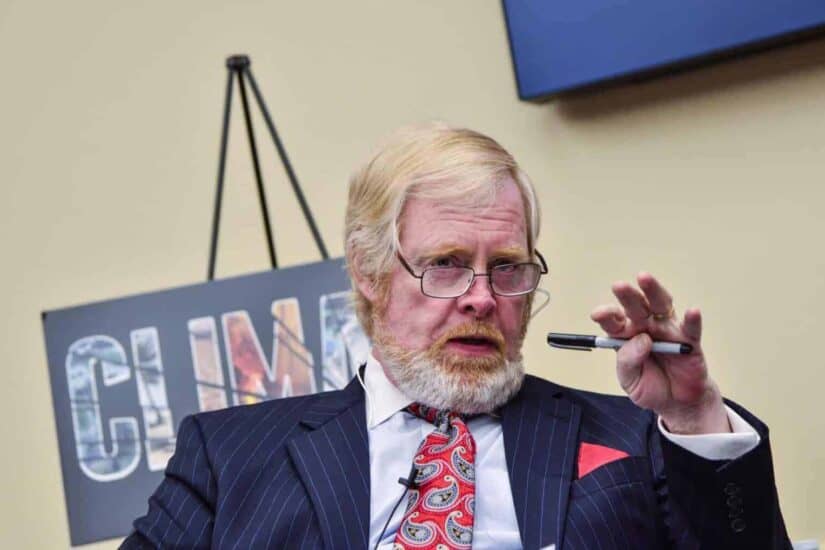
US Ambassador to South Africa Leo Brent Bozell III. Picture: Kris Connor/Getty Images


Civil society organisations comparing notes on advocacy strategies is necessary. But when a top envoy of a superpower engages in “dialogue” with right-wing leaders notorious for white supremacy, the stakes are different.
In SA, these groups are remembered not for advancing reconciliation but for opposing it. Some were offshoots of the same crowd that disrupted the multiparty negotiations leading to the 1994 settlement in Kempton Park.
They literally gate-crashed the talks, threatened racial violence and boycotted efforts aimed at building democracy and racial harmony.
Their agenda never truly changed; today, they are nostalgic about the past. Their agenda was repackaged under the guise of cultural and linguistic rights for a privileged minority.
Abroad, they paraded themselves as victims, lobbying in Washington for recognition as an isolated community. This narrative became the basis for stories that justified racist-inspired asylum claims and attempts to isolate SA internationally, in fact, by the US only.
Against this backdrop, the recent meeting between Leo Brent Bozell, the US ambassador to South Africa, and leaders of right-wing groups raises troubling questions.
Such a gathering cannot credibly be about peace and reconciliation. These are the very actors who rejected reconciliation when the opportunity was real in 1994. To now cloak their agenda in the language of dialogue is disingenuous.
South Africans understand the meaning of peace and reconciliation. Those concepts cannot coexist with US President Donald Trump’s worldview. His record shows a determination to drag societies back into racial conflict.
If Trump were genuinely committed to peace, he would have acted to stop the killing of civilians in Gaza, where nearly 80 000 people have died since October 2023. This occurred under US-backed Israeli bombardments of hospitals, homes, refugee camps and even creches.
A peace-minded leader would also have pursued a lasting solution to the war in Ukraine and resisted Israeli Prime Minister Benjamin Netanyahu’s push to bomb Iran’s nuclear facilities in June last year.
That strike, followed by the killing of Iran’s Supreme Leader Ayatollah Ali Khamenei in February, was widely condemned as aggression. Spain, Germany, and France opposed it outright.
Instead of curbing violence, Trump has continued where Joe Biden left off – arming Israel while Britain provides intelligence support. Independent investigations by news outlet Classified UK have exposed London’s deep involvement, even as mainstream Western media downplays it.
Trump’s approach is not peacemaking but bloodletting. His erratic shifts on global conflicts make him a menace to stability.
A report cited by Global Research, submitted by medical professionals to the US Congress, warned that Trump “presents a clear and present danger to our country and to the world”, citing escalating violent tendencies.
Disturbingly, this coincided with White House discussions openly contemplating nuclear strikes against Iran.
Bozell’s own conduct mirrors Trump’s duplicity. In Hermanus recently, he wore the Trump hat – aggressive, combative and sympathetic to right-wing grievances. Yet, in meetings with state officials, he presented himself as a diplomat seeking improved relations. This is a double agenda that undermines trust.
Trump peddles false claims of an Afrikaner genocide. Despite evidence disproving this, he clings to it. Bozell’s mission in SA appears aligned with this agenda: to amplify conservative Afrikaner voices and re-engineer history for political ends. The envoy must prove us wrong.
South Africans must remain vigilant. Dialogue is essential, but not when it masks agendas that threaten the democratic miracle Nelson Mandela worked so hard to achieve.