
Diversifying water sources is essential if South Africa is to build resilience against droughts, floods and growing demand.
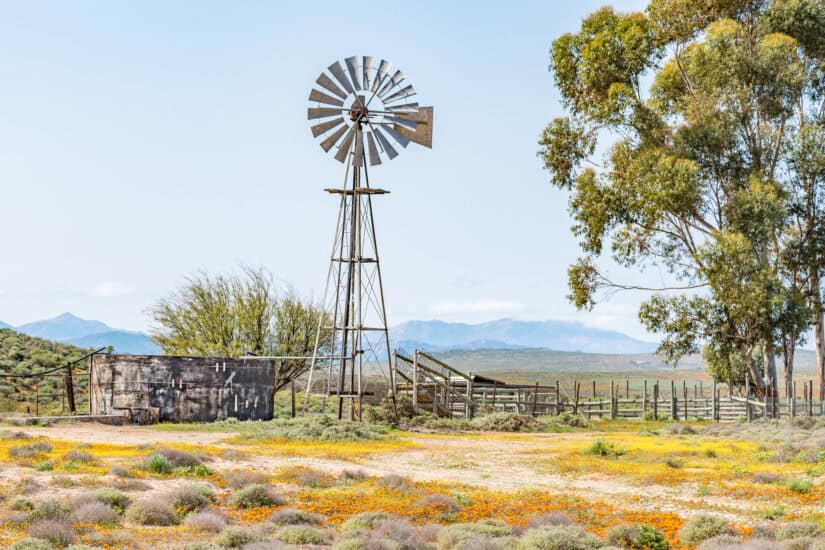
A water pumping windmill, dam and a kraal on a farm next to the road from Spoegrivier to Klipfontein in the Northern Cape Namaqualand region of South Africa. Picture: iStock


The defining water challenge of the 21st century is no longer simply about building bigger dams or laying more pipelines.
As prolonged droughts, floods, rising temperatures, changing rain patterns and rapid urbanisation strain conventional water resources, governments are rethinking water security.
Today, science and global best practice show groundwater is a strategic asset for sustainable development and long-term water security.
Unlocking its potential requires moving beyond the idea that groundwater begins and ends with a borehole. A borehole is merely an access point.
True groundwater security encompasses hydrogeological science, aquifer protection, managed aquifer recharge, water quality management, digital monitoring, environmental stewardship, institutional capability and governance.
Climate change is a water crisis. Rising temperatures, erratic rain and catchment degradation are disrupting water cycles.
Groundwater is one of the most dependable buffers against variability. Unlike surface reservoirs, aquifers have minimal evaporation losses, making them especially valuable in semi-arid southern Africa.
They sustain baseflows, support agriculture and ecosystems and provide reliable supplies during droughts. For millions of Africans, it is already the primary drinking water source, yet it’s of the continent’s least understood and protected resources.
South Africa’s experience underscores the need for change. The day zero crisis in Cape Town, recurring provincial droughts, KwaZulu-Natal floods and pressure on ageing infrastructure highlight the risks of over-reliance on surface water.
SA’s emerging groundwater focus is shifting from simply drilling boreholes to building resilient, decentralised systems that serve communities and strengthen national security.
SA’s groundwater strategy also advances its commitment to Sustainable Development Goal 6, which calls for universal access to safe water and sanitation and the sustainable management of water resources by 2030.
Though the country has made significant progress in access to drinking water since 1994 and has strengthened integrated water resource management through progressive legislation and institutional reforms challenges remain, particularly in municipal infrastructure, water quality, non-revenue water and service reliability.
Groundwater is a path to accelerate progress by extending services to underserved communities, strengthening climate resilience and protecting water resources for future generations. Every South African, regardless of location, deserves water of comparable quality, safety and reliability.
Decentralised treatment technologies now enable rural, periurban and informal communities to receive standards matching or exceeding many urban supplies. It affirms water as a matter of equality, dignity and constitutional rights under Section 27.
Internationally, successful countries strengthen security through diversified water mix portfolios. Large dams and transfers must be supplemented by groundwater, managed aquifer recharge, wastewater reuse, rainwater harvesting, ecosystem restoration, decentralised treatment, seawater desalination and acid mine drainage reclamation.
Each element plays a distinct role: groundwater for drought reliability, recharge for storage with low evaporation, reuse for productive applications, harvesting for local resilience, restoration for natural storage, desalination for coastal needs, and acid mine drainage treatment to turn liabilities into assets.
Scaling these innovations requires scientific excellence, institutional strength and regional cooperation. Advances in groundwater science are opening opportunities for development, adaptation and food security across Africa.
Globally, Australia leads in managed aquifer recharge using stormwater and recycled water. California reformed unsustainable abstraction through basin governance and monitoring.
Namibia has secured supplies in extreme conditions through development, reuse and technology. SA has strong foundations.
The Water Research Commission, Council for Scientific and Industrial Research, universities, water boards and hydrogeologists offer world-class expertise in groundwater, recharge, reuse, digital management and planning.
Emerging tools such as satellite monitoring, geographic information system, remote sensing, AI, machine learning and predictive modelling enable better aquifer understanding, risk detection and protection.
Groundwater supports climate-smart agriculture by enabling efficient irrigation, precision techniques and drought-resilient crops, while recharge stores surplus for future use, thus advancing both water and food security.
Many southern African aquifers are transboundary, including the Ramotswa, Stampriet, Lubombo and Limpopo systems. The Southern African Development Community Groundwater Conference highlighted the need for shared governance, harmonised monitoring and data sharing to turn groundwater into a driver of regional integration rather than competition.
Lasting security requires partnerships across government, research, private sector, development finance, civil society and communities. SA, with its scientific capability, is well-placed to lead globally, combining its water-scarce experience with commitments to justice.