The City of Ekurhuleni has been granted permission to procure 2 400MW of independently generated electricity from the private sector.
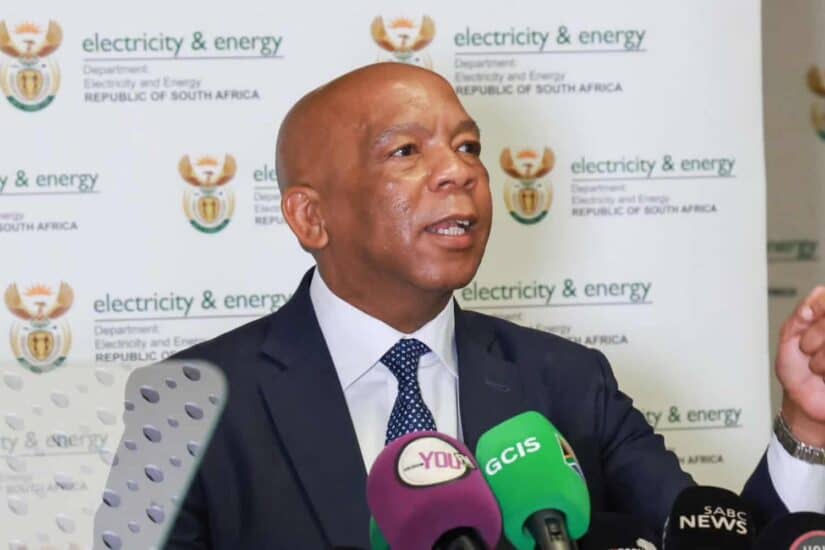
Minister of Electricity and Energy Kgosientsho Ramakgopa. Picture: X / @DOEE_ZA


The Ekurhuleni municipality has secured permission to implement an electricity generation programme that will eventually see all but end its reliance on Eskom.
Electricity and energy minister Kgosientho Ramakgopa on Monday announced that the municipality’s ministerial determination for Independent Power Producers (IPP) had been approved.
The programme is expected to attract more than R16 billion in private-sector investment to generate roughly 95% of Ekurhuleni’s current electricity demand.
“The city will not spend a cent from their balance sheet. The mayor and council will redirect their capital to other spending pressures and then use the spending power of the private sector to help them roll out this programme.
“If you like, it is an IPP version at the level of a municipality, and that’s the collaboration of public and private sector,” said Ramakgopa.
‘Free Ekurhuleni from total dependence’
The programme’s initial phases are set to come online in 2027, with the full complement of expected megawatts online by 2030.
Ramakgopa said Ekurhuleni’s daily electricity demand was roughly 2 500MW, and the municipality granted the Section 34 application for 2 400MW of independently produced energy. Roughly 1 240MW will come from solar photovoltaic sites, 780MW from natural gas, and 180MW from waste-to-energy programmes.
“What this does, potentially, is to free Ekurhuleni from total dependence on Eskom. At today’s consumption, if Ekurhuleni were to bring this on board and generate optimally from these resources, it means that Ekurhuleni will be free of Eskom.
“Of course, it will continue to be grid-tied, but it will be generating using the instrument provided for in law,” said Ramakgopa.
Roughly 1 400MW will be embedded, meaning it will be generated within Ekurhuleni’s boundaries, with the minister particularly pleased with the potential of the waste-to-energy component.
“With the maturing of new technology, waste is the new gold. They will be able to build the waste economy.
“The pickers that we are seeing, I am sure Ekurhuleni will find a way of ensuring they capture the whole value chain,” said Ramakgopa.
‘It’s about reindustrialisation’
Ekurhuleni mayor Nkosindiphile Xhakaza said the municipality would save an estimated R36 billion over 20 years.
The first phases of the programme are due for sod turning this week, with Xhakaza saying 75 partners were queuing for approvals.
“Now that the licence is here, hopefully tomorrow we get it gazetted. Ekurhuleni is going to be busy. There will be much-needed jobs for our people in the immediate [future],” said Xhakaza.
Ekurhuleni was the first municipality to apply for the ministerial determination, but the application underwent prolonged scrutiny because of its size.
eThekwini had since become the first to receive a ministerial determination, and Cape Town, which generates 400MW and 220MW independently, the second, respectively.
Ramakgopa and Xhakaza said the primary benefits would be energy security and affordability for Gauteng’s industrial hub, while boasting 80% of the approved partners wholly black-owned.
“We are using energy and electricity as a lever to ensure that there is qualitative transformation.
“The measure of the success of this programme is not just the megawatts on the grid. Fundamentally, it’s about transformation. It’s about reindustrialisation. It’s about ownership and community participation,” Ramakgopa concluded.