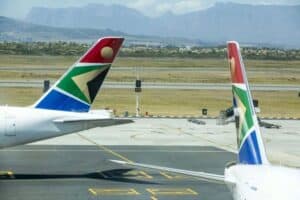
SAA says the search for a strategic equity partner is being led by its shareholder, while the airline engages potential lenders.
Treasury has warned SAA that further state support will not be available after its R1 billion guarantee expires as the airline seeks an equity partner. Picture: Gallo Images/Thulani Mbele.


South African Airways (SAA) has until February to find a buyer – and National Treasury has warned the state-owned airline that, when its current R1 billion loan guarantee runs out, there will be no more state support for the business.
The deadline to find buyers is one of the conditions of a R1 billion government guarantee, which was requested by SAA in July and approved by Finance Minister Enoch Godongwana on 5 August.
But according to Treasury, the airline has not yet borrowed against the guarantee.
“SAA has not yet drawn down on the underlying credit facility,” the Treasury spokesperson said.
Treasury declined to identify the commercial bank involved.
In July, The Citizen reported sources close to the matter suggested the carrier was in talks with Standard Bank.
SAA faces deadlines to sell non-core assets
SAA was mum on guarantees and banking arrangements at the time, later denying reports concerning its funding arrangements.
Another condition of the loan guarantee is SAA must identify non-core assets for sale or commercial use within 90 days of approval of the guarantee.
That deadline falls on Tuesday.
A detailed plan, supported by independent valuations, must follow within 120 days – by 3 December – with implementation required within six months of approval.
“The monetisation of non-core assets will demonstrate the airline’s commitment to strengthening its own balance sheet, improving liquidity and reducing future borrowing requirements,” said the Treasury spokesperson.
In addition, Treasury’s conditions require quarterly reports on route profitability, passenger loads and yields.
Underperforming routes must have corrective plans.
A monitoring committee comprising Treasury, the department of transport and SAA officials must oversee financial performance, supported by monthly cash flow forecasts and quarterly debt reports.
Leadership turmoil adds to SAA’s financial challenges
The deadlines follow the collapse of the Takatso Consortium deal in 2024, which would have seen private investors acquire 51% of SAA. Since then, the airline has lurched from one leadership controversy to another.
The much-criticised permanent appointment of former CEO John Lamola was followed by his sudden exit.
His successor in an acting capacity, ex-Air Chefs boss Matshela Seshibe, was subsequently placed on special leave amid further controversy.
An attempted court interdict over executive recruitment added to the turmoil, while SAA’s much-criticised 2025 financial statements received a disclaimer opinion from the auditor-general.
Outa blames political interference for SAA’s woes
Wayne Duvenage, CEO of civil action and anticorruption non-profit Outa, blamed the airline’s continuing financial woes on political interference and poor leadership.
“They are not taking the financial management and the long-term financial stability of SAA seriously,” Duvenage said.
He criticised the revolving door in the airline’s top job, its continued reliance on acting executives and political interference in appointments.
“They say we’re going to professionalise them. We’re going to appoint on merit. They are still not doing that.”
SAA spokesperson Mphilo Dlamini said: “The process to identify a strategic equity partner is being led by the shareholder and falls within the shareholders’ mandate. SAA therefore does not determine or make commitments on their behalf.”
The airline was engaging with a number of potential lenders.
“I will not disclose non-core assets it earmarks for monetisation at this stage,” added Dlamini.