



The former MPs were expelled in June 2026.
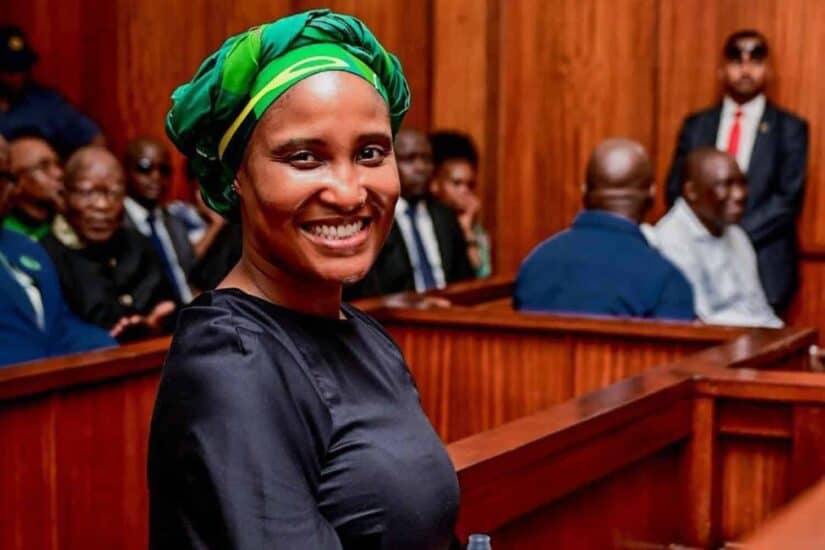
Duduzile Zuma-Sambudla. Picture: X/@KingMntungwa


Expelled MK party members Duduzile Zuma-Sambudla and former national spokesperson Nhlamulo Ndhlela are challenging their expulsion from Jacob Zuma’s party.
The court papers also seek Ndhlela’s reinstatement as a member of parliament.
The duo approached the high court in Johannesburg to review and set aside their expulsions, which were announced on 18 June 2026.
Expulsion of Zuma-Sambudla and Ndhlela
The party expelled the pair after accusing them of gross misconduct, saying the decision followed its consideration of a series of actions, public statements and activities involving Zuma-Sambudla, the daughter of party president Jacob Zuma, and the former national spokesperson.
The Johannesburg high court is expected to hear the application on Tuesday.
Challenge
In their court papers, Zuma-Sambudla and Ndhlela argue that their expulsions were unlawful and carried out without following the party’s constitutional processes.
They contend that the removals bypassed the MK party’s disciplinary structures and denied them an opportunity to defend themselves.
Central to their case is the claim that no formal disciplinary hearings were held before the expulsions were announced.
Presidential decrees
Zuma-Sambudla and Ndhlela further argue that the so-called presidential decrees relied upon to justify their expulsions were unsigned and therefore legally invalid.
In their court filing, they maintain that the documents are effectively non-existent in law and cannot be relied upon to justify their removal from the party.
The dispute centres largely on allegations against Ndhlela, whom the party leadership accuses of misconduct.
Insubordination allegations
The MK party alleges that Ndhlela committed “gross insubordination” by convening an unauthorised media briefing on 16 May 2026.
According to the party, he used the briefing to announce the disbandment of the MK party’s national high command and the establishment of a national executive committee without authorisation from the party leadership.
Parliament
The fallout quickly spread beyond party structures and into Parliament.
Following the expulsion announcement, the MK party leadership moved to remove Ndhlela from the National Assembly.
On 10 July 2026, the Speaker of the National Assembly formally informed him that he had ceased to be an MP by operation of law.
The development prompted the applicants to amend their court application, joining the Speaker of the National Assembly and the Electoral Commission of South Africa (IEC) to the proceedings in an effort to protect the disputed parliamentary seat pending the court’s determination of the legality of the expulsions.
The speaker has since indicated that she will abide by the court’s decision.
MK party’s defence
The MK Party has defended its actions by pointing to provisions in its constitution that establish former president Jacob Zuma as the party’s “supreme leader” with ultimate authority over all party affairs, including membership matters.
According to the party, Zuma’s powers include issuing directives and making decisions affecting members without being constrained by conventional disciplinary structures.
The party further argues that membership is contractual in nature and may be terminated for political or organisational reasons when deemed necessary.
Summary expulsions
The court has previously reviewed and set aside similar summary expulsions within the MK party. In a comparable ruling, the court set aside the oral/unwritten presidential decrees expelling members Pumlani Kubukeli and Khanyisile Litchfield-Tshabalala, automatically reinstating them as party members and restoring their seats in the National Assembly.
The case has exposed a fundamental clash between the MK party’s leadership structure and the rights claimed by its members, with the court expected to determine whether the party’s internal processes complied with principles of procedural fairness.



