






Political analysts caution against reading too much into the early figures, with many more results still outstanding.
 Elections 2026
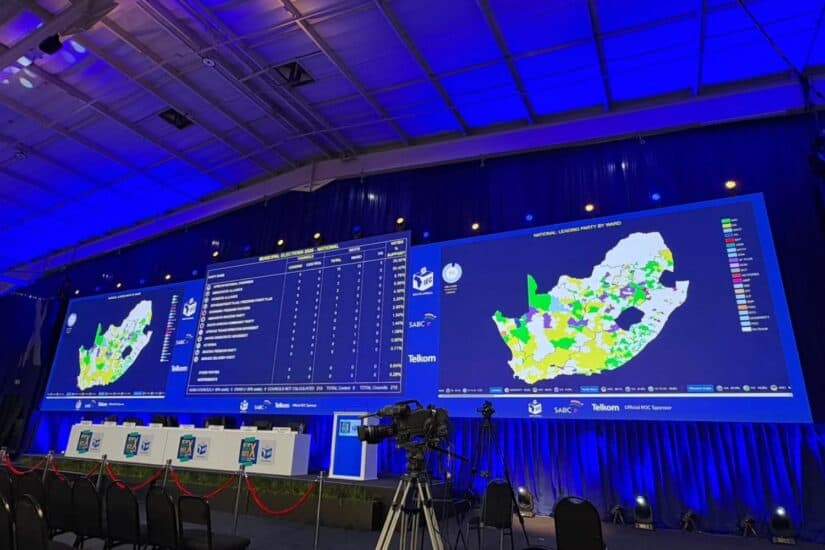
The IEC results board at Gallagher Convention Centre in Midrand. Picture: The Citizen/Faizel Patel


The ballots have been cast, the voting stations have closed, and South Africa’s political parties are now entering the most critical stage of the 2026 Local Government Elections as the first results begin trickling in from across the country.
All eyes will be on the election results leaderboard on Thursday as political parties and politicians scan the screen to see whether their electioneering and campaigning convinced voters to cast their ballots for their parties and give them a chance to govern wards, districts, and municipalities plagued by service delivery issues.
Counting
With millions of votes still being counted, attention has shifted from campaign rallies and voting queues to the high-stakes battle for control of municipalities, where every percentage point could determine whether parties govern outright or are forced into coalition negotiations.

LIVE interactive map, latest news, multimedia and more!
View MapElection officials worked through the night tallying ballots, while party leaders, candidates and supporters closely monitored incoming results for early signs of voter sentiment.
The outcome is expected to shape local governance, service delivery and political influence across municipalities for years to come.
DA takes the lead
The first declaration came from the Blue Crane Local Municipality in the Eastern Cape, handing the DA an early victory and a symbolic boost as the race for municipal control intensifies.
City of Johannesburg mayoral candidate Helen Zille welcomed the result.
“It’s wonderful to be leading the leaderboard from the start.”
However, political analysts caution against reading too much into the early figures, with results from larger and more fiercely contested municipalities still outstanding.
Major metros
Major metros are expected to take significantly longer to conclude as counting, verification and auditing processes continue.
The elections have been among the most closely watched local polls in recent years, with the ANC, DA, EFF, and MK party all seeking to strengthen their influence at local government level.
As the results board slowly fills up, the political landscape remains uncertain. What is already clear, however, is that the campaign is over and the contest for municipal power has entered its decisive phase.
Service delivery
By the time the final ballots are counted, South Africans will know not only who won, but who will govern their communities for the next five years.
On election day, ANC President Cyril Ramaphosa acknowledged growing voter frustration over failing municipal services, saying service delivery has become the defining issue in South Africa’s local government elections as millions headed to the polls.
Ramaphosa cast his ballot alongside the first lady, Dr Tshepo Motsepe, at Hyde Park High School in Johannesburg on Wednesday.



