



IEC staff and officials received a 95% approval rating for trustworthiness, patience, friendliness, professionalism and helpfulness.
 Elections 2026
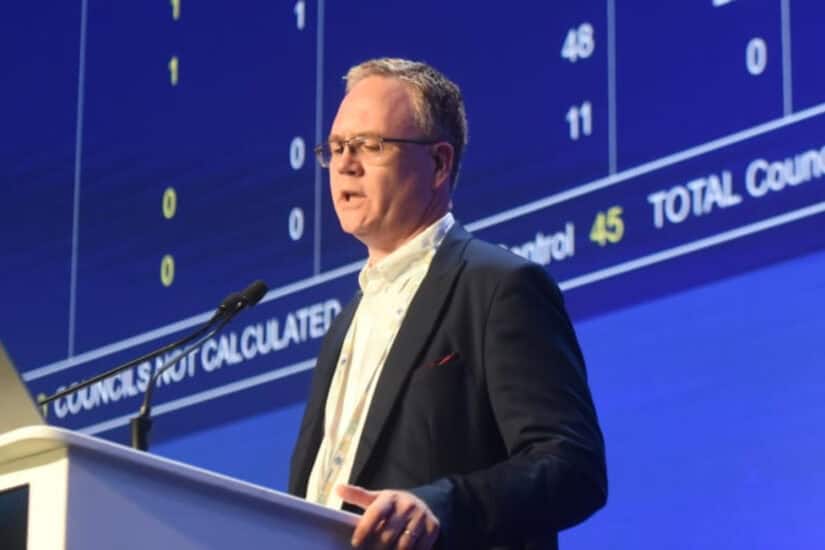
Director of the Human Science Research Council Benjamin Robert. Picture: Nigel Sibanda /The Citizen


The vast majority of voters believe the election process has been free, fair and easily accessible.
These were the findings of the Human Sciences Research Council’s Election Satisfaction Survey (ESS) for the 2026 local government elections.
First conducted in 1999, the ESS monitors “electoral predispositions” and the experiences of voters to better improve election efficiency.

Get your results on
our Election Hub
Live results
The survey interviewed 13 198 voters on 4 November, selecting no more than 50 voters from 300 voting stations across demographically proportionate areas.
Interviews were split into four time periods, with 23% conducted before 10:30am on voting day, and the remainder split evenly throughout the day.
IEC trust drops 12% in seven years
The ESS stated that 60% of those surveyed had already decided to vote six months or more before the elections.
At the other end of the scale, 12% had made the decision to vote in the last month, 5% in the week before election day, and 4% on the day of the election.
The survey found that 83% believed their votes would be counted accurately, with 90% believing the process was free and 91% believing it was fair.
Alarmingly, the survey found trust in the IEC had dropped from 93% in 2019 to 81% in 2026.
“Some believe the IEC is influenced by political parties, particularly the governing party, raising doubts about its independence and impartiality.
“Some respondents associate the IEC with wider government corruption, political dissatisfaction and a broader lack of confidence in public institutions,” the council’s presentation stated.
Rural and traditional areas were most trusting with 83%, while urban areas were least trusting with 79%.
Provincially, the Eastern Cape had the highest level of trust in the IEC with 87%, while KwaZulu-Natal had the least with 72%.
Positive sentiments towards the IEC included a strong track record, an absence of negative experiences and no previous evidence of wrongdoing.
IEC staff impartiality questioned
Listing where they received their election information, respondents noted radio, television and social media as the most useful mediums.
On voting stations, 86% said they were very accessible, with 90% having travelled less than 30 minutes and 91% queuing for no more than 30 minutes.
IEC staff and officials received a 95% approval rating for trustworthiness, patience, friendliness, professionalism and helpfulness.
However, that dropped to 89% when respondents were asked about the perceived impartiality of IEC staff.
Regarding the secrecy of their ballots, 95% were satisfied that their vote would remain a secret, with this stat hovering between 95% and 99% since the late 2000s.
The council was satisfied that the survey’s outcomes expressed a positive sentiment toward the election process.
“The findings underscore the importance of sustaining public trust, strengthening perceptions of impartiality, improving electoral inclusivity and addressing information gaps and reported intimidation.
“Continued monitoring of these dimensions through the ESS series will remain essential for informing electoral management, promoting accountability and reinforcing public confidence in South Africa’s democratic electoral processes.”