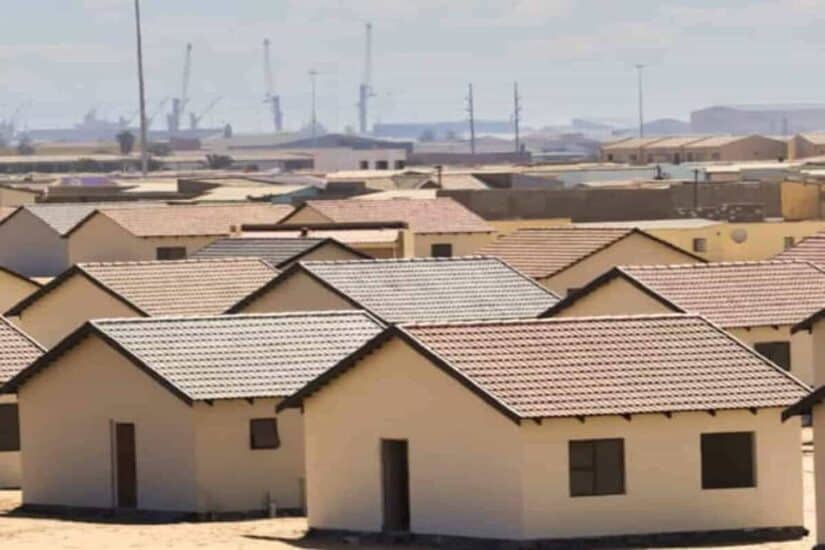
Fourteen of Gauteng's 45 government-funded housing projects have been illegally occupied, leaving legitimate beneficiaries waiting for homes amid costly eviction processes and project delays.
Picture: iStock


Almost one in three major government-funded housing projects in Gauteng has been invaded by squatters, leaving hundreds of poor families, who are legitimately on housing waiting lists, living in squalor.
The Gauteng department of human settlements has confirmed that 14 of 45 housing projects have been illegally occupied over the past five years.
The disclosure was made by department officials in response to questions in the Gauteng legislature. The issue of illegal occupation of government-funded housing projects was first raised in the legislature in September last year.
However, The Citizen investigation has found that the problem remains unresolved.
14 of 45 housing projects illegally occupied
Last year, the department told the legislature it had appointed a panel of security companies to monitor and conduct surveillance at housing projects, prevent land invasions and assist with the enforcement of eviction orders.
However, the department warned that removing illegal occupants would be costly.
“Removing illegal occupants would be costly, with each eviction order estimated to cost about R1.5 million,” the department said in a written response.
It said the financial burden could limit its ability to swiftly remove illegal occupants.
DA Gauteng MPL Mervyn Cirota said the department could not use budget constraints as an excuse while millions of rands in public investment were being surrendered to unlawful occupants and legitimate beneficiaries continued to wait for their homes.
Cirota said the government had failed to prevent the invasions from occurring.
“If the DA was in charge, in the event of illegal occupations, we will take swift legal action to protect investments and ensure allocation of homes to verified beneficiaries without years of delay,” he said.
Beneficiary lists flagged as key problem
Portfolio committee on human settlements chair Nocks Seabi said illegal occupation of houses remained a widespread challenge across the country, with the committee continuing to receive complaints from beneficiaries.
Seabi identified the mismanagement of beneficiary lists as one of the main problems.
“The committee has been categorical that there must be a digital platform that systematically records and clearly identifies the intended beneficiaries from the outset, when a housing project is conceived and planned,” he said.
“When beneficiaries know who is legitimately in line to benefit from a project, there is likely to be less scope for illegal occupation.”
Delays leave homes vulnerable to occupation
Seabi said delays in completing housing projects were also worsening the problem.
In many projects, he said, houses were nearly complete but could not be occupied by the rightful beneficiaries because of challenges, including the non-payment of contractors and delays in approvals by the National Home Builders Registration Council.
“These delays leave completed or near-completed houses vulnerable to illegal occupation and exacerbate the problem,” he said.
He said lengthy legal proceedings to remove illegal occupants further delayed the allocation of houses to legitimate beneficiaries.
“The impact on beneficiaries is devastating as they are forced to contend with inhumane living conditions, despite the department having already committed resources to provide them with a house,” Seabi said.
He said illegal occupation also placed an additional burden on the public purse because the department could be forced to spend money on legal proceedings and repairs before properties could be handed over to their rightful beneficiaries.
“This results in a duplication of costs that could have been avoided through better beneficiary management, faster project completion and effective prevention of illegal occupation,” he said.
Calls for digital housing beneficiary system
Seabi urged the department to urgently develop and institutionalise a digital beneficiary list system that would allow beneficiaries to verify their position on the list and clearly identify the housing project from which they were expected to benefit.
“This will improve transparency, reduce uncertainty and help prevent disputes and illegal occupation,” he said.
He also called for greater communication between the department, municipalities and communities about planned housing projects, timelines and the number of houses to be delivered.
“Clear and timely communication can help manage expectations, reduce misinformation and mitigate the risk of illegal occupation,” he said.
Seabi said closer cooperation between the department and law enforcement agencies was also needed to ensure that people involved in corruption were investigated and, where evidence supported it, prosecuted.
Communities ‘excluded’ from housing developments
Meanwhile, Thapelo Mohapi of Abahlali baseMjondolo said the organisation was aware of allegations that government officials had been involved in the sale of houses intended for beneficiaries.
“Houses had been sold by officials and ward councillors in the eThekwini municipality during the allocation stage,” Mohapi said.
He said communities were often excluded from housing developments that affected them.
“The problem is that the government does not include the people who are supposed to be the beneficiaries in their development. These developments are imposed on the people,” he said.
Mohapi said government needed to meaningfully engage communities from the beginning of housing developments and improve protection for people who reported alleged corruption.
He also said some residents were receiving municipal water bills for houses they had never occupied, while continuing to live in informal settlements.
He said such records could potentially prevent residents from applying for housing because municipal systems could indicate that they had already been allocated a house.
“The government must implement the upgrading of informal settlements policy which will ensure people are meaningfully engaged,” he said.
“Land must be made available closer to where people are working.”